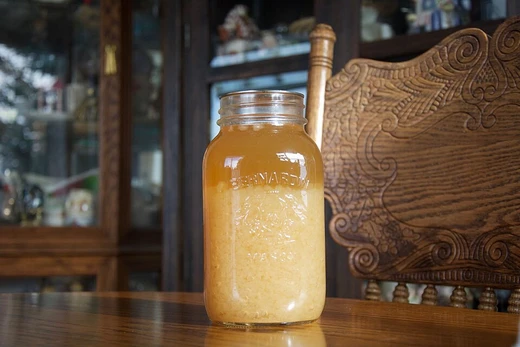
Fermentation in food processing
Ancient microbial conversion of carbohydrates into alcohol and acids.

Wikipedia / Wikimedia Commons
Fermentation in food processing turns carbohydrates into alcohol or organic acids through the action of yeasts or bacteria, without an oxidizing agent. This field of study is called zymology or zymurgy. The process is older than recorded history; the oldest known evidence of fermentation comes from a 13,000-year-old beer-like residue, with a gruel-like consistency, discovered in a cave near Haifa, Israel.
Humans have used fermentation since ancient times, likely stumbling upon it by accident. To preserve surplus food, people stored items in containers that were probably forgotten, allowing yeast and bacteria to grow naturally. Other early alcoholic drinks include a mix of fruit, rice, and honey from the Neolithic Chinese village of Jiahu (7000–6600 BC). Winemaking began around 6000 BC in Georgia, in the Caucasus region. Seven-thousand-year-old wine jars, now at the University of Pennsylvania, were excavated in Iran’s Zagros Mountains. Strong evidence also shows fermented alcoholic drinks were made in Babylon (circa 3000 BC), ancient Egypt (circa 3150 BC), pre-Hispanic Mexico (circa 2000 BC), and Sudan (circa 1500 BC).
The science of fermentation took a major step forward in 1856, when French chemist Louis Pasteur linked yeast to the process. Studying how yeast converts sugar to alcohol, Pasteur concluded that a “vital force” within living yeast cells—which he called “ferments”—catalyzed the reaction. He wrote that alcoholic fermentation is tied to the life and organization of yeast cells, not to their death or decay.
However, living yeast cells turned out not to be essential. In 1897, German chemist Eduard Buchner of Humboldt University of Berlin showed that sugar could ferment without any living yeast present, thanks to an enzyme complex he named zymase, secreted by the yeast. He won the Nobel Prize in Chemistry in 1907 for this discovery of “cell-free fermentation.” A year earlier, in 1906, studies of ethanol fermentation led to the early identification of oxidized nicotinamide adenine dinucleotide (NAD+).
The byproducts of food fermentation—alcohol, preservative organic acids, and carbon dioxide—all have human uses. Alcohol turns fruit juices into wine, grains into beer, and starchy foods like potatoes into spirits such as gin and vodka. Carbon dioxide leavens bread. Organic acids preserve and flavor vegetables and dairy products.
Fermentation serves five main purposes: enriching diets with diverse flavors, aromas, and textures; preserving large amounts of food through lactic acid, alcohol, acetic acid, and alkaline fermentations; adding protein, essential amino acids, and vitamins to food substrates; removing antinutrients; and cutting cooking time and fuel use.
Fermented beverages have likely always been tied to ceremonies and festivals. Evidence for this comes from the design of drinkware and the residues left inside them.
Fermented foods vary widely by region. Worldwide examples include alcohol (beer, wine), vinegar, olives, yogurt, bread, and cheese. In East and Southeast Asia, there are amazake, atchara, belacan, burong mangga, com ruou, doenjang, douchi, fish sauce, lah pet, lambanog, kimchi, kombucha, leppet-so, narezushi, miso, nata de coco, nattō, ngapi, oncom, padaek, pla ra, prahok, ruou nep, sake, shrimp paste, soju, soy sauce, stinky tofu, tape, tempeh, tempoyak, and zha cai. Central Asia offers kumis, kefir, shubat, and qatiq (yogurt). South Asia features achar, appam, dosa, dhokla, dahi (yogurt), idli, mixed pickle, ngari, sinki, tongba, and paneer. Africa has garri, injera, laxoox, mageu, ogi, ogiri, and iru. The Americas contribute chicha, chocolate, vanilla, hot sauce, tepache, tibicos, pulque, muktuk, kiviak, and parakari. The Middle East includes torshi and boza. Europe offers sourdough bread, elderberry wine, kombucha, pickling, rakfisk, sauerkraut, pickled cucumber, surströmming, mead, kvass, salami, sucuk, prosciutto, and cultured milk products such as quark, kefir, filmjölk, crème fraîche, smetana, skyr, rakı, tupí, and żur. Oceania has poi and kānga pirau.
Fermented foods can also be grouped by base ingredient. Bean-based items include cheonggukjang, doenjang, douchi, fermented bean curd, miso, natto, soy sauce, stinky tofu, tempeh, oncom, soybean paste, Beijing mung bean milk, kinama, iru, and thua nao. Grain-based foods include amazake, beer, bread, choujiu, gamju, injera, kvass, makgeolli, murri, ogi, rejuvelac, sake, sikhye, sourdough, sowans, rice wine, malt whisky, grain whisky, idli, dosa, Bangla (drink), vodka, boza, and chicha. Vegetable-based items include kimchi, mixed pickle, sauerkraut, Indian pickle, gundruk, and tursu. Fruit-based products include wine, vinegar, cider, perry, brandy, atchara, nata de coco, burong mangga, asinan, pickling, vişinată, chocolate, rakı, and aragh.
- field
- Food processing, microbiology
- key_process
- Conversion of carbohydrates to alcohol or organic acids by microorganisms
- earliest_evidence
- 13,000-year-old beer residue in Israel
- scientific_founder
- Louis Pasteur (1856)
- cell_free_discovery
- Eduard Buchner (1897)
Lore & Background
Fermentation has been exploited since ancient times, likely discovered unintentionally when excess foods were stored in containers and forgotten, allowing yeast and bacteria to grow. Early alcoholic drinks include a 13,000-year-old beer-like gruel from Israel, a fruit-rice-honey drink from 7000–6600 BC in China, and wine from circa 6000 BC in Georgia. Evidence of fermented drinks also appears in Babylon, ancient Egypt, pre-Hispanic Mexico, and Sudan.
Reader's Guide
The French chemist Louis Pasteur founded zymology in 1856 by connecting yeast to fermentation, concluding that fermentation was catalyzed by a vital force within living yeast cells. In 1897, Eduard Buchner discovered that sugar could be fermented without living yeast cells, by an enzyme complex he termed zymase, earning the Nobel Prize in Chemistry in 1907. Fermentation produces alcohol, preservative organic acids, and carbon dioxide, used to make wine, beer, bread, and preserved foods. It enriches diet, preserves food, adds nutrients, eliminates antinutrients, and reduces cooking time. Fermented foods are universal, with regional varieties including kimchi, miso, tempeh, yogurt, cheese, sauerkraut, and fish sauces. Risks include botulism if sterilization is inadequate, especially in traditional Alaska Native practices using plastic containers, and a carcinogenic by-product, ethyl carbamate.
Did You Know?
- The earliest archaeological evidence of fermentation is 13,000-year-old beer residue found in a cave near Haifa, Israel.
- Louis Pasteur founded zymology in 1856 by connecting yeast to fermentation.
- Eduard Buchner discovered cell-free fermentation in 1897, winning the Nobel Prize in Chemistry in 1907.
- Alaska has more cases of botulism than any other U.S. state, linked to traditional fermentation of animal products in plastic containers.
More in Fermented Foods 1-17
Spotted an error? Know more?
This is a living reference — every entry is fact-audited, and reader corrections feed straight into our audit queue. Suggest an edit · See this site's audit record