Leif Erikson
Norse explorer who reached North America centuries before Columbus.
Last updated

Paul R. Burley · CC BY-SA 4.0
Leif became paramount chieftain of the Greenland colony after his father's death shortly after 1000 CE.[1][2] The Norse explorer Leif Erikson, who is sometimes called Leif the Lucky, is believed to have been the first European to reach the continent of North America, doing so around the year 1000.[3][1]
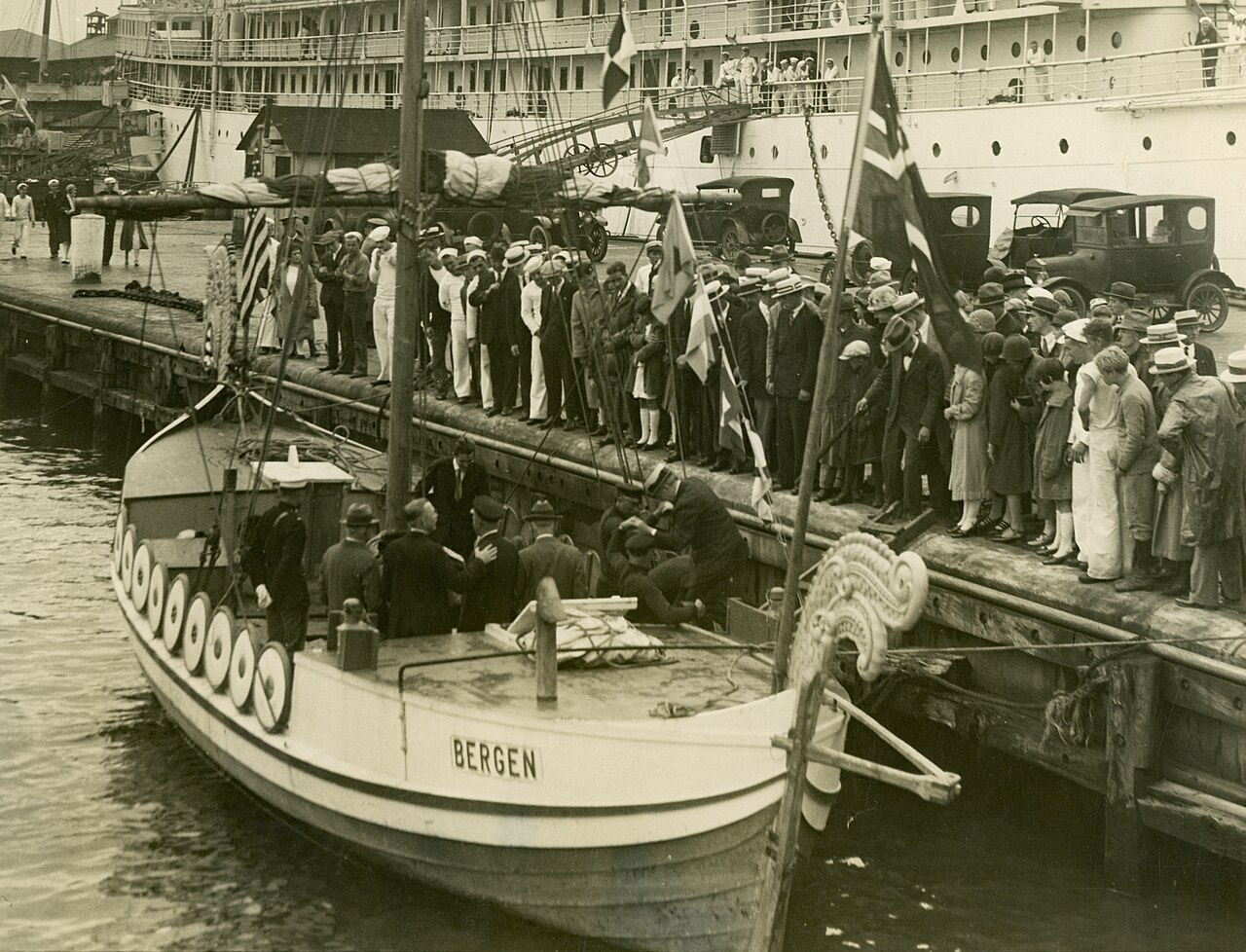
Life and work
Leif followed Bjarni's route in reverse, landing first at Helluland, then Markland, and finally a verdant area he named Vinland.[4][5] The Saga of Erik the Red states Leif discovered Vinland after being blown off course while returning from Norway to Greenland.[6] During his stay in Norway, Leif converted to Christianity at the court of King Olaf Tryggvason.[7][1] He earned the nickname "Leif the Lucky" for rescuing a shipwrecked crew and for converting Norse Greenland to Christianity.[8]
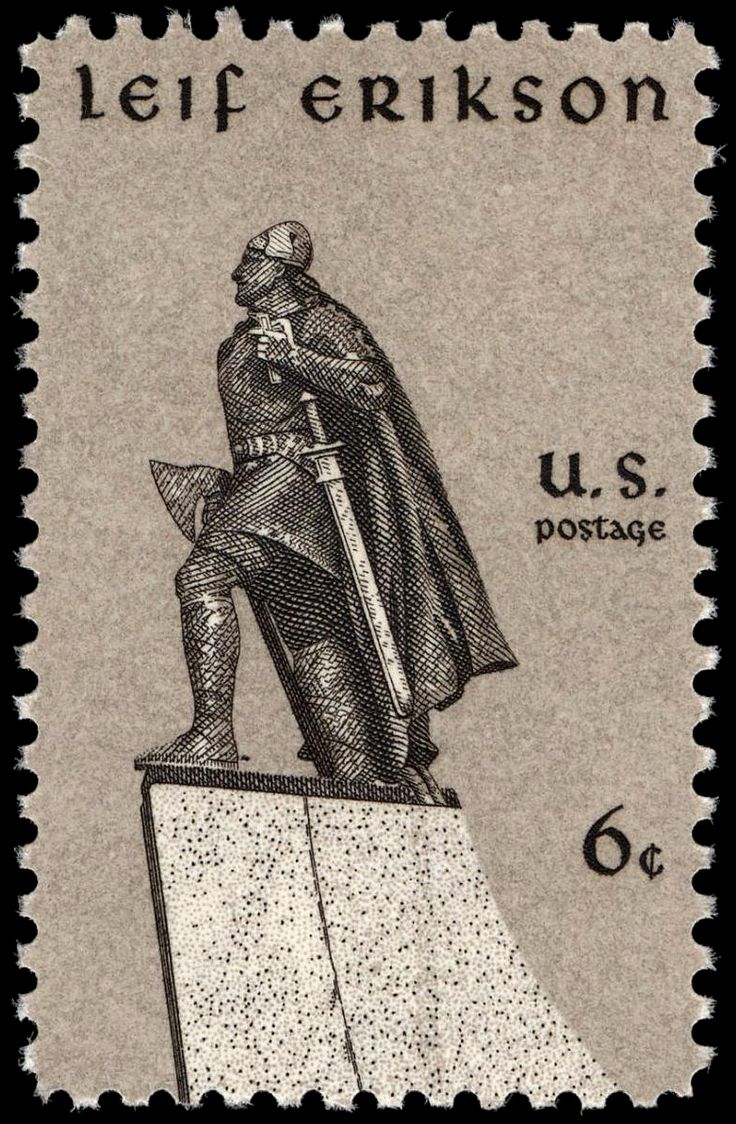
Although the sagas do not record where Leif was born, it is probable that his birthplace was Iceland, the location where his mother and father first encountered each other.[9][10] Leif was raised at Brattahlíð, the family farm situated in Greenland's Eastern Settlement.[11]
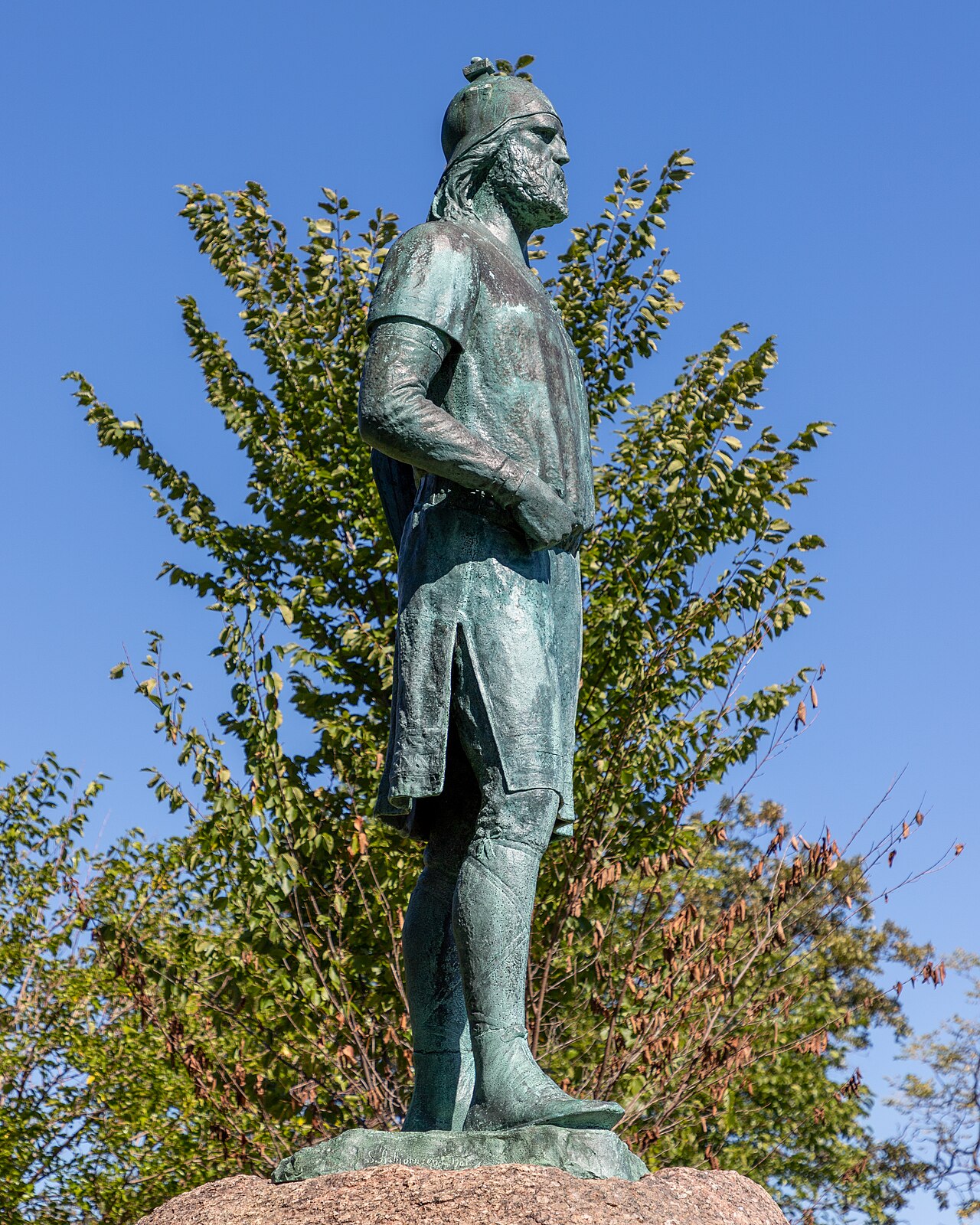
What the cited sources add
The Canadian Encyclopedia notes that Leif's explorations in North America occurred around the year 1000.[1] According to The Canadian Encyclopedia, Leif is described in the Saga of the Greenlanders as "tall and strong, of striking appearance, shrewd, and in every aspect moderate and wise"[1] The same source states that Leif was still alive in 1018 when King Olaf II sent a conquered adversary to him in Greenland.[1] The Canadian Encyclopedia reports that by roughly 1025, Leif was dead and his son Thorkell was chieftain at Brattahlid.[1]
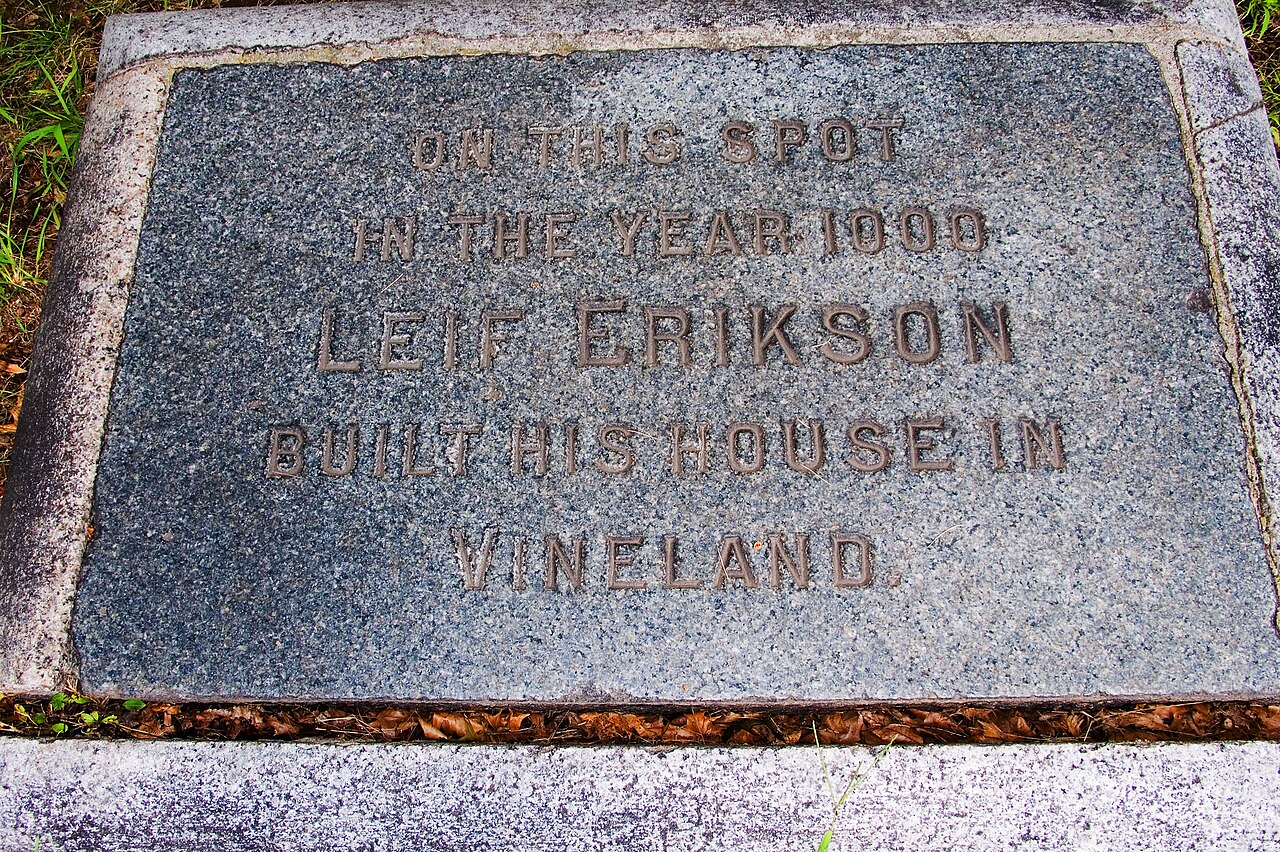
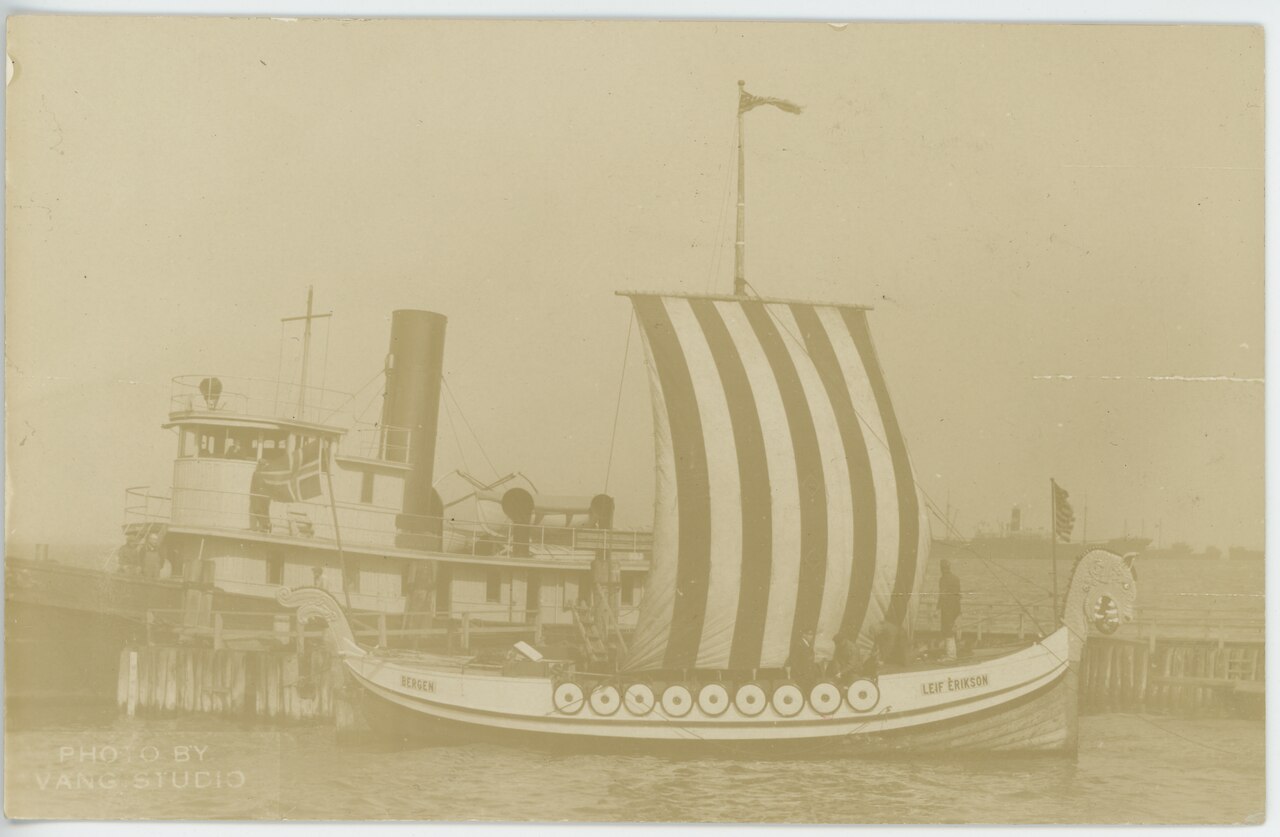
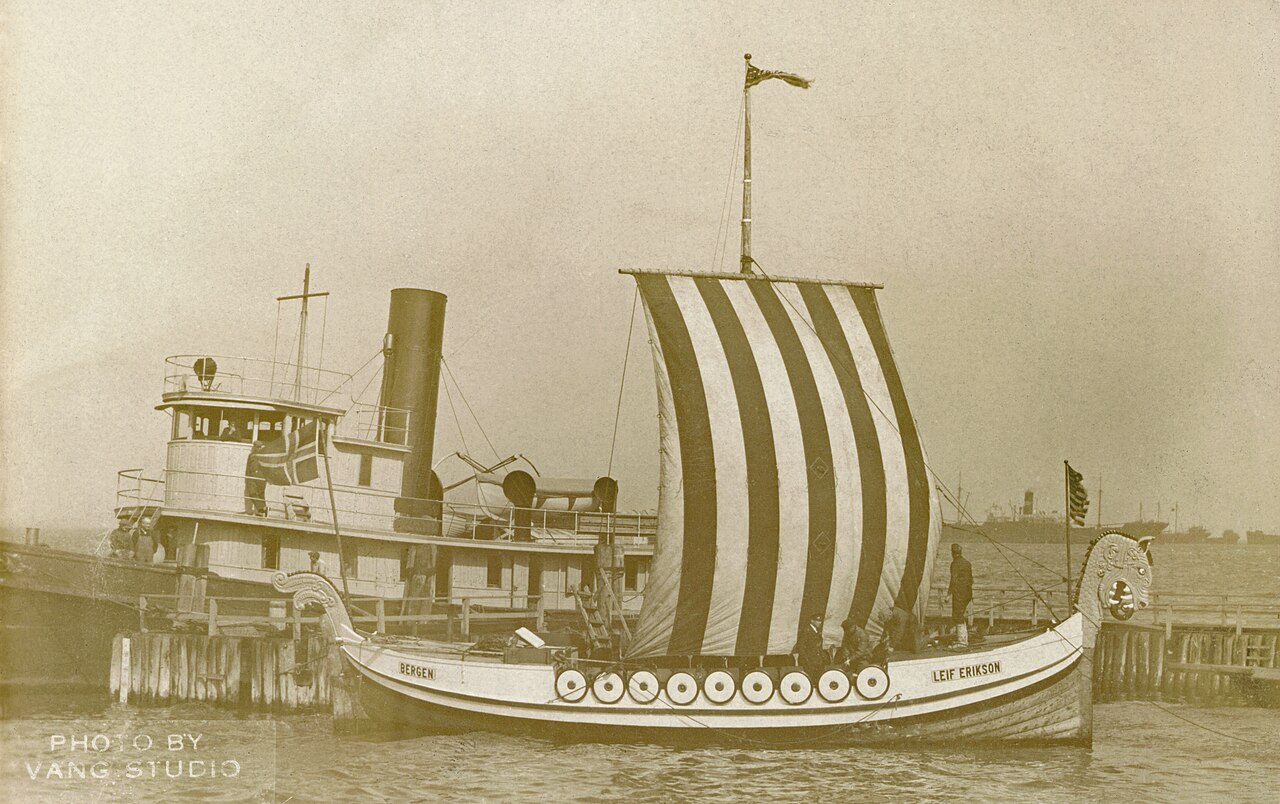
Hansen explains that October 9 was chosen for Leif Erikson Day because the ship Restaurationen arrived in New York on that date in 1825 with the first organized party of Norwegian immigrants.[12] Hansen's account points out that the Sagas specify only that Leif's arrival in America occurred during the autumn, without providing a precise date.[12]
References
- "Leif Eriksson", The Canadian Encyclopedia, 12 October 2018. facts only, no text reused. web.archive.org
- Wikipedia, "Leif Erikson" (CC BY-SA 4.0), which cites: "Leif Eriksson", The Canadian Encyclopedia, 12 October 2018 (we also read that source) en.wikipedia.org
- Wikipedia, "Leif Erikson" (CC BY-SA 4.0), which cites: "Leif Eriksson", The Canadian Encyclopedia, 12 October 2018; "Leif Erikson (11th century)", BBC; "Why Do We Celebrate Columbus Day and Not Leif Erikson Day?", 11 October 2015 (we also read that source) en.wikipedia.org
- Wikipedia, "Leif Erikson" (CC BY-SA 4.0), which cites: Somerville & McDonald, 2010, p. 352.; Wernick, "The Vikings", Time-Life Books, 1979, p. 149–151; Wernick, "The Vikings", Time-Life Books, 1979, p. 149–151; Wernick, "The Vikings", Time-Life Books, 1979, p. 149–151 (we also read that source) en.wikipedia.org
- Wikipedia, "Leif Erikson" (CC BY-SA 4.0), which cites: Wernick, "The Vikings", Time-Life Books, 1979, p. 149–151; "Chapter 5 – Norse Explorers from Erik the Red to Leif Erikson – Canadian Explorers | the History of Canada" (we also read that source) en.wikipedia.org
- Wikipedia, "Leif Erikson" (CC BY-SA 4.0), which cites: Somerville & McDonald, 2010, pp. 419–420. (original not read by us) en.wikipedia.org
- Wikipedia, "Leif Erikson" (CC BY-SA 4.0), which cites: Campbell, 2021, pp. 37–39.; Somerville & McDonald, 2010, p. 420.; Reeves, 1890, p. 57.; Hermannsson, "Tyrkir, Leif Erikson's Foster-Father", Modern Language Notes, June 1954, p. 388–389 (we also read that source) en.wikipedia.org
- Wikipedia, "Leif Erikson" (CC BY-SA 4.0), which cites: Ingstad, 1985, pp. 171–178.; Campbell, 2021, pp. 37–39. (original not read by us) en.wikipedia.org
- Wikipedia, "Leif Erikson" (CC BY-SA 4.0), which cites: Leiv Eriksson , Norsk biografisk leksikon; Sverrir Jakobsson, "Shouldn't Leifr Eiríksson ('Leif the Lucky') really be viewed as a Greenlander with family roots in Iceland and Norway?", The Icelandic Web of Science, 14 July 2001; Leif Eriksson – Encyclopædia Britannica, Inc., 2012. Retrieved 11 April 2012.; "Congressional Record, V. 145, Pt. 21, November 17, 1999 to December 3, 1999", Government Printing Office, October 2004 (we also read that source) en.wikipedia.org
- Wikipedia, "Leif Erikson" (CC BY-SA 4.0), which cites: "Leiv Eiriksson", Store norske leksikon; Sverrir Jakobsson, "Shouldn't Leifr Eiríksson ('Leif the Lucky') really be viewed as a Greenlander with family roots in Iceland and Norway?", The Icelandic Web of Science, 14 July 2001; Sanderson, Jeanette. (2002) Explorers, Teaching Resources/Scholastic. p. 14. .; Sverrir Jakobsson, "Shouldn't Leifr Eiríksson ('Leif the Lucky') really be viewed as a Greenlander with family roots in Iceland and Norway?", The Icelandic Web of Science, 14 July 2001 (we also read that source) en.wikipedia.org
- Wikipedia, "Leif Erikson" (CC BY-SA 4.0), which cites: "Leiv Eiriksson", Store norske leksikon; Dregni, "Vikings in the attic: in search of Nordic America", U of Minnesota Press, 2011, p. 72–73 (we also read that source) en.wikipedia.org
- Hansen, "My Minneapolis", 1956. facts only, no text reused. web.archive.org
Each numbered sentence above was checked against the source it cites before publication. Sentences citing Wikipedia adapt text from the English Wikipedia article Leif Erikson (contributors), used under CC BY-SA 4.0; this entry is available under the same licence. Other sources were used for facts only; no text or images are copied from them.
More in Great Explorers
Sources
Compiled from Wikipedia and the sources listed below. Text from Wikipedia is available under CC BY-SA 4.0; this entry is adapted from it.
- Wikipedia: Leif Erikson (CC BY-SA 4.0).
Spotted an error? Know more?
Reader corrections go straight into our review queue. Suggest an edit · How this site is sourced