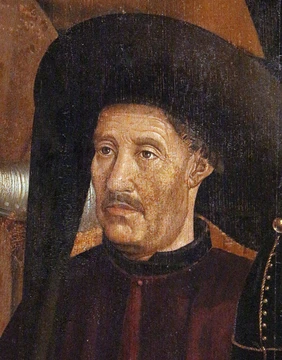
Antonio de Ulloa
Spanish naval officer, scientist, and colonial administrator of the Enlightenment.
Last updated
Antonio de Ulloa y de la Torre-Guiral was born in Seville on January 12, 1716, into a family with strong intellectual and social standing. His father wrote on economics, one brother became an engineer and oversaw the Canal de Castilla, and another became a jurist, historian, and member of the Royal Spanish Academy.
Ulloa studied grammar and science under a priest and learned mathematics at a local school. At fourteen, he sailed from Cádiz to Cartagena de Indias. After returning, he entered the Spanish Naval Academy in 1733 and soon saw action in Italy, where Spain was fighting for control of Naples and Sicily.
South American expedition
At nineteen, Ulloa was chosen to replace another officer on the French Geodesic Mission to Quito. The mission aimed to measure a degree of latitude near the equator, settling a debate between those who thought the Earth was flattened at the poles (following Newton) and those who believed it was elongated at the poles (following Descartes). The results would also aid navigation. Ulloa and his fellow naval officer Jorge Juan were selected on the recommendation of the king’s chief minister.
The mission faced delays and local resistance. In 1737, a dispute with the president of the Quito audiencia led to an arrest order against Ulloa and Juan. They took refuge in a church, and Ulloa escaped to Lima, where the Viceroy of Peru protected them. When war with Britain began in 1739, both officers helped defend the Peruvian coast.
From 1736 to 1744, Ulloa traveled across the Viceroyalty of Peru, recording astronomical, natural, and social observations. During an inspection of gold panning in the Chocó region of present-day Colombia, he described a metal he called platina (“little silver”).
This was the first detailed description of platinum in European science, and Ulloa is often credited with its discovery. He returned to Europe in 1745. In 1746, he was elected a fellow of the Royal Society of London, and in 1751, a foreign member of the Royal Swedish Academy of Sciences.
From 1758 to 1764, Ulloa governed Huancavelica in Peru and oversaw its mercury mines. He fought corruption there but without success. After the Seven Years’ War, he became the first governor of Spanish Louisiana in 1766. French Creoles in New Orleans strongly resisted his rule and expelled him during the Rebellion of 1768.
Lore & Background
Antonio de Ulloa was born in Seville, Spain, into a socially prominent and intellectually distinguished family. His father, Bernardo de Ulloa y Sousa, was noted for his writings on economics. At the age of fourteen, Ulloa embarked from Cádiz on the galleon San Luis, bound for Cartagena de Indias. After returning to Cádiz, he entered the Real Compañía de Guardias Marinas (the Spanish Naval Academy) in 1733 and soon sailed to Italy, where the Spanish navy was fighting to wrest control of Naples and Sicily from the Habsburg monarchy.
At the age of nineteen, Ulloa joined the French Geodesic Mission to the Equator, which established that the shape of the Earth is an oblate spheroid, flattened at the poles, as predicted by Isaac Newton.
Reader's Guide
Antonio de Ulloa's significance lies in his dual role as a scientist and imperial administrator during the Spanish Enlightenment. As a young naval officer, he participated in the French Geodesic Mission to the Equator, which provided crucial empirical evidence that the Earth is an oblate spheroid, vindicating Newtonian mechanics over Cartesian physics.
His detailed reports from South America, including the first European description of platinum, earned him an international reputation and election to the Royal Society of London and the Royal Swedish Academy of Sciences. Ulloa's later career as governor of Huancavelica and Spanish Louisiana illustrates the challenges of colonial administration, including his failed efforts to combat corruption in Peru and his expulsion from New Orleans by French Creoles in 1768. His legacy endures through his scientific contributions, particularly the discovery of platinum and the observation of atmospheric optical phenomena, as well as his published work Relación histórica del viaje a la América Meridional, which provided comprehensive descriptions of South America's geography, inhabitants, and natural history.
Did You Know?
- Ulloa published the first detailed observations of platinum, later identified as a new chemical element.
- Ulloa observed a phenomenon later called 'Ulloa's halo' or 'Bouguer's halo,' where each person saw a halo only around the shadow of their own head.
Frequently Asked Questions
Who is Antonio de Ulloa?
Antonio de Ulloa y de la Torre-Guiral (1716–1795) was a Spanish naval officer, natural scientist, and colonial administrator active during the Enlightenment. Born in Seville into an intellectually prominent family, he combined military service with serious scientific inquiry throughout his career.
What did Antonio de Ulloa do in the French Geodesic Mission to the Equator?
Ulloa accompanied the French expedition to South America as a Spanish naval officer, helping to document the region's natural history while the French team measured the curvature of the Earth. His involvement highlighted the uneasy diplomatic and scientific rivalry between France and Spain in the 1730s and 1740s.
How did Antonio de Ulloa's career progress from youth to old age?
After a teenage voyage from Cádiz to Cartagena de Indias, he entered the Spanish Naval Academy in 1733 and saw combat in Italy. He later shifted toward scientific work and colonial administration, eventually governing Spanish Louisiana, and he died in 1795.
More in Explorers & Navigators
Sources
Compiled from Wikipedia and the sources listed below. Text from Wikipedia is available under CC BY-SA 4.0; this entry is adapted from it.
- Wikipedia: Antonio de Ulloa (CC BY-SA 4.0).
Spotted an error? Know more?
Reader corrections go straight into our review queue. Suggest an edit · How this site is sourced