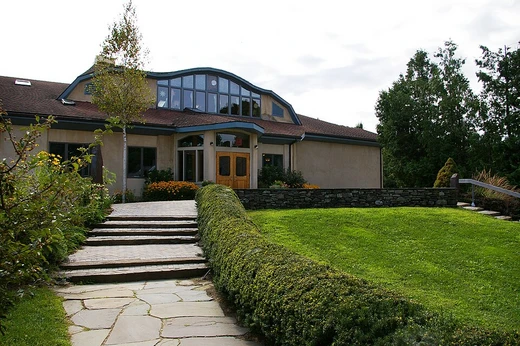
Sudbury school
Students govern themselves and direct their own education.
A Sudbury school is a K-12 educational institution where students assume complete responsibility for their own learning and the school is governed by direct democracy, with students and staff as equal citizens. There is no set curriculum, syllabus, or standardized instruction; learning arises as a byproduct of ordinary experience. This model is a form of democratic education and qualifies as a democratic school.
Quick Facts
- Type
- Democratic school
- Age range
- K-12
- Governance
- Direct democracy (weekly school meeting)
- Founding institution
- Sudbury Valley School
- Year founded
- 1968
- Location
- Framingham, Massachusetts, near Sudbury, Massachusetts
Facts from the source article.
Did You Know?
- Though there is no formal or regulated definition of a Sudbury Model school, more than 60 schools worldwide identify themselves with Sudbury, and some include 'Sudbury' in their name.
- Sudbury schools operate as independent entities and are not formally associated in any way.
Underlying beliefs
Sudbury schools rest on the educational conviction that children naturally excel at acquiring behaviors like creativity, imagination, alertness, curiosity, thoughtfulness, responsibility, and judgement without direct instruction; what they lack is experience, which adults can help them gain through open guidance. The sociopolitical premise holds that experiencing full democratic rights in childhood best prepares one for adult life in a democracy. The fundamental premises are that people are curious by nature, that learning is most efficient when self-initiated, that all people are creative if allowed to develop their unique talents, that age-mixing promotes growth, and that freedom is essential for personal responsibility.
School democracy
At a Sudbury school, the weekly school meeting, based on the New England town meeting model, controls everything. This meeting creates, changes, or removes school rules, handles the budget, and decides on staff hiring and firing. Every person there, whether student or staff, gets one equal vote, with most decisions settled by a simple majority. School rules are kept in a law book that serves as the school's legal code. To handle complaints, the process usually includes an investigation, a hearing, a trial, a sentence, and a chance to appeal, reflecting the idea that students must deal with the results of their own actions.
Learning
Learning is regarded as a natural byproduct of all human activity, self-initiated and self-motivated. The model holds that there are many ways to learn and that learning is something a person does, not something done to them; the presence of a teacher is not necessary. Free exchange of ideas and conversation among mixed-age students provides broad exposure to potentially relevant areas. Older and younger students learn from each other, and older students serve as role models.
Play is pervasive, leading first-time visitors to observe that students appear to be in perpetual recess. Students are given full responsibility for their own education: the only person designing what a student learns is the student, except when a student requests a class or arranges an apprenticeship. No tests, evaluations, or transcripts are used, and students are not compared or ranked. Reading is treated like any other subject; students learn to read when they choose or simply through daily life.
Only a few seek help when deciding to learn, and each child uses their own method—from being read to, to memorizing stories, to reading cereal boxes, game instructions, or street signs. The Sudbury Valley School claims all its students have learned to read, at widely varying ages, with no apparent drawback to later reading.
Comparison with related models
The Sudbury model de-emphasizes classes: there is no curriculum or set of required courses, and learner interest guides study; there are generally no classrooms, only rooms where people choose to gather. Age mixing is free and unrestricted, emphasized as a powerful tool for learning and development. Unlike most other schools, parents have limited or no involvement in school administration; the democratic school meeting, composed exclusively of students and staff, is the sole authority on hiring and firing staff.
More in Education & Schools
Spotted an error? Know more?
Reader corrections go straight into our review queue. Suggest an edit · How this site is sourced