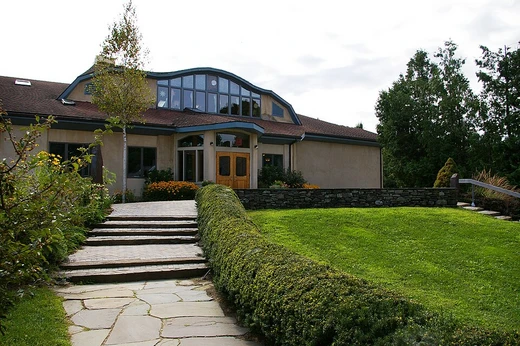
Gurukula
Ancient Indian residential schooling system centered on the guru.
A gurukula (गुरुकुलम्) is a traditional Indian religious education system where students, called shishyas, reside near or with their guru. This close daily contact between teacher and pupil forms the core of learning and personal growth.
Quick Facts
- Field
- Traditional religious education
- Region
- India
Facts from the source article.
Did You Know?
- The word gurukulam is a classical Sanskrit tatpuruṣa compound of guru (teacher) and kula (family or house).
- At the Jain Culture Center of Antwerp, children aged 8 to 16 study Vedic mathematics, art, music, Vedic astrology, Jyotishi, Sanskrit, and yoga in a gurukul during school holidays.
History
The gurukula system has existed since ancient times, with the Upanishads (1000–800 BCE) mentioning several gurukulas, including that of guru Drona at Gurgaon. The Bhrigu Valli discourse on the Brahman is said to have taken place in Guru Varuni's gurukula. Vedic thought prescribes the Upanayana sacred rite of passage for all individuals before age 8, or at least by 12, after which they are to remain unmarried celibate students until age 25. Gurukulas were supported by public donations and are considered among the earliest forms of public school centres.
Dharampal's historical research, based on early British administrators' reports, documented widespread indigenous educational institutions in the Bombay, Bengal, and Madras Presidencies and the Punjab, with daily attendance by about 30% of children aged 6–15. By the colonial era the system was in steep decline. Dayananda Saraswati and Swami Shraddhanand founded the Dayanand Anglo-Vedic Public Schools and Universities in 1886, pioneering the modern gurukula.
In 1948 Shastriji Maharaj Shree Dharamjivan das Swami initiated the first Swaminarayan gurukul in Rajkot, Gujarat. Recently, several gurukulam have opened in India and overseas, and some gurus and Vedantic scholars now operate E-gurukul online.
Education
Students learn from the guru and assist in his daily life, including household chores, which some scholars consider essential for inculcating self-discipline. Typically no fees are accepted, as the guru–shishya relationship is considered sacred. At the end of their education, students offer guru dakshina—a gesture of respect that may be monetary or a special task—before leaving. Students live away from home for months to years, learning self-discipline, politeness, humanism, and spirituality.
Scholarly works on Gurukul
Dharampal authored The beautiful tree: Indigenous Indian education in the eighteenth century. Prof. Marmar Mukhopadhayay compiled Total Quality Management in Education, drawing insights from ancient education, and devised the concept of Multi-Channel Learning based on Gurukul Pedagogy. Ankur Joshi authored research papers including Elementary education in Bharat (that is India): insights from a postcolonial ethnographic study of a Gurukul, A post-colonial perspective towards education in Bharat, and Delivering holistic education for contemporary times: Banasthali Vidyapith and the Gurukula system.
More in Education & Schools
Spotted an error? Know more?
Reader corrections go straight into our review queue. Suggest an edit · How this site is sourced