New York University
A private research university in New York City, founded in 1832 by Albert Gallatin.
Last updated

via Wikipedia: State University of New York · see source
New York University, known as NYU, is a private research institution located in New York City. It was chartered by the New York State Legislature in 1831 and opened its doors the following year, founded by Albert Gallatin as a secular, all-male school near City Hall. By 1833, the university had relocated, and its main campus has since remained in Greenwich Village, centered around Washington Square Park. Over time, NYU expanded to include an engineering school in Brooklyn’s MetroTech Center and various graduate schools across Manhattan.
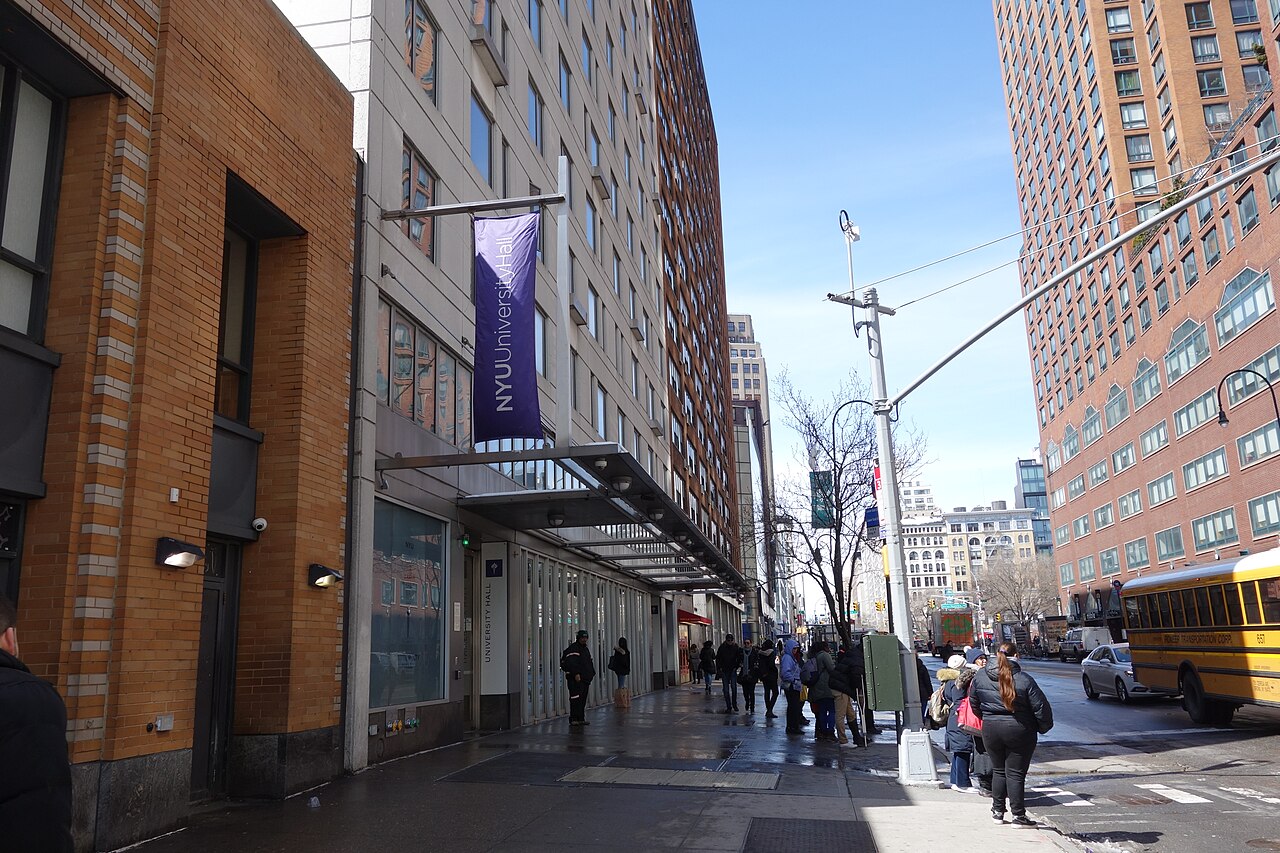
With 51,848 students enrolled in 2021, NYU ranks among the largest private universities in the U.S. by enrollment. It is also one of the most frequently applied-to schools in the country, with a selective admissions process.
The university’s main New York City campus houses undergraduate schools dedicated to arts and science, individualized study, education, business, engineering, and the arts. Its graduate offerings span medicine, law, public service, professional studies, social work, and nursing. Internal academic centers include the Courant Institute of Mathematical Sciences, Center for Data Science, Center for Neural Science, Clive Davis Institute, Institute for the Study of the Ancient World, Institute of Fine Arts, and the NYU Langone Health System.
NYU operates as a global university system, with degree-granting portal campuses at NYU Abu Dhabi in the United Arab Emirates and NYU Shanghai in China, as well as academic learning centers in Accra, Berlin, Buenos Aires, Florence, London, Los Angeles, Madrid, Paris, Prague, Sydney, Tel Aviv, Tulsa, and Washington, D.C. Among its past and present faculty and alumni are 39 Nobel laureates, 8 Turing Award winners, 5 Fields Medalists, 31 MacArthur Fellows, 26 Pulitzer Prize winners, 3 heads of state, 5 U.S. governors, 12 U.S. senators, and 58 members of the U.S. House of Representatives.
Lore & Background
Albert Gallatin, secretary of the treasury under Thomas Jefferson and James Madison, declared his intention to establish 'in this immense and fast-growing city ... a system of rational and practical education fitting and graciously opened to all.' A three-day-long 'literary and scientific convention' held in City Hall in 1830 and attended by over 100 delegates debated the terms of a plan for a new university. These New Yorkers believed the city needed a university designed for young men who would be admitted based upon merit rather than birthright or social class. On April 18, 1831, the institution that would become NYU was established with the support of a group of prominent New York City residents from the city's merchants, bankers, and traders. Albert Gallatin was elected as its first president.
On April 21, 1831, the new institution received its charter and was incorporated as the University of the City of New York by the New York State Legislature; older documents often refer to it by that name. The university has been popularly known as New York University since its inception and was officially renamed New York University in 1896. In 1832, NYU held its first classes in rented rooms of four-story Clinton Hall, situated near City Hall. In 1835, the School of Law, NYU's first professional school, was established.
Although the impetus to found a new school was partly a reaction by evangelical Presbyterians to what they perceived as the Episcopalianism of Columbia College, NYU was created non-denominational, unlike many American colleges at the time. The American Chemical Society was founded in 1876 at NYU. Soon after its founding, it became one of the nation's largest universities, with an enrollment of 9,300 in 1917. The university purchased a campus at University Heights in the Bronx because of overcrowding on the old campus.
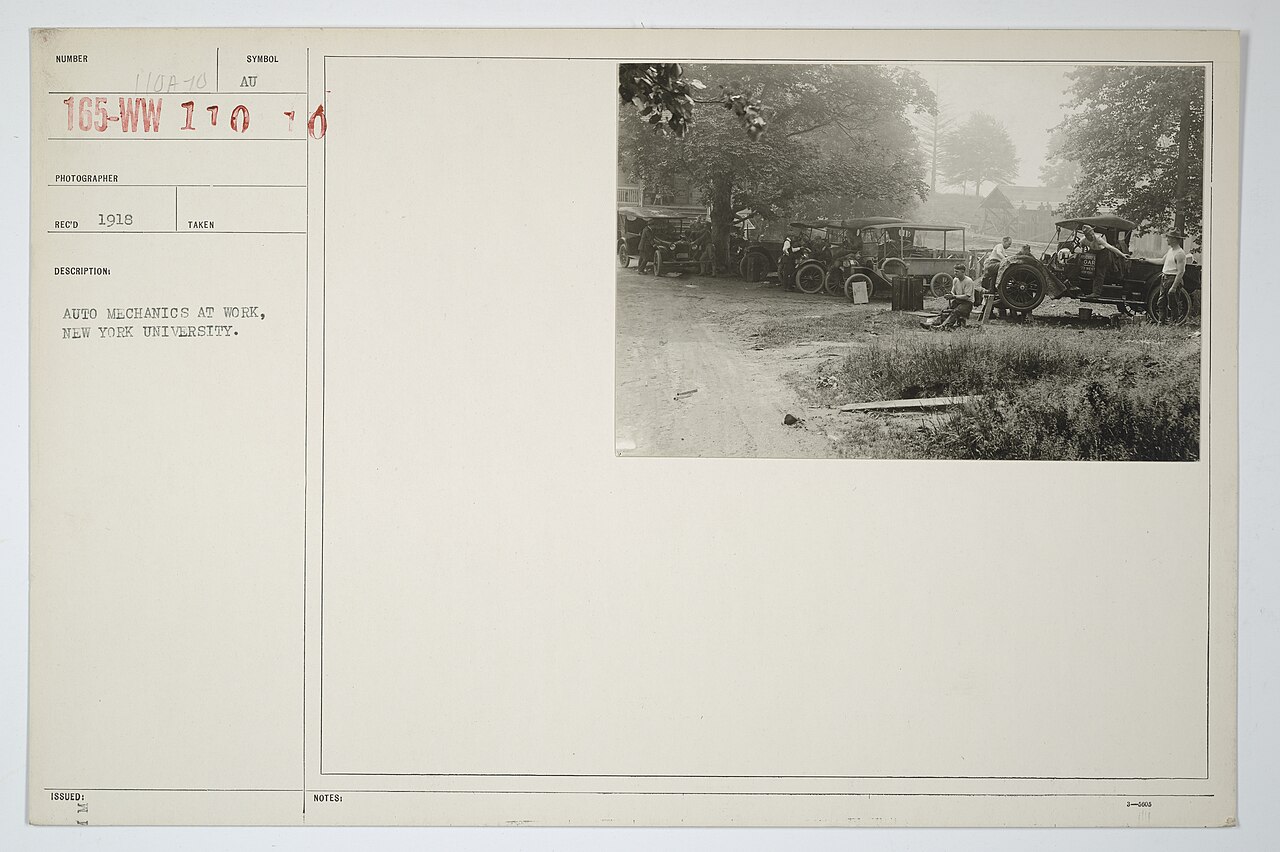
NYU also had a desire to follow New York City's development further uptown. NYU's move to the Bronx occurred in 1894, spearheaded by the efforts of Chancellor Henry Mitchell MacCracken. The University Heights campus was far more spacious than its predecessor was. As a result, most of the university's operations, along with the undergraduate College of Arts and Science and School of Engineering, were housed there.
Legislative Birth and the Case for Public Access
The State University of New York did not emerge from a single moment of inspiration but from a deliberate institutional reckoning. Between 1946 and 1948, a temporary commission led by Owen D. Young—then chairman of General Electric—examined the landscape of higher education in the state.
Their findings were pointed: New York's private institutions of higher education were highly discriminatory and failed to provide for many New Yorkers. The commission's recommendation became law in 1948, when Governor Thomas E. Dewey signed legislation creating SUNY on the foundation of the teacher-training schools established in the 19th century. Many of those predecessor institutions had long since evolved beyond their original mission, offering curricula similar to those found at four-year liberal arts schools, and had even become known as "Colleges for Teachers" rather than "Teachers' Colleges." New York was, by its own admission, one of the last states in the nation to formalize a public university system, yet the decision to act in 1948 set the stage for everything that followed.
The Rockefeller Expansion and Flagship Identity
SUNY's transformation from a modest collection of teacher-training schools into a sprawling statewide network was driven largely by two figures: Chancellor Samuel B. Gould and Governor Nelson A. Rockefeller. Rockefeller took a personal, hands-on interest in the architectural design and physical construction of new facilities across the state, treating the system's growth as a matter of personal conviction rather than mere policy.
His most consequential institutional move was championing the acquisition of the private University of Buffalo into the SUNY system, rebranding it as the public State University of New York at Buffalo. Today, that institution stands alongside Stony Brook University on Long Island as one of SUNY's two flagship universities, with Binghamton University and the University at Albany serving as additional research university centers. The system's physical footprint is enormous—25,000 acres of land, with the SUNY College of Environmental Science and Forestry occupying the largest single campus, situated next to Upstate Medical University, which employs over 10,959 people and is the system's largest single employer.
Governance, Scale, and the Cornell Connection
SUNY is governed by the State University of New York Board of Trustees, which consists of eighteen members, fifteen of whom are appointed by the Governor, with consent of the New York State Senate. The sixteenth member is the president of The State University of New York Student Assembly. The last two members are the presidents of the University Faculty Senate and Faculty Council of Community Colleges, both of whom are non-voting. The board of trustees appoints the chancellor who serves as SUNY Chief Executive Officer.
Students arrive not only from within New York but from 171 foreign countries, though out-of-state and international students pay higher tuition. Perhaps most uniquely, SUNY maintains four contracted colleges operating concurrently within Cornell University—Agriculture and Life Sciences, Veterinary Medicine, Human Ecology, and Industrial and Labor Relations. Graduates of those four schools hold alumni standing at both institutions, a dual affiliation that blurs the line between the state system and one of the Ivy League's most prominent private universities.
Defining Moments and a Legacy of Inclusion
SUNY's history is punctuated by decisions that reflected the state's evolving values. On October 8, 1953, the system banned all national fraternities and sororities across its thirty-three campuses, a prohibition that endured until 1977. The stated purpose was to combat racial and religious discrimination embedded in many national organizations' bylaws. Several groups challenged the ban in court, arguing it unfairly swept in organizations without discriminatory clauses, but the resolution was upheld as within the state's authority to govern its educational institutions.
In 1986, L. Eudora Pettigrew became the first African-American to serve as a SUNY college president when she was named to lead Old Westbury. The system's roots stretch back even further: SUNY Potsdam traces its origins to 1816 as the St. Lawrence Academy, making it the oldest college within the system. Cornell's State College of Forestry, operated between 1889 and 1903 before a gubernatorial veto ended its funding, eventually found a permanent home in Syracuse, where it continues as the College of Environmental Science and Forestry.
Reader's Guide
NYU is one of the largest private universities in the United States by enrollment, with a total of 51,848 enrolled students in 2021. It is one of the most applied-to schools in the country and admissions are considered selective. NYU's main campus in New York City is organized into undergraduate schools in the fields of arts and science, individualized study, education, business, engineering, and the arts.
NYU's graduate schools cover the fields of medicine, law, public service, professional studies, social work, and nursing. The university's internal academic centers include the Courant Institute of Mathematical Sciences, Center for Data Science, Center for Neural Science, Clive Davis Institute, Institute for the Study of the Ancient World, Institute of Fine Arts, and the NYU Langone Health System. NYU is a global university system with degree-granting portal campuses at NYU Abu Dhabi in the United Arab Emirates and NYU Shanghai in China, and academic learning centers in Accra, Berlin, Buenos Aires, Florence, London, Los Angeles, Madrid, Paris, Prague, Sydney, Tel Aviv, Tulsa, and Washington, D.C.
Did You Know?
- The university logo, the upheld torch, is derived from the Statue of Liberty, signifying NYU's service to New York City.
- From 2007 to 2018, NYU experienced a 114% increase in applications to its university system, increasing from around 35,000 applicants to more than 120,000 in 2024 and 2025.
Frequently Asked Questions
What is New York University's origin story?
NYU traces its founding to 1831, when Albert Gallatin secured a state charter to create a secular, non-sectarian school in lower Manhattan. It began as an all-male institution focused on practical, non-religious education near the seat of city government.
What are New York University's defining traits?
NYU is private, research-oriented, and non-denominational, with a founding mission rooted in secular education. Its global reach—spanning New York City, Abu Dhabi, and Shanghai—sets it apart from most domestic-only institutions.
More in Education & Schools
Related in Education & Schools
Links follow this subject's own source article.
Sources
Compiled from Wikipedia and the sources listed below. Text from Wikipedia is available under CC BY-SA 4.0; this entry is adapted from it.
- Wikipedia: New York University (CC BY-SA 4.0).
Spotted an error? Know more?
Reader corrections go straight into our review queue. Suggest an edit · How this site is sourced