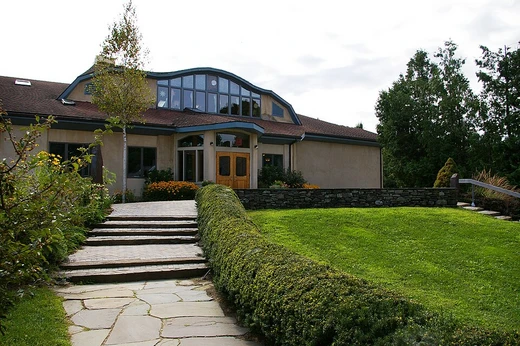
Separate school
Last updated
A separate school in Canada is a publicly funded school with a religious component, operating under constitutional status in Ontario, Alberta, and Saskatchewan, and statutory status in the Northwest Territories, Yukon, and Nunavut. It is run by a separate school board elected by the minority faith community, and no church holds a constitutional or proprietary interest in the school. The mandate is to provide education reflecting Roman Catholic (or rarely Protestant) theology, within limits set by the Constitution Act, 1867 and the Canadian Charter of Rights and Freedoms.
Quick Facts
- Jurisdictions
- Ontario
- Alberta
- Saskatchewan
- Northwest Territories
- Yukon
- Nunavut
- Constitutional basis
- Section 93 of the Constitution Act, 1867 (provinces); federal statutes (territories)
- Faiths eligible
- Roman Catholic or Protestant minority only
- Key legal case
- Adler v. Ontario
Facts from the source article.
History
The separate school issue originated in the Province of Canada before Confederation, rooted in the British conquest of New France in 1759–1760. The territory acquired included French Catholic settlements along the St. Lawrence and lower Great Lakes. The Constitutional Act of 1791 divided the territory into Lower Canada (largely francophone Catholic) and Upper Canada (largely anglophone Protestant with a Catholic minority).
The Act of Union of 1840 reunited them into the Province of Canada, though laws often applied separately to each area. Schools were initially parochial, controlled by churches. Methodist minister Egerton Ryerson, as Chief Superintendent of Education for Upper Canada from 1844, championed common schools but conceded to minority-faith schools within the public system, partly because Protestants in Lower Canada had already secured separate schools.
Provinces and territories with separate schools
Ontario's separate school provision is s. 93(1) of the Constitution Act, 1867 as originally enacted; for Alberta and Saskatchewan, it is s. 93(1) as amended by the Alberta Act and Saskatchewan Act. The Supreme Court of Canada in Adler v.
Ontario held that the provincial education power under s. 93 is plenary and not subject to Charter attack, being a historical compromise crucial to Confederation. Ontario's funded school boards include 29 English Catholic, 8 French Catholic, and 35 non-denominational public boards, plus one Protestant separate school, the Burkevale Protestant Separate School.
The public system was historically Protestant but became secular; prayer in public schools was banned in the late 1980s by the Ontario Court of Appeal. Funding for Roman Catholic separate schools originally covered up to Grade 10; in 1984, Premier William Davis extended full funding to Grades 11–13, with the first funded year in 1985–86. The right to publicly funded separate schools remains guaranteed to Roman Catholics in Ontario. The issue of extending funding to other religious schools was raised by the Progressive Conservative Party in the 2007 election but not pursued after their loss.
Provincial abolition of separate schools
In Manitoba, public support for separate schools ended in 1890 with an amendment to the Public Schools Act, sparking the Manitoba Schools Question. The 1896 Laurier–Greenway Compromise allowed religious instruction in public schools for 30 minutes at day's end under conditions, without reversing the 1890 law; Pope Leo XIII's encyclical Affari vos encouraged acceptance. Quebec's education system, originally separated into Protestant and Catholic school boards, was replaced by a linguistically based secular system after a constitutional amendment in 1997.
Newfoundland and Labrador had a confessional school system until 1997, with separate schools for Roman Catholics, Seventh-day Adventists, Salvationists, Pentecostals, and an integrated Protestant stream, all receiving provincial grants. A 1997 referendum led to the Constitution Amendment, 1998 (Newfoundland Act), eliminating the constitutional obligation, after which the province established a single non-denominational public system.
More in Education & Schools
Sources
Compiled from Wikipedia and the sources listed below. Text from Wikipedia is available under CC BY-SA 4.0; this entry is adapted from it.
- Wikipedia: Separate school (CC BY-SA 4.0).
Spotted an error? Know more?
Reader corrections go straight into our review queue. Suggest an edit · How this site is sourced