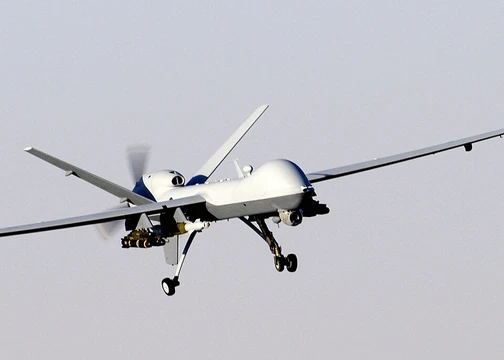
Convention on International Civil Aviation
Foundational treaty establishing ICAO and international air law.

The Convention on International Civil Aviation, commonly known as the Chicago Convention, is a multilateral treaty that established the International Civil Aviation Organization (ICAO), a specialized agency of the United Nations. It sets out the fundamental rules governing international air travel, including airspace sovereignty, aircraft registration, safety, security, and sustainability, and details the rights of signatory states.
Quick Facts
- Long Name
- Convention on International Civil Aviation
- Date Signed
- 7 December 1944
- Location Signed
- Chicago, Illinois, United States
- Date Effective
- 4 April 1947
- Condition Effective
- 26 ratifications
- Parties
- 193 / (Cook Islands and all United Nations members except Liechtenstein)
- Depositor
- Government of the United States of America
- Languages
- English, French, Russian and Spanish
Facts from the source article.
Lore & Background
The Chicago Convention was signed on December 7, 1944, in Chicago by 52 signatory states. It received the requisite 26th ratification on March 5, 1947, and went into effect on April 4, 1947, the same date that ICAO came into being. In October of the same year, ICAO became a specialized agency of the United Nations Economic and Social Council (ECOSOC). The convention has since been revised eight times, in 1959, 1963, 1969, 1975, 1980, 1997, 2000, and 2006.
The convention had 193 state parties, which includes all member states of the UN except Liechtenstein. The Cook Islands is a party to the Convention although it is not a member of the UN. The convention has been extended to cover Liechtenstein by the ratification of Switzerland. Key articles include Article 1, which grants every state complete and exclusive sovereignty over the airspace above its territory, and Article 3 bis, which requires states to refrain from using weapons against civil aircraft in flight. Article 24 stipulates that kerosene already on board an aircraft flying between contracting states may not be taxed by the state where the aircraft lands or through whose airspace it flies, though no tax regulation exists for refueling before departure.
Reader's Guide
The Chicago Convention is the cornerstone of international civil aviation, providing the legal framework under which nearly all global air travel operates. Its significance lies in establishing ICAO as the UN specialized agency that coordinates international air travel and sets standards and recommended practices (SARPs) through 19 annexes. These annexes cover personnel licensing, rules of the air, airworthiness, environmental protection, security, and safety management, among other areas. The convention's principles, such as state sovereignty over airspace and the recognition of certificates and licenses among contracting states, enable seamless international flights. Its legacy includes the prohibition of taxation on fuel already on board during international flights, though this does not extend to domestic flights or refueling before departure. The convention's provisions on scheduled air services require special permission for operations over or into a state's territory, while non-scheduled services have broader rights. The convention's annexes are regularly amended by ICAO to address evolving aviation challenges, including unmanned free balloons and environmental measures like CORSIA.
Did You Know?
- The Chicago Convention was signed by 52 states on December 7, 1944, and entered into force on April 4, 1947.
- The convention has 193 state parties, including all UN member states except Liechtenstein, which is covered by Switzerland's ratification.
- Article 24 exempts kerosene already on board an aircraft from taxation when flying between contracting states, but does not regulate taxes on refueling before departure.
Frequently Asked Questions
What is the Convention on International Civil Aviation?
Also called the Chicago Convention, it is a 1944 multilateral treaty that created the International Civil Aviation Organization (ICAO) and laid down the core legal rules governing international air travel.
When and where was the Convention on International Civil Aviation signed?
Fifty-two nations put their signatures to it in Chicago on December 7, 1944, and it officially entered into force on April 4, 1947.
What does the Convention on International Civil Aviation actually govern?
It sets out the foundational principles for international aviation—airspace sovereignty, aircraft registration, safety, security, and sustainability—and established ICAO as the UN specialized agency responsible for maintaining those standards.
Why does the Convention on International Civil Aviation matter for drone enthusiasts?
Because it is the bedrock treaty of international air law, any cross-border drone operation ultimately has to respect the sovereignty and registration rules it enshrines for all aircraft.
How widely adopted is the Convention on International Civil Aviation?
Ninety-three states are currently parties to the treaty, and it has been revised eight times since its original 1944 text, making it one of the most broadly ratified agreements in the world.
More in Drone Regulation 1-24
Spotted an error? Know more?
Reader corrections go straight into our review queue. Suggest an edit · How this site is sourced