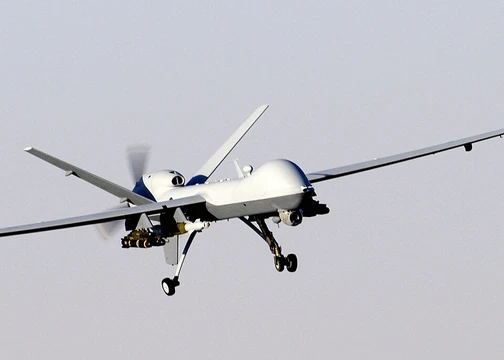
Air sovereignty
A nation's exclusive control over its territorial airspace.

Air sovereignty refers to a country's exclusive right to control the airspace above its territory and territorial waters. This principle is fundamental to national security and international aviation law, as it grants a state the authority to regulate all flight activity within its sovereign airspace and to defend it against unauthorized intrusions.
- Sovereign airspace limit
- 12 nautical miles from coast
- Vertical boundary dispute
- No international agreement; most countries use the Kármán Line at 100 km (62 mi)
- Icao establishment
- 4 April 1947 via the Chicago Convention
- Airspace classes
- 7 classes (A–G), adopted by ICAO on 12 March 1990
- Us private air rights limit
- 300 feet above highest terrain (including buildings), per United States v. Causby (1946)
Lore & Background
Sovereign airspace is defined by international law as the airspace above a country's land and territorial waters, extending up to 12 nautical miles from its coast. Beyond that limit, airspace is considered international. The International Civil Aviation Organization (ICAO), established on 4 April 1947 through the Chicago Convention, coordinates the allocation and management of airspace globally, dividing it into Flight Information Regions (FIRs) for which individual countries are responsible. There is no international agreement on the vertical extent of sovereign airspace, though most countries use the Kármán Line (100 km or 62 mi) as the legal boundary between airspace and outer space; however, descending Space Shuttles have flown below 80 km over other nations without requesting permission.
Countries defend their sovereign airspace through measures such as air policing. NATO conducts air policing missions to protect European airspace, maintaining fighter aircraft on 24/7 quick reaction alert (QRA). In the United States, this mission is called Aerospace Control Alert, primarily carried out by the Air National Guard using F-15 and F-16 jets. Some NATO states without QRA capability, such as those in the Baltic and Icelandic areas, rely on other NATO countries to provide aircraft for airspace defense.
Air defense identification zones (ADIZ) extend beyond sovereign airspace, allowing a country to identify and control aircraft for national security. In 2013, China established an ADIZ in the East China Sea, which drew criticism as it overlapped existing zones and imposed requirements on both civilian and military aircraft.
Reader's Guide
Air sovereignty is a cornerstone of modern statehood and international aviation. It establishes that a country has exclusive regulatory and enforcement authority over the airspace above its land and territorial waters, up to 12 nautical miles from its coast. This principle enables nations to protect their borders, manage air traffic, and ensure safety within their Flight Information Regions (FIRs) as coordinated by ICAO. The lack of a universally agreed vertical boundary between airspace and outer space remains a legal and technical challenge, with most states informally adopting the Kármán Line at 100 km. The concept of sovereign airspace directly shapes national defense policies, as seen in NATO's air policing missions and the United States' Aerospace Control Alert program, which maintain constant readiness to intercept unauthorized aircraft. Air defense identification zones (ADIZ) further extend a country's reach beyond its sovereign airspace for security purposes, as demonstrated by China's 2013 East China Sea ADIZ. The balance between sovereign control and international cooperation, particularly through ICAO's framework, continues to define how nations manage and protect their airspace in an era of increasing drone and commercial air traffic.
Did You Know?
- Sovereign airspace extends 12 nautical miles from a country's coast; beyond that is international airspace.
- The United States Supreme Court case United States v. Causby (1946) ruled that private property rights end 300 feet above the highest terrain.
- NATO maintains 24/7 quick reaction alert fighter aircraft to protect sovereign European airspace.
Frequently Asked Questions
What is Air sovereignty in drone regulation?
Air sovereignty is the principle that a nation holds exclusive legal authority over the airspace directly above its land and territorial waters. It grants that state the power to regulate every aircraft—including drones—operating within its borders and to repel unauthorized intrusions.
How far up does Air sovereignty extend?
No single international treaty sets a fixed ceiling for sovereign airspace. Most countries treat the Kármán Line at roughly 100 km (about 62 mi) as the practical upper boundary, though this remains a matter of national interpretation rather than universal agreement.
What airspace classes fall under Air sovereignty?
ICAO divides sovereign airspace into seven classes, labeled A through G, a framework adopted on 12 March 1990. Each class carries distinct rules for visibility, communication, and authorization that directly shape how drones may be flown.
When was the legal foundation for Air sovereignty created?
The modern framework traces back to the Chicago Convention, which established ICAO on 4 April 1947. That treaty codified the idea that every state possesses full and exclusive sovereignty over the airspace above its territory.
How does Air sovereignty limit private drone operations in the US?
Under the 1946 United States v. Causby ruling, a property owner's private air rights are generally capped at about 300 feet above the highest terrain or structure. Drone pilots must therefore respect both sovereign airspace rules and these lower private-use thresholds when flying near buildings or elevated ground.
More in Drone Regulation 1-24
Spotted an error? Know more?
Reader corrections go straight into our review queue. Suggest an edit · How this site is sourced