Aviation law
Aviation law governs flight, air travel, and international air commerce.

Aviation law governs flight, air travel, and the related legal and business issues. It shares some concerns with admiralty law and is often treated as international law because air travel crosses borders. The business side of airlines and their regulation also falls under this field. Internationally, the International Civil Aviation Organization (ICAO), a specialized UN agency, sets general rules and mediates disputes.
In the United States and most European nations, aviation law is handled at the federal or state level. In the U.S., states generally cannot directly regulate aviation; they rely on federal laws and case law. For instance, in 2008, the Second Circuit Court of Appeals struck down New York’s Passenger Bill of Rights law, ruling that aviation regulation is traditionally federal. Unlike admiralty law, aviation law lacks a specific constitutional grant of federal jurisdiction. Still, states and municipalities have indirect control, such as zoning laws that keep airports away from residential areas or restrictions on airport operating hours. State product-liability laws are not preempted by federal law, so aviation manufacturers can often be held strictly liable for defects. Space law, governing matters beyond Earth’s atmosphere, is newer, beginning with the Outer Space Treaty in 1967.
Historically, Roman and other ancient legal systems gave landowners all rights to the airspace above their property. The first law specific to aircraft was a 1784 Paris ordinance, a year after the Montgolfier brothers’ first hot air balloon flight. Several 19th-century court cases in common law jurisdictions involved balloonists.
In public international law, balloons saw use in the 1870–71 Franco-German War. The 1899 First Hague Conference imposed a five-year moratorium on combat balloon use, which the 1907 Second Hague Conference did not renew. Before World War I, some nations signed bilateral agreements on international flights; during the war, many banned flights over their territory. After the war, competing multilateral treaties emerged, including the 1919 Paris Convention, the 1926 Ibero-American Convention, and the 1928 Havana Convention. The International Air Transport Association (IATA) was founded in 1919 at a Hague conference to foster airline cooperation.
- First aircraft specific law
- 1784, Paris
- First hot air balloon flight
- 1783, Montgolfier brothers
- Founding of iata
- 1919
- Warsaw convention
- 1929
- Chicago convention
- 1944
- Tokyo convention
- 1963
- Montreal convention
- 1999
Lore & Background
Roman law and other ancient land systems generally granted all rights in airspace to the owner of the underlying land. The first law specifically applicable to aircraft was a local ordinance enacted in Paris in 1784, one year after the first hot air balloon flight by the Montgolfier brothers. Several court cases involving balloonists were tried in common law jurisdictions during the 19th century. Balloons were used in the Franco-German War of 1870–71, and the First Hague Conference of 1899 set a five-year moratorium on the use of balloons in combat operations, which was not renewed by the Second Hague Conference (1907). Prior to World War I, several nations signed bilateral agreements regarding the legal status of international flights, and during the war, several nations took the step of prohibiting flights over their territory. Several competing multilateral treaty regimes were established in the wake of the war, including the Paris Convention of 1919, Ibero-American Convention (1926) and the Havana Convention (1928). The International Air Transport Association (IATA) was founded in 1919 in a conference at The Hague, to foster cooperation between airlines in various commercial and legal areas. The lack of uniformity in international air law, particularly with regard to the liability of international airlines, led to the Warsaw Convention of 1929. The Chicago Convention on International Civil Aviation was signed in 1944, during World War II. It provided for the establishment of the International Civil Aviation Organization as a unit of the United Nations devoted to overseeing civil aviation. The Tokyo Convention of 1963 enacted new international standards for the treatment of criminal offenses on or involving aircraft. The Montreal Convention of 1999 updated the carrier liability provisions of the Warsaw Convention, while the Cape Town Treaty of 2001 created an international regime for the registration of security interests in aircraft and certain other large movable assets.
Reader's Guide
Aviation law is notable for its dual nature: it operates both as a matter of international law, through bodies like the International Civil Aviation Organization (ICAO), and as a federal or state-level concern in countries such as the United States and most European nations. In the U.S., states cannot govern aviation matters directly in most cases, as illustrated by the 2008 Second Circuit decision striking down New York's Passenger Bill of Rights law because regulation of aviation is traditionally a federal concern. However, aviation law is not held under the same federal mandate of jurisdiction as admiralty law; the U.S. Constitution provides for the administration of admiralty but not for aviation law. States and municipalities retain some indirect regulation, such as zoning laws that can require airports to be located away from residential areas and restrictions on airport usage to certain times of day. State product-liability laws are not pre-empted by federal law, and in most cases, aviation manufacturers may be held strictly liable for defects in aviation products. The development of national regulations varied: the United Kingdom enacted the Air Navigation Act 1920; the Russian Soviet Federative Socialist Republic declared sovereignty over its airspace in 1921 and formed Aeroflot in 1932; the United States established the Federal Aviation Agency in 1958, which became the FAA in 1967, and the Airline Deregulation Act of 1978 greatly increased the FAA's regulatory workload; Japan enacted its civil aviation regime in 1952 and later deregulated its market in the 1980s and 1990s.
Did You Know?
- The International Civil Aviation Organization (ICAO) is a specialized agency of the United Nations established by the Chicago Convention of 1944.
- The Warsaw Convention of 1929 was created to address the lack of uniformity in international air law regarding airline liability.
- In the United States, the Airline Deregulation Act of 1978 allowed new operators to apply for operating certificates, increasing the FAA's regulatory workload.
Frequently Asked Questions
What is aviation law in simple terms?
Aviation law is the collection of legal rules that govern how aircraft fly, how air travel works, and how the commercial aviation industry operates. It overlaps with admiralty law and is frequently treated as a branch of international law because flights routinely cross national borders.
What exactly does aviation law regulate?
It covers flight operations, air traffic rules, airline business practices, and cross-border disputes. In the United States and most European nations, this authority is concentrated at the federal or state level, meaning individual cities or counties generally cannot impose their own aviation rules.
How did aviation law originate?
The first known aircraft-specific law appeared in Paris in 1784, just a year after the Montgolfier brothers completed their pioneering hot-air balloon flight in 1783. The field then matured through key treaties such as the 1929 Warsaw Convention, the 1944 Chicago Convention, and the 1963 Tokyo Convention.
Why should drone enthusiasts care about aviation law?
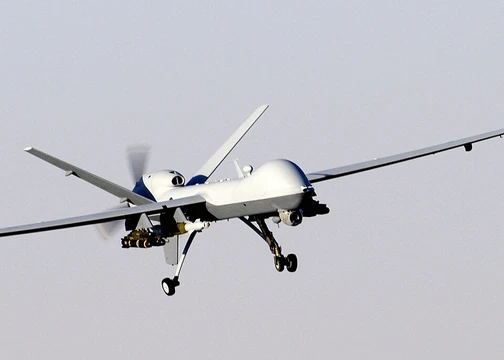
Drones share the same airspace as manned aircraft, so they are subject to the same broader aviation law framework that sets rules for all flight. Understanding these regulations is essential for anyone operating a drone legally, whether for hobby, photography, or commercial work.
Who sets the international rules for aviation?
The International Civil Aviation Organization (ICAO), a specialized UN agency, establishes general standards and mediates disputes between member states. It works in the broader ecosystem alongside industry bodies like IATA, which was founded in 1919 to coordinate airline operations.
More in Drone Regulation 1-24
Spotted an error? Know more?
Reader corrections go straight into our review queue. Suggest an edit · How this site is sourced