Caryl Churchill
British playwright known for dramatising abuses of power, non-naturalistic techniques, and feminist themes.
Last updated

Vervaardiger /Rechthebbende: Robert Scheers ; Licentie: CC BY 4.0 Creative Commo · CC BY 4.0
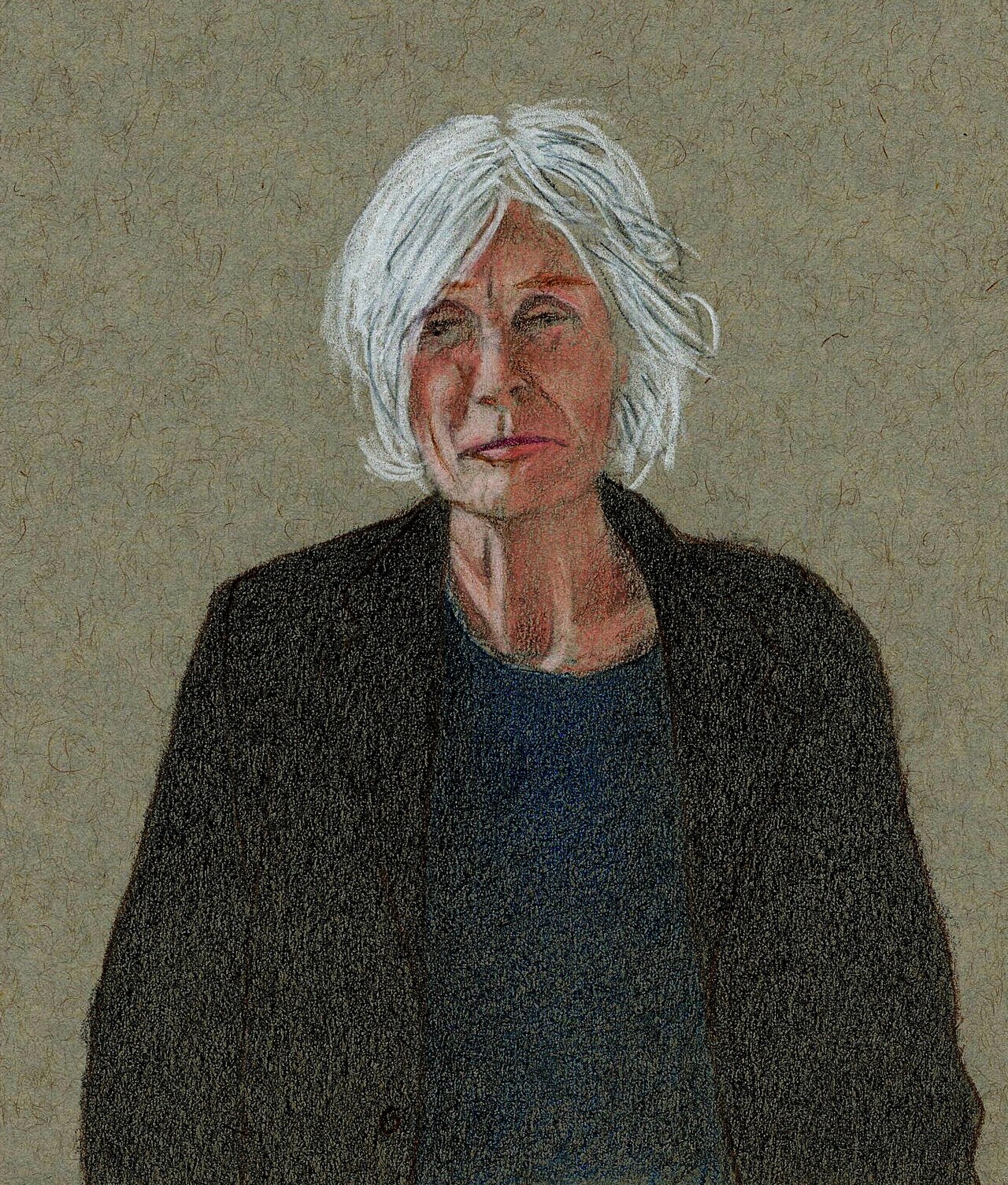
Caryl Lesley Churchill, born 3 September 1938 in Finsbury, London, is a British playwright whose work often examines abuses of power, employs non-naturalistic techniques, and tackles sexual politics and feminist themes. Her notable plays include Cloud 9 (1979), Top Girls (1982), Serious Money (1987), Blue Heart (1997), Far Away (2000), A Number (2002), and Love and Information (2012). Critics have called her "one of Britain's greatest poets and innovators for the contemporary stage." In a 2011 Village Voice poll of dramatists, six of the twenty respondents named Churchill the greatest living playwright.
Early life and education
Her father, Robert Churchill, was a political cartoonist, and her mother, Jan Brown, worked as a fashion model and actress. After World War II, when Churchill was ten, the family moved to Montreal, Canada, where she attended Trafalgar School for Girls. She returned to England in 1956 to study at Lady Margaret Hall, Oxford, graduating in 1960 with a BA in English Literature.
While at Oxford, she won the Richard Hillary Memorial Prize and began writing. Her earliest plays—Downstairs (produced 1958), You've No Need to be Frightened, Having a Wonderful Time (1960), and Easy Death (produced 1962)—were staged by student theatre groups. Downstairs took first prize at the 1958 National Student Drama Festival.
Career and artistry
During the 1960s and 1970s, while raising a family, Churchill wrote short radio dramas for BBC Radio, including The Ants (1962), Not, Not, Not, Not Enough Oxygen (1971), and Schreber's Nervous Illness (1972). She also created television plays for the BBC, such as The After-Dinner Joke (1978) and Crimes (1982). Some of these radio and TV works were later adapted for the stage.
Her early plays used modernist epic theatre techniques to explore gender and sexuality. By the mid-1980s, she began incorporating dance-theatre, starting with A Mouthful of Birds (1986), which references Antonin Artaud’s Theatre of Cruelty and surrealist traditions. The fragmented, surreal narratives in her work mark it as postmodernist.
Themes and plays
Her first professionally produced stage play, Owners (1972), is a two-act, fourteen-scene piece about an obsession with power. That same year it premiered in London. From 1974 to 1975, Churchill served as the Royal Court Theatre’s first female resident dramatist.
She collaborated with companies like Joint Stock and Monstrous Regiment, a feminist theatre collective, both of which used extended workshops to develop new plays. Churchill continues to use improvisational workshops for many of her works. During this period she also wrote Objections to Sex and Violence (1974).
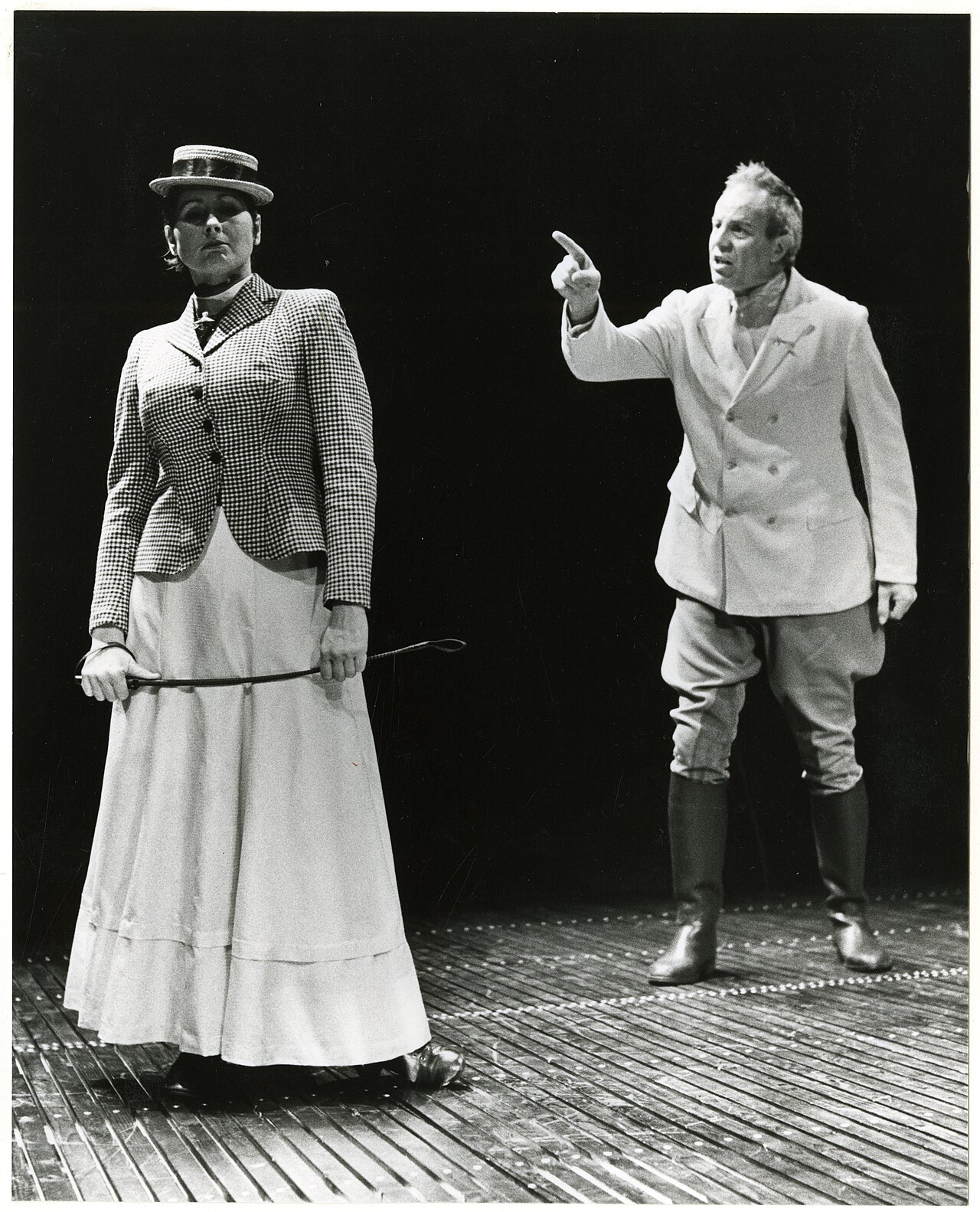
Cloud 9 (1979), her first widely noticed play, is a farce about sexual politics set partly in a Victorian-era British overseas colony. It examines how colonialist and imperialist mindsets affect intimate relationships, using cross-gender casting for comic and instructive effect. The play succeeded in Britain and the United States, winning an Obie Award for best play in New York in 1982.
Churchill gradually moved away from realist conventions, with feminist themes becoming a central guide. She won another Obie in 1983 for Top Girls, which deals with women losing their humanity to gain power in a male-dominated world. The all-female cast centers on Marlene, who sacrifices home and family for business success.
Half the play shows a celebratory dinner where Marlene mingles with historical, iconic, and fictional women who achieved great stature in a “man’s world” at great cost. The other half, set a year earlier, reveals the painful cost of Marlene’s success within her family. In Top Girls, Churchill used a forward dash (/) to indicate interruption and an asterisk (*) to show a speech following an earlier one.
Softcops, first produced by the Royal Shakespeare Company in 1984, is a surreal play set in 19th-century France about government efforts to depoliticize illegal acts. Justin Hayford of the Chicago Reader wrote that the play offers little to those familiar with Michel Foucault’s Discipline and Punish (on which it is based), calling it a “Cliffs Notes” version. In 2018, Michael Billington said Softcops “felt like a meditation on crime and punishment lacking Churchill’s usual gift of narrative drive.” A Mouthful of Birds (1986), co-written with David Lan, was described by Wallace Shawn as among Churchill’s “rich, inventive” works that keep theater exciting. Cameron Woodhead of The Sydney Morning Herald called it “a difficult pleasure to watch and a challenge to perform.” Billington, however, listed it as a misfire, dismissing it as “mystifying in its attempt to create a dance-drama suggesting that the violence and ecstasy of Euripides’ The Bacchae were alive in modern Britain.” Serious Money (1987) is a comedy about excesses in the financial world.
Lore & Background
Churchill was born on 3 September 1938 in Finsbury, London, the daughter of Jan Brown, a fashion model and actress, and Robert Churchill, a political cartoonist. After the Second World War, her family emigrated to Montreal, Canada, when she was ten years old. In Montreal, she attended Trafalgar School for Girls. She returned to England to attend university in 1956, and in 1960 graduated from Lady Margaret Hall, Oxford, with a BA degree in English Literature.
She received the Richard Hillary Memorial Prize at Oxford and began her writing career there. Her four earliest plays — Downstairs (produced 1958), You've No Need to be Frightened, Having a Wonderful Time (1960), and Easy Death (produced 1962) — were performed at Oxford by student theatre ensembles. Downstairs was performed at the National Student Drama Festival in 1958 and won first prize.
While raising a family in the 1960s and 1970s, Churchill began to write short radio dramas for BBC Radio, including The Ants (1962), Not, Not, Not, Not Enough Oxygen (1971), and Schreber's Nervous Illness (1972). She also wrote television plays for the BBC, including The After-Dinner Joke (1978) and Crimes (1982). In 1972, she wrote Owners, her first professionally produced stage play.
She served as resident dramatist at the Royal Court Theatre from 1974 to 1975, and was the Royal Court's first female playwright in residence. She began collaboration with theatre companies such as the Joint Stock Theatre Company and the Monstrous Regiment Theatre Company, both of which used an extended workshop period in their development of new plays. Her first play to receive wide notice was Cloud Nine (1979), "a farce about sexual politics", set partly in a British overseas colony during the Victorian era. It won an Obie Award in 1982 for best play of the year in New York.
Roots and Oxford Formation
Caryl Churchill entered the world on 3 September 1938 in Finsbury, London, into a creative household shaped by her mother Jan Brown, a fashion model turned actress, and her father Robert Churchill, a political cartoonist. When she was just ten, the family crossed the Atlantic to Montreal, Canada, where she attended the Trafalgar School for Girls. That transatlantic displacement would later inform her restless, boundary-crossing sensibility.
In 1956 she returned to England to study at Lady Margaret Hall, Oxford, graduating in 1960 with a BA in English Literature and collecting the Richard Hillary Memorial Prize along the way. Oxford became the crucible of her theatrical voice: her four earliest plays—Downstairs, You've No Need to be Frightened, Having a Wonderful Time, and Easy Death—were staged by student ensembles on campus. Downstairs went on to win first prize at the 1958 National Student Drama Festival, marking the first public recognition of a writer who would go on to reshape British drama for decades.
From Radio Waves to Dance-Theatre
While raising a family through the 1960s and 1970s, Churchill honed her craft in the more intimate medium of BBC Radio, producing short dramas such as The Ants (1962), Not, Not, Not, Not Enough Oxygen (1971), and Schreber's Nervous Illness (1972). Television followed with pieces like The After-Dinner Joke and Crimes, several of which were later adapted for the stage. Her early theatrical work drew on the modernist traditions of epic theatre to interrogate gender and sexuality. By the mid-1980s her palette expanded dramatically: A Mouthful of Birds (1986), co-written with David Lan, introduced dance-theatre and invoked the surrealist legacy of Antonin Artaud and his Theatre of Cruelty.
The result was a body of work defined by fragmented, surrealistic narratives that critics have classified as postmodernist. Churchill also developed a distinctive collaborative method, working with the Joint Stock and Monstrous Regiment theatre companies through extended improvisational workshops—a practice she has continued throughout her career. In Top Girls she even invented a notational system for performance, using a forward dash to mark interruptions and an asterisk to signal non-sequential speech, giving directors a precise grammar for her layered dialogue.
Confronting Power on the Stage
Churchill's stage work is unified by a sustained interrogation of how power operates—politically, sexually, economically. Owners (1972), her first professionally produced play, fixed its gaze on obsession with authority. Cloud Nine (1979) turned that lens toward the colonial mindset, staging a farce about sexual politics in a Victorian overseas colony and using cross-gender casting to expose the absurdity of imperial gender hierarchies; it earned an Obie Award in 1982. Top Girls (1983) sharpened the feminist critique, following Marlene, a businesswoman who has traded family for career, at a dinner table surrounded by historical women who achieved stature in a male world at devastating personal cost.
Serious Money (1987) shifted to the financial world, writing in rhyming couplets to satirise Thatcherite stock-market excess just as the 1987 crash was unfolding. Softcops (1984) adapted Foucault's ideas on discipline and punishment into a surreal 19th-century French setting. Across these works, Churchill's loyalty to feminist themes remained a guiding principle even as she steadily abandoned the conventions of realism.
Recognition and Lasting Influence
Churchill's standing among her peers is remarkable. In a 2011 dramatists' poll conducted by The Village Voice, six of the twenty writers surveyed named her the greatest living playwright—a testament to how deeply her work resonates with fellow practitioners. She has been described as one of Britain's greatest poets and innovators for the contemporary stage, a designation that captures both the linguistic precision of her verse and her willingness to shatter theatrical convention.
Her Obie Awards for Cloud Nine and Top Girls cemented her reputation in the American theatre world, while her tenure as the Royal Court Theatre's first female resident dramatist in 1974–75 marked a milestone in the institution's history. Actor and playwright Wallace Shawn has argued that Churchill's rich, inventive works are among those responsible for keeping modern theatre exciting. From her 1958 Oxford productions to Love and Information in 2012, her career spans more than five decades of continuous innovation, and her influence on how power, gender, and language are dramatised remains undiminished.
Reader's Guide
Churchill's work consistently explores gender, sexuality, and power through non-naturalistic techniques. In Top Girls (1982), which won an Obie Award for best play in 1983, she devised a system using a forward dash signal (/) to indicate interruption and an asterisk (*) to indicate a speech following on from an earlier speech. Serious Money (1987), a verse play chiefly written in rhyming couplets, satirises the financial world and played immediately after the stock market crash of 1987. A Number (2002) addresses human cloning and questions of identity, earning her an Obie Award in 2005.
Love and Information (2012), featuring 100 characters performed by a cast of 15, is structured as a series of more than 50 fragmented scenes, some no longer than 25 seconds. Churchill also incorporated dance-theatre in her writing, starting with A Mouthful of Birds (1986), co-written with David Lan, which references the surrealist theatre tradition of Antonin Artaud and the Theatre of Cruelty. Her play The Skriker (1994) includes distorted language, references to English folktales, and evocations of modern urban life. In 2010, she was commissioned to write the libretto for a new short opera by Orlando Gough, as part of the Royal Opera House's ROH2 OperaShots initiative, resulting in A ring a lamp a thing.
Frequently Asked Questions
Who is Caryl Churchill?
Caryl Churchill is a British playwright born on 3 September 1938 who has been shaping the contemporary stage for decades. She is widely regarded as one of the most innovative voices in modern British theatre.
What plays is Caryl Churchill most known for?
Her most celebrated works include Cloud 9, Top Girls, Serious Money, Blue Heart, Far Away, A Number, and Love and Information. These plays span several decades and showcase her evolving approach to dramatic form.
Also in the Codexery
More in Dramatists & Playwrights
Sources
Compiled from Wikipedia and the sources listed below. Text from Wikipedia is available under CC BY-SA 4.0; this entry is adapted from it.
- Wikipedia: Caryl Churchill (CC BY-SA 4.0).
Spotted an error? Know more?
Reader corrections go straight into our review queue. Suggest an edit · How this site is sourced