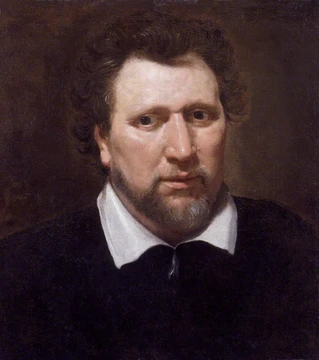
Dario Fo
Italian Nobel-winning playwright who revived commedia dell'arte and political satire.
Last updated
Dario Luigi Angelo Fo was an Italian playwright, actor, theatre director, stage designer, songwriter, and political campaigner for the Italian left wing. He received the 1997 Nobel Prize in Literature and was described as 'arguably the most widely performed contemporary playwright in world theatre.' Much of his dramatic work depends on improvisation and comprises the recovery of 'illegitimate' forms of theatre, such as those performed by giullari and the ancient Italian style of commedia dell'arte. His plays have been translated into 30 languages and performed across the world, including in Argentina, Bulgaria, Canada, Chile, India, Iran, the Netherlands, Poland, Romania, South Africa, South Korea, Spain, Sri Lanka, Sweden, the United Kingdom, the United States, and Yugoslavia.
Lore & Background
Fo was born at Sangiano in Lombardy's Province of Varese, near the eastern shore of Lake Maggiore. His father, Felice, was a socialist station master and amateur actor; his mother, Pina Rota Fo, wrote a book of reminiscences. Fo learned storytelling from his maternal grandfather and Lombard fishers and glassblowers.
During World War II, at age 16, Fo was drafted into Mussolini's fascist army. He later claimed to have secretly helped his father smuggle refugees and Allied soldiers to Switzerland by disguising them as Lombard peasants. However, his statements were widely denied by the testimonies of both partisans and his fascist comrades, as well as by a sentence of the court of Varese on 15 February 1979.
After the war, Fo studied at the Brera Academy and Politecnico di Milano but left before his final examinations after a nervous breakdown. He began to paint and became involved in the piccoli teatri movement, presenting improvised monologues. He considered his artistic influences to include Beolco, Brecht, Chekhov, De Filippo, Gramsci, Mayakovsky, Molière, Shaw, and Strehler.
Reader's Guide
Fo's significance lies in his fusion of medieval jester traditions with modern political critique, earning him the 1997 Nobel Prize in Literature. The Swedish Academy praised him as a writer 'who emulates the jesters of the Middle Ages in scourging authority and upholding the dignity of the downtrodden.' His solo work Mistero Buffo, performed over 30 years across Europe, Asia, Canada, and Latin America, was denounced by Cardinal Ugo Poletti, Cardinal Vicar for the Diocese of Rome, as 'the most blasphemous show in the history of television.' His play Can't Pay?
Won't Pay! has passed into the English language and is described as capturing 'something universal in actions and reactions of the working class.' In the 2010s, Fo became the main ideologue of the Five Star Movement, the anti-establishment party led by Beppe Grillo, often referred to by its members as 'the Master.' His work of the 1960s, 1970s, and 1980s is peppered with criticisms of assassinations, corruption, organised crime, racism, Roman Catholic theology, and war. Throughout the 1990s and 2000s, he lampooned Forza Italia and Silvio Berlusconi, and in the 2010s his targets included the banks amid the European sovereign-debt crisis. Fo was an atheist and owned and operated a theatre company.
Did You Know?
- Fo's first radio series, Poer nano, was cancelled by authorities after scandalising them with twisted Shakespearean tales, including a Hamlet where the titular character kills his father to continue an affair with his mother.
- Fo met his wife Franca Rame when they were working in the revue Sette giorni a Milano; they married on 24 June 1954.
Frequently Asked Questions
What themes did Dario Fo's plays tackle?
His writing consistently satirized corruption, organized crime, racism, war, and Roman Catholic theology. He used sharp political comedy to give voice to ordinary people and challenge entrenched power structures.
When did Dario Fo live?
He was born on 24 March 1926 in Italy and died on 13 October 2016. His career spanned roughly nine decades of active performance, playwriting, and political engagement.
Also in the Codexery
More in Dramatists & Playwrights
Sources
Compiled from Wikipedia and the sources listed below. Text from Wikipedia is available under CC BY-SA 4.0; this entry is adapted from it.
- Wikipedia: Dario Fo (CC BY-SA 4.0).
Spotted an error? Know more?
Reader corrections go straight into our review queue. Suggest an edit · How this site is sourced