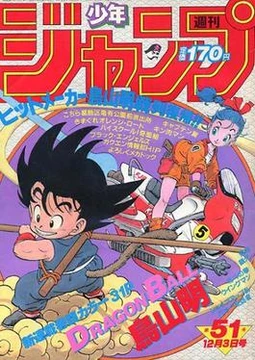
World Tournament Competitors
From boyhood adventures to universal battles, the Z Fighters stand ready.
The Dragon Ball franchise features an ensemble cast that includes humans with superhuman strengths, anthropomorphic animals, extraterrestrial lifeforms, and deities. While the series begins as a search for seven Dragon Balls to summon a wish-granting dragon, the tone shifts from comedic to action-oriented as protagonist Son Goku reaches adulthood. The narrative centers on Goku's group of associates, known in Japanese as the "Z Fighters" or "Dragon Team," who defend Earth against progressively more powerful foes. This group expands throughout the series by adding former enemies and new heroes, creating a diverse roster that spans from boyhood training to defending the universe.
- Primary Role
- Martial Arts Champions and Challengers
- Affiliation
- Independent (Gathered by Master Roshi/World Martial Arts Association)
- First Appearance
- Dragon Ball Chapter 21 / Episode 21
- Key Members
- Son Goku, Krillin, Tien Shinhan, Piccolo Jr., Vegeta
- Status
- Active (Recurring Event)
Lore & Background
The Dragon Ball universe operates on specific narrative rules regarding character origins and abilities. Akira Toriyama based many characters on Journey to the West: Goku corresponds to the Monkey King, Bulma to Tang Sanzang, Oolong to Zhu Bajie, and Yamcha to Sha Wujing. Toriyama also incorporated ideas from his earlier one-shot, Dragon Boy. He found it easier to visually differentiate anthropomorphic characters than humans, which explains their prevalence. For female characters, he aimed for designs that were "beautiful and sexy" yet "strong," though he admitted to having trouble drawing them, resulting in fewer female appearances. The series features significant plot devices like the afterlife and time travel; Dragon Ball Super specifically expands the setting to include parallel universes, with the vast majority of events occurring in Universe 7.
In Their Own Story
The story follows Son Goku, adopted by Grandpa Son Gohan, who encounters allies like Bulma, Master Roshi, and Trunks. His journey includes rivals such as Tien Shinhan, Piccolo, and Vegeta, alongside villains like Frieza, Cell, and Majin Buu. A pivotal moment occurs when Goku's Saiyan heritage is revealed; his original name is Kakarot. The narrative evolves through key arcs: Goku's son Gohan assumes the protagonist role following the Cell Games Saga, while Bardock and Trunks from an alternate future serve as protagonists in their respective side stories. Vegeta acts as a co-protagonist in Dragon Ball Super. The group's composition shifts constantly; for instance, Krillin is killed by King Piccolo's spawn Tambourine but revived by Shenron, only to die again on Planet Namek at Frieza's hands before being wished back via Namekian Dragon Balls.
Reader's Guide
Character names often serve as puns rooted in specific categories. Bulma and her family are named after undergarments; Saiyans are named after vegetables; the Ginyu Force is named after refrigerator products because Frieza is a pun on "freezer." A study by Tsuda University researchers found that among 118 villainous characters, consonants /g/ and /b/ were frequently used, supporting a sound-meaning association for "bad & male" characters in Japanese. Toriyama did not initially like naming techniques but followed his editor's suggestion; his wife named the signature Kamehameha, while he named others, selecting English names for Vegeta and kanji for Piccolo to reflect their sophistication. For the anime adaptations, Toei Animation staff created original characters for Dragon Ball GT and most films, which exist in unique continuities branching from the main series.
Did You Know?
- A study of 118 villainous characters found that consonants /g/ and /b/ were frequently used in their names.
- Akira Toriyama's wife named the series' signature Kamehameha technique.
- Vegeta is the fourth generation of the Saiyan royal bloodline to bear his namesake.
- Piccolo is a Namekian, a green-skinned, four-fingered, hairless humanoid species who created the Dragon Balls.
- Dragon Ball Super expands the setting to include parallel universes, with most events taking place in Universe 7.
More in Factions & Organizations
Related in Dragon Ball
Links follow this subject's own source article.
Elsewhere in the Dragon Ball universe
Spotted an error? Know more?
This is a living reference — every entry is fact-audited, and reader corrections feed straight into our audit queue. Suggest an edit · See this site's audit record