Walter Baade
German astronomer who doubled the known size of the universe.

Wilhelm Heinrich Walter Baade (March 24, 1893 – June 25, 1960) was a German astronomer who spent most of his career in the United States, from 1931 to 1959.
Born in Prussia to a teacher, Baade completed school in 1912 and studied mathematics, physics, and astronomy at the universities of Münster and Göttingen, earning his PhD in 1919. He then worked at the Hamburg Observatory in Bergedorf until 1931. In 1920, he discovered 944 Hidalgo, the first known object of a class later called Centaurs—minor planets that cross the orbits of giant planets.
From 1931 to 1958, Baade was based at Mount Wilson Observatory in Los Angeles, California. In 1937, the University of Hamburg offered him the directorship of its observatory, but he declined. During World War II, he used wartime blackouts—which cut light pollution—to resolve individual stars in the center of the Andromeda Galaxy for the first time. This work led him to define two distinct stellar populations (Population I and Population II) and to discover that Cepheid variable stars come in two types. Using that discovery, he recalculated the size of the known universe, doubling Edwin Hubble’s 1929 estimate. He announced this result at the 1952 International Astronomical Union meeting in Rome, causing considerable surprise.
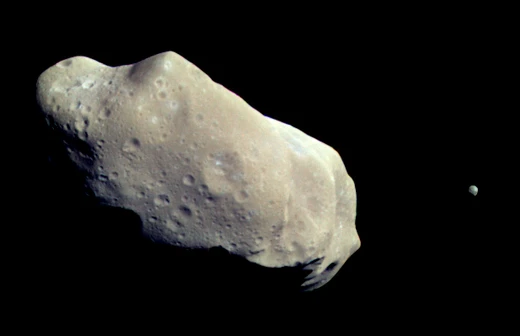
With Fritz Zwicky, Baade identified supernovae as a new class of astronomical objects. They also proposed the existence of neutron stars and suggested that supernovae could create them. Starting in 1952, he and Rudolph Minkowski matched optical counterparts to various radio sources, including Cygnus A. In total, Baade discovered ten asteroids, among them 944 Hidalgo (the first centaur, though not recognized as such until 1977), the Apollo-class 1566 Icarus (whose orbit brings it closer to the Sun than Mercury), and the Amor-type 1036 Ganymed.
Baade died in 1960 in Göttingen, West Germany. Among his honors were foreign membership in the Royal Netherlands Academy of Arts and Sciences (1953), election to the American Philosophical Society (1953), the Gold Medal of the Royal Astronomical Society (1954), the Bruce Medal (1955), and the Henry Norris Russell Lectureship (1958). Features named after him include asteroid 1501 Baade, the lunar crater Baade, the lunar valley Vallis Baade, one of the two Magellan telescopes, and asteroid 966 Muschi (after his wife’s nickname). He is also remembered for ide
- born
- March 24, 1893, Prussia, Germany
- died
- June 25, 1960, Göttingen, West Germany
- field
- Astronomy
- nationality
- German
- known_for
- Defining stellar populations, discovering two types of Cepheid variables, recalculating the size of the universe, identifying supernovae as a new category, proposing neutron stars
Quick Facts
- Birth Name
- Wilhelm Heinrich Walter Baade
- Birth Date
- 1893-03-24
- Birth Place
- Schröttinghausen, Prussia, German Empire
- Death Date
- 1960-06-25
- Death Place
- Göttingen, Lower Saxony, West Germany
- Citizenship
- German
- Field
- Astronomy
- Workplaces
- Hamburg-Bergedorf Observatory, Mt. Wilson, Palomar Observatory
- Education
- University of Göttingen
- Doctoral Students
- Halton Arp / Allan Sandage
- Known For
- Coined the term "supernova" and "neutron star" with Fritz Zwicky
- Awards
- Bruce Medal 1955
Facts from the source article.
Lore & Background
Walter Baade was born in Prussia, Germany, the son of a teacher. After finishing school in 1912, he studied mathematics, physics, and astronomy at the universities of Münster and Göttingen, earning his PhD in 1919. He then worked at Hamburg Observatory at Bergedorf from 1919 to 1931, where in 1920 he discovered 944 Hidalgo, the first of a class of minor planets now called Centaurs.
In 1931, Baade moved to the United States to work at Mount Wilson Observatory in Los Angeles, California, where he remained until 1958. During World War II, he took advantage of wartime blackout conditions to resolve stars in the center of the Andromeda Galaxy for the first time. This led him to define distinct stellar populations (Population I and Population II) and to discover two types of Cepheid variable stars. Using this discovery, he recalculated the size of the known universe, doubling the previous calculation made by Edwin Hubble in 1929, and announced it at the 1952 International Astronomical Union meeting in Rome.
Together with Fritz Zwicky, Baade identified supernovae as a new category of astronomical objects and proposed the existence of neutron stars. Beginning in 1952, he and Rudolph Minkowski identified optical counterparts of various radio sources, including Cygnus A. He discovered 10 asteroids, including 1566 Icarus and 1036 Ganymed.
Reader's Guide
Walter Baade's work fundamentally reshaped modern astronomy. His wartime observations of the Andromeda Galaxy, made possible by reduced light pollution, led to the concept of stellar populations—a key framework for understanding galactic evolution. By discovering two types of Cepheid variable stars, he corrected the cosmic distance scale, doubling the size of the known universe and challenging earlier estimates by Edwin Hubble. This recalibration had profound implications for cosmology, altering our understanding of the age and scale of the cosmos. Baade's collaboration with Fritz Zwicky also established supernovae as a distinct class of objects and predicted neutron stars, a concept later confirmed. His identification of optical counterparts to radio sources, such as Cygnus A, helped bridge radio and optical astronomy. Baade's legacy is preserved in the asteroid 1501 Baade, the lunar crater Baade, and the Baade-Wesselink method for determining distances to Cepheid variables. His work remains foundational in stellar and galactic astronomy.
Did You Know?
- Baade discovered 944 Hidalgo in 1920, the first of a class of minor planets now called Centaurs.
- He used wartime blackout conditions at Mount Wilson Observatory to resolve stars in the center of the Andromeda Galaxy for the first time.
- Baade doubled Edwin Hubble's 1929 calculation of the size of the known universe.
- Together with Fritz Zwicky, he proposed the existence of neutron stars and suggested supernovae might create them.
From Prussian Classroom to the American Sky
Walter Baade entered the world on March 24, 1893, in Prussia, the son of a schoolteacher. After completing his schooling in 1912, he pursued mathematics, physics, and astronomy at the universities of Münster and Göttingen, earning his doctorate in 1919. His professional journey began at Hamburg Observatory in Bergedorf, where he remained until 1931. It was there, in 1920, that he spotted the minor planet 944 Hidalgo — an object whose orbit crosses the paths of giant planets and would later be recognized as the first member of a class now called Centaurs, a designation not formalized until 1977. In 1931 he crossed the Atlantic to take up a position at Mount Wilson Observatory near Los Angeles, a move that would define the rest of his career. He turned down a prestigious return to Hamburg in 1937 when the observatory sought him as Richard Schorr's successor. At Mount Wilson he went on to discover ten asteroids, including the Mercury-crossing 1566 Icarus and the Amor-type 1036 Ganymed, and he collaborated with Fritz Zwicky to establish supernovae as a distinct astronomical category and to propose the existence of neutron stars.
The Blackout That Doubled the Universe
The most transformative episode of Baade's career unfolded under the most unlikely of circumstances. During World War II, enforced blackout conditions over Southern California dramatically reduced the light pollution that had long plagued observations at Mount Wilson. Seizing this rare opportunity, Baade turned the great telescope toward the heart of the Andromeda Galaxy and, for the first time in history, resolved individual stars in its central region. What he saw shattered a long-held assumption: the Cepheid variable stars used as cosmic yardsticks came in two distinct types, not one. This revelation meant that the distances Hubble had calculated in 1929 were roughly half the true values, effectively doubling the scale of the known universe. Baade also used these observations to define what he called Population I and Population II stars, a framework that reorganized how astronomers think about galactic structure. He delivered this staggering correction at the 1952 meeting of the International Astronomical Union in Rome, where it was received with considerable astonishment by the assembled community.
A Name Written Across the Sky
Baade's imprint on astronomy extends far beyond any single paper or discovery. In the 1940s he identified a relatively dust-free observational window toward the Galactic Center in Sagittarius, a region now known as Baade's Window. He was also the first to identify a pulsar directly associated with the Crab Nebula — an object subsequently called the Crab Pulsar but long known in his honor as Baade's Star. The Baade-Wesselink method, a technique for determining the distance to a Cepheid variable star, carries his name as a permanent fixture in stellar astrophysics. Beginning in 1952, he and Rudolph Minkowski identified the optical counterparts of various radio sources, including the famous Cygnus A, bridging two observational worlds. His discoveries are commemorated in the asteroid 1501 Baade, a lunar crater and a lunar valley (Vallis Baade) both bearing his name, and one of the two great Magellan telescopes. Even his personal life left a celestial mark: asteroid 966 Muschi was named after his wife's nickname.
Honors, Exile, and a Quiet Return
Baade's life was shaped as much by geography and allegiance as by science. Born in Prussia to a teacher, he spent nearly three decades in the United States, from 1931 to 1959, working at Mount Wilson. When the Hamburg Observatory invited him back in 1937 to succeed Richard Schorr, he declined, choosing to remain in California. His contributions earned him a remarkable string of recognitions: foreign membership in the Royal Netherlands Academy of Arts and Sciences in 1953, election to the American Philosophical Society that same year, the Gold Medal of the Royal Astronomical Society in 1954, the Bruce Medal in 1955, and the Henry Norris Russell Lectureship of the American Astronomical Society in 1958. After leaving the United States, Baade returned to his homeland and died on June 25, 1960, in Göttingen, West Germany — the same city where he had once studied as a young man. His obituaries appeared across three international astronomical journals in 1961, testifying to the breadth of the community he had touched.
More in Discoverers of astronomical objects 1-24
Spotted an error? Know more?
This is a living reference — every entry is fact-audited, and reader corrections feed straight into our audit queue. Suggest an edit · See this site's audit record