George O. Abell
American astronomer known for galaxy clusters and skepticism.

George Ogden Abell was an American astronomer and professor who made significant contributions to the study of clusters of galaxies and planetary nebulae. His work during and after the National Geographic Society - Palomar Observatory Sky Survey led to the creation of the Abell catalog of rich clusters of galaxies and advances in understanding the large-scale structure of the universe. He taught at UCLA and was also a prominent skeptic, co-founding the Committee for Scientific Investigation of Claims of the Paranormal.
- born
- March 1, 1927
- died
- October 7, 1983
- field
- Astronomy
- nationality
- American
- known_for
- Abell catalog of galaxy clusters, work on planetary nebulae, skepticism of paranormal claims
Quick Facts
- Birth Name
- George Ogden Abell
- Birth Date
- 1927-03-27
- Birth Place
- Los Angeles, California, U.S.
- Death Date
- 1983-10-07
- Education
- B.S. / (1951) / , / M.S. / (1952) · PhD / (1957) / California Institute of Technology / (B.S., M.S., and PhD)
- Doctoral Advisor
- Donald Osterbrock
- Field
- Astronomy
- Workplaces
- University of California, Los Angeles
- Doctoral Students
- Edwin C. Krupp
- Spouse
- Phyllis / (second marriage)
- Children
- 2 sons / (first marriage)
Facts from the source article.
Lore & Background
George Ogden Abell was born in Los Angeles on March 1, 1927, to Theodore Curtis Abell and Annamarie (Ogden) Abell. His father was a Unitarian minister and original member of the Hollywood Humanist Society; his mother was a librarian and social worker. His parents divorced when he was six, and he lived with his mother and maternal grandfather, an author of western novels. His father took him to Griffith Observatory around age eight, sparking his interest in astronomy. He attended Van Nuys High School, earning all As in math and science courses.
After high school in 1945, Abell enlisted in the US Army Air Corps. The war ended before he could begin pilot training, so he attended weather school at Chanute Field in Illinois and served as an Air Corps weatherman in Japan for six months before discharge. He then returned to Los Angeles, worked as a gas station attendant, and entered Caltech. He switched from physics to astronomy as a sophomore when the astronomy department was inaugurated. He earned his B.S. in 1951, M.S. in 1952, and Ph.D. in 1957, all from Caltech, as an early Ph.D. student of Donald Osterbrock. During his studies, he worked as a guide and lecturer at Griffith Observatory.
Abell's professional career began as a graduate student observer on the National Geographic Society – Palomar Observatory Sky Survey. This work produced the Abell catalog of 2,712 rich clusters of galaxies, recognition of second-order clusters (disproving Carl Charlier's hierarchical model), studies of cluster luminosity for distance determination, a list of 86 planetary nebulae, and the discovery (with Robert G. Harrington) of periodic comet 52P/Harrington-Abell. He taught at UCLA for 17 years, chaired the astronomy department from 1968 to 1975, and served on numerous university committees. He also taught in the Summer Science Program for high school students, wrote the textbook *Exploration of the Universe*, and helped produce educational TV series such as *Project Universe* and *Understanding Space and Time*.
Reader's Guide
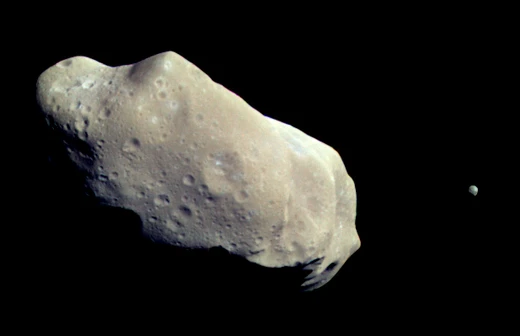
George O. Abell's significance lies in his dual legacy as a research astronomer and a public educator. His catalog of rich clusters of galaxies remains a foundational resource for studying the large-scale structure of the universe, and his work on planetary nebulae helped establish their origin from red giant stars. His recognition of second-order clustering challenged existing cosmological models. Beyond research, Abell was a dedicated teacher who emphasized understanding how scientific facts are established, not just memorizing them. He brought astronomy to broader audiences through textbooks, educational television, and lectures at small colleges. Equally important was his role as a skeptic: he co-founded the Committee for Scientific Investigation of Claims of the Paranormal (now the Committee for Skeptical Inquiry) and actively debunked astrology, pseudoscience, and the occult. His efforts reflected a belief that combating superstition and fraud was essential to scientific enlightenment. A galaxy, an asteroid, a periodic comet, and an observatory are named in his honor, underscoring his lasting impact on astronomy and science communication.
Did You Know?
- Abell earned all As in every math and science course he took at Van Nuys High School.
- He was an early Ph.D. student of astronomer Donald Osterbrock.
- He co-discovered periodic comet 52P/Harrington-Abell with Robert G. Harrington.
- He was an originating member of the Committee on Scientific Investigation of Claims of the Paranormal, now the Committee for Skeptical Inquiry.
Early Life and Formative Influences
George Ogden Abell entered the world in Los Angeles on March 27, 1927, the son of Theodore Curtis Abell, a Unitarian minister and founding member of the Hollywood Humanist Society, and Annamarie Ogden Abell, a trained librarian who ultimately pursued social work. The boy was named after his maternal uncle, George Ogden, a western novelist. His parents' divorce when he was six sent him and his mother to live with that same uncle, though his father never severed the bond, regularly taking the young George to museums and, around age eight, to the newly opened Griffith Observatory and planetarium. That single outing ignited a lifelong fascination with the cosmos and sent him devouring astronomy books. At Van Nuys High School, he earned straight As across every mathematics and science course. Outside the classroom, a restless teenager juggling newspaper delivery, a mail route, shifts at a bowling alley, a restaurant, a grocery store, and odd home-maintenance jobs, he built a work ethic that would serve him for decades.
Education and Military Interlude
After graduating from Van Nuys High School in 1945, Abell enlisted in the U.S. Army Air Corps during the final months of World War II. He passed the qualifying exams for pilot, navigator, or bombardier training, but the war's end shuttered those programs before he could begin. Redirected to weather school at Chanute Field in Illinois, he completed the course and then faced a choice: stay for forecasting school, which would have made him an officer and extended his service. Eager to leave the military, he declined and was posted to Japan, where he spent six months as an Air Corps weatherman before his eighteen-month enlistment ended. Back in Los Angeles, he worked as a gas-station attendant while waiting to enroll at Caltech. There he initially studied physics as a freshman, but when the institute launched its astronomy department the following year, he switched tracks. He lived in Fleming House, bowled on the house team, and wrote the music column for The California Tech. He also moonlighted as a guide at Griffith Observatory. His B.S. (1951), M.S. (1952), and Ph.D. (1957) all came from Caltech, where he became the first doctoral student of Donald Osterbrock.
Palomar Sky Survey and Major Discoveries
The National Geographic Society–Palomar Observatory Sky Survey became the crucible of Abell's most consequential research. As a Caltech graduate student serving as an observer on the project, he produced findings that reshaped several branches of astronomy. His catalog of 2,712 rich galaxy clusters, which includes the well-known Abell 68, remains a foundational reference. He identified second-order clustering among those groups, a discovery that dealt a blow to Carl Charlier's hierarchical model of the universe. His work on cluster luminosity demonstrated how these aggregates could serve as tools for gauging relative cosmic distances. In the realm of planetary nebulae, he compiled a list of 86 such objects, including Abell 39, and, together with UCLA colleague Peter Goldreich, established that these glowing shells originate from red giant stars. With Robert G. Harrington, he also co-discovered the periodic comet 52P/Harrington-Abell. An expanded edition of his cluster catalog, co-authored with Harold G. Corwin and Ronald P. Olowin, appeared in 1987, four years after his death, growing the count to roughly 4,000 clusters and extending redshift coverage to z = 0.2.
Teaching, Skepticism, and Enduring Legacy
At UCLA, where he spent seventeen years and chaired the astronomy department from 1968 to 1975, Abell held a firm conviction about pedagogy: the heart of teaching science lies in showing students how and why facts are established, not merely in reciting impressive results. He served on numerous university committees, from the Faculty Senate to the Graduate Council, and during the turbulent 1960s he helped organize the unofficial Committee for Responsible University Government, worried that student unrest was eroding academic standards. His educational reach stretched well beyond the lecture hall; he led sessions in the Summer Science Program for gifted high schoolers and appeared on educational television. Equally important to his identity was his commitment to critical thinking. He was an originating member of the Committee on Scientific Investigation of Claims of the Paranormal, the body that later became the Committee for Skeptical Inquiry. His influence endures in the sky itself: a galaxy, an asteroid, a periodic comet, and an observatory all bear his name.
More in Discoverers of astronomical objects 1-24
Spotted an error? Know more?
This is a living reference — every entry is fact-audited, and reader corrections feed straight into our audit queue. Suggest an edit · See this site's audit record