Johann Elert Bode
German astronomer who popularised the Titius–Bode law and named Uranus.

Johann Elert Bode, a German astronomer born in Hamburg, is best remembered for taking a formula first noted by Johann Daniel Titius and turning it into a widely known rule now called the Titius–Bode law. He also calculated an approximate orbit for the newly discovered planet Uranus and popularized the name that eventually stuck.
Bode’s early life was marked by a serious eye disease that damaged his right eye and caused him ongoing vision problems. His talent in mathematics caught the attention of Johann Georg Büsch, who let Bode study in his library. Bode’s career began with a short publication about the solar eclipse of 5 August 1766. He then wrote an elementary astronomy book, *Anleitung zur Kenntniss des gestirnten Himmels* (1768), which did so well that Johann Heinrich Lambert invited him to Berlin in 1772 to compute ephemerides on a better system. In 1774, Bode founded the *Astronomisches Jahrbuch*, eventually compiling and issuing 51 yearly volumes. He became director of the Berlin Observatory in 1786 and retired in 1825.
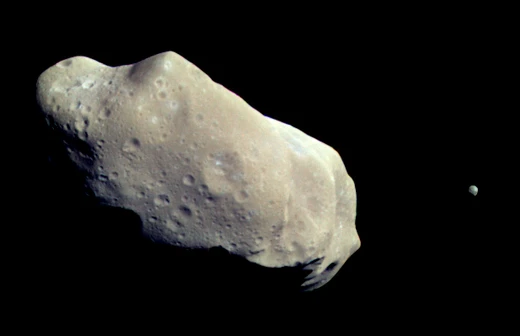
In 1801, Bode published *Uranographia*, a large celestial atlas that combined scientific accuracy in star positions with artistic depictions of constellation figures. This atlas marked the high point of artistic constellation representation; later atlases gradually dropped such elaborate drawings. He also put out a smaller star atlas for amateur astronomers, *Vorstellung der Gestirne*. Bode is credited with discovering Bode’s Galaxy (M81). Comet Bode (C/1779 A1) bears his name, with its orbit calculated by Erik Prosperin. The asteroid 998 Bodea, discovered in 1923 by Karl Reinmuth, was named after him, with an added ‘a’ to follow the convention of feminine asteroid names.
The law that made Bode famous was actually discovered by Titius in 1766. Bode first mentioned it in a footnote in his *Anleitung* book, and though it is officially called the Titius–Bode law, it is often simply called Bode’s law. This formula tried to explain the distances of planets from the Sun, but it famously fails for Neptune, which was later discovered in Berlin. The law gained attention because Uranus was found at a position it predicted. A gap between Mars and Jupiter led Bode to push for a search for a planet there, resulting in the formation of the “celestial police.” Before they could begin, Giuseppe Piazzi discovered the asteroid Ceres in 1801 at the p
- known_for
- Reformulation and popularisation of the Titius–Bode law; calculating an approximate orbit of Uranus; popularising the name Uranus
Quick Facts
- Birth Date
- 19 January 1747
- Birth Place
- Hamburg, Holy Roman Empire
- Death Date
- df=yes · 1826 · 11 · 23 · 1747 · 1 · 19
- Death Place
- Berlin, Province of Brandenburg, Kingdom of Prussia
- Field
- Astronomy
- Known For
- Titius–Bode law
- Doctoral Advisor
- Johann Georg Büsch
- Doctoral Students
- Johann Pfaff
Facts from the source article.
Lore & Background
Bode was born in Hamburg. As a youth, he suffered from a serious eye disease that particularly damaged his right eye; he continued to have trouble with his eyes throughout his life. His early promise in mathematics brought him to the attention of Johann Georg Büsch, who allowed Bode to use his own library for study. He began his career with the publication of a short work on the solar eclipse of 5 August 1766. This was followed by an elementary treatise on astronomy entitled Anleitung zur Kenntniss des gestirnten Himmels (1768, 10th ed. 1844), the success of which led to his being invited to Berlin by Johann Heinrich Lambert in 1772 for the purpose of computing ephemerides on an improved plan. There in 1774, he founded the Astronomisches Jahrbuch. He later compiled and issued 51 yearly volumes of it.
He became director of the Berlin Observatory in 1786, from which he retired in 1825. There he published the Uranographia in 1801, a celestial atlas that aimed both at scientific accuracy in showing the positions of stars and other astronomical objects, as well as the artistic interpretation of the stellar constellation figures. Bode also published another small star atlas, intended for astronomical amateurs (Vorstellung der Gestirne). He is credited with the discovery of Bode's Galaxy (M81). Comet Bode (C/1779 A1) is named after him; its orbit was calculated by Erik Prosperin. Asteroid 998 Bodea, discovered on 6 August 1923 by Karl Reinmuth at Heidelberg, was also christened in his honour.
Reader's Guide
Bode's name became attached to the 'law' discovered by Johann Daniel Titius in 1766. Bode first makes mention of it in the Anleitung zur Kenntniss des gestirnten Himmels in a footnote, and although it is often officially called the Titius–Bode law, it is also commonly just called Bode's law. This law attempts to explain the distances of the planets from the Sun in a formula although ironically it breaks down for the planet Neptune which was later discovered in Berlin. It was the discovery of Uranus at a position predicted by the law which aroused great interest in it. There was a gap (with no planet) between Mars and Jupiter, and Bode urged a search for a planet in this region which culminated in a group formed for this purpose, the so-called 'celestial police'. However before the group initiated a search, they were trumped by the discovery of the asteroid Ceres by Giuseppe Piazzi from Palermo in 1801, at Bode's predicted position. Latterly, the law fell out of favour when it was realised that Ceres was only one of a small number of asteroids and when Neptune was found not to be in a position required by the law. The discovery of planets around other stars has brought the law back into discussion.
Bode himself was directly involved in research leading from the discovery of a planet – that of Uranus in 1781. Bode consulted older star charts and found numerous examples of the planet's position being given while being mistaken for a star. These earlier sightings allowed an exact calculation of the orbit of the new planet. Bode was also responsible for giving the new planet its name. The discoverer William Herschel proposed to name it after George III which was not accepted so readily in other countries. Bode opted for Uranus, with the apparent logic that just as Saturn was the father of Jupiter, the new planet should be named after the father of Saturn. There were further alternatives proposed, but ultimately Bode's suggestion became the most widely used – however it had to wait until 1850 before gaining official acceptance in Britain. In 1789, Bode's Royal Academy colleague Martin Klaproth was inspired by Bode's name for the planet to name his newly discovered element 'uranit', then changed to 'uranium'.
Did You Know?
- Bode suffered from a serious eye disease that damaged his right eye and troubled him throughout his life.
- He founded the Astronomisches Jahrbuch in 1774 and compiled 51 yearly volumes of it.
- Bode's Galaxy (M81) is named after him, and Comet Bode (C/1779 A1) also bears his name.
- The element uranium was named after the planet Uranus, a name suggested by Bode.
Rise from Hamburg to Berlin's Astronomical Center
Bode entered the world in Hamburg in January 1747, and from an early age his right eye was compromised by a serious disease that would trouble him for the rest of his life. Despite this handicap, his mathematical talent caught the eye of Johann Georg Büsch, who granted the young man access to his personal library for self-directed study. His first public contribution was a brief paper on the solar eclipse of August 1766, but it was his 1768 elementary treatise on the starry sky that truly launched his career. The book's success drew the attention of Johann Heinrich Lambert, who in 1772 summoned Bode to Berlin to compute ephemerides on a new, improved system. There, in 1774, Bode established the Astronomisches Jahrbuch, a yearly almanac he would go on to compile for fifty-one consecutive volumes. His standing grew steadily: he became director of the Berlin Observatory in 1786, held the directorship of the Astronomisches Rechen-Institut from 1787 through 1825, and earned fellowship of the Royal Society in 1789 and election to the Royal Swedish Academy of Sciences in 1794. He retired in 1825 and passed away in Berlin the following November, at the age of seventy-nine.
The Titius-Bode Law and the Hunt for Missing Planets
The numerical relationship first noted by Johann Daniel Titius in 1766 — a simple formula describing the spacing of planetary orbits from the Sun — entered wider awareness through a footnote Bode tucked into his 1768 introductory astronomy text. Though the rule is formally called the Titius-Bode law, it is far more commonly known simply as Bode's law. The formula gained dramatic credibility when Uranus was found in 1781 at precisely the distance the law predicted, sparking enormous enthusiasm. Bode seized on the conspicuous gap between Mars and Jupiter and urged astronomers to search that region for a missing world. This call led to the formation of a coordinated search group, colloquially dubbed the celestial police. Before they could organize their observations, however, Giuseppe Piazzi in Palermo stumbled upon the asteroid Ceres in 1801, right where Bode's calculation had pointed. The law's prestige waned over time: Ceres turned out to be merely one of many asteroids, and Neptune — ironically discovered in Berlin — did not fit the formula at all. Yet the detection of planets orbiting other stars has recently revived scholarly interest in the relationship.
Naming a New World and Naming an Element
When William Herschel pointed his telescope at a new wandering body in 1781, the first planet ever found by instrument, he proposed christening it after King George III. The suggestion did not travel well beyond Britain. Bode, consulting older star charts, discovered that the object had in fact been recorded as a star on multiple occasions — John Flamsteed had catalogued it as 34 Tauri back in 1690 — and these earlier sightings gave him the data needed to calculate the planet's orbit with precision. As for the name, Bode reasoned that since Saturn was the mythological father of Jupiter, the newly discovered outer world should bear the name of Saturn's own father: Uranus. Other alternatives were floated, but Bode's choice gradually became the standard. Britain was the last holdout; the Nautical Almanac Office did not switch from Georgium Sidus to Uranus until 1850. The naming ripple extended beyond astronomy: in 1789, chemist Martin Klaproth, a colleague at the Royal Academy, was inspired by Bode's planetary name to call his newly identified element uranit, later regularized to uranium to match the naming conventions of other metals.
A Legacy Written in Stars and Stone
Bode's 1801 Uranographia stands as the high-water mark of an era in which celestial atlases combined rigorous positional science with lavish artistic renderings of the constellation figures. After his atlas, later star charts progressively stripped away the elaborate mythological illustrations until they vanished entirely from printed tables. He also produced a smaller, more accessible star atlas aimed at amateur observers, and a comprehensive catalogue listing over seventeen thousand stars. His influence on German popular science was considerable; his introductory works on the constellations and their stories were reprinted more than ten times, and his writings are credited with spreading a genuine taste for astronomy across the German-speaking world. The sky itself preserves his memory in several ways: the galaxy M81 is known as Bode's Galaxy, the comet C/1779 A1 carries his name, and asteroid 998 Bodea — the trailing letter added to satisfy the convention that asteroid names be feminine — was christened in his honour in 1923 by Karl Reinmuth at Heidelberg.
More in Discoverers of astronomical objects 1-24
Spotted an error? Know more?
This is a living reference — every entry is fact-audited, and reader corrections feed straight into our audit queue. Suggest an edit · See this site's audit record