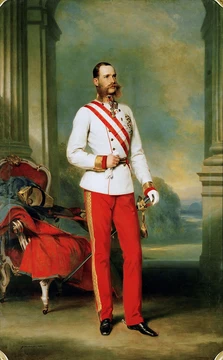
Fall of Eagles
A 1974 BBC drama on the fall of three imperial dynasties.
Fall of Eagles is a 13-part British television drama aired by the BBC in 1974, created by John Elliot and produced by Stuart Burge. The series portrays historical events from 1848 to 1918, focusing on the Habsburgs of Austria-Hungary, the Hohenzollerns of Germany, and the Romanovs of Russia. It is notable for its depiction of the final decades of three ruling dynasties through the work of multiple scriptwriters.
Quick Facts
- Genre
- Serial drama
- Creator
- John Elliot
- Narrator
- Michael Hordern
- Country
- United Kingdom
- Episodes
- 13
- Producer
- Stuart Burge
- Runtime
- 50 to 55 minutes
- Network
- BBC1
Facts from the source article.
Did You Know?
- The main title music is the Trauermarsch from Mahler's Symphony No. 5.
- The closing theme music is the central section from the first movement of Shostakovich's Symphony No. 6.
- One review stated the series 'does not attach any sentiments with royalty or the happenings in wake of its collapse.'
Overview
The series recounts the final decades of three great empires, each symbolized by an eagle in its heraldry, brought down by historical forces. Its central theme is the effects of centuries of despotism, lack of social reform, and the devastation of World War I, which spurred revolutionary movements. The narrative begins after the Revolutions of 1848 and continues through the Armistice of 11 November 1918, covering about 70 years across 13 episodes that shift between Austria-Hungary, Germany, and Russia.
Media
Fall of Eagles was released on video and DVD in autumn 2004 in the United Kingdom, including a photo gallery and a 40-page historical notes booklet by Andy Priestner. The release also features new interviews with Gayle Hunnicutt, Charles Kay, and director David Cunliffe. A US release followed in May 2006 without the companion booklet. A separate book titled The Fall of Eagles: The Death of the Great European Dynasties by Cyrus Leo Sulzberger II was published by Crown in 1981.
Frequently Asked Questions
When did Fall of Eagles first air?
Fall of Eagles first aired on 15 March 1974.
When did Fall of Eagles end?
Fall of Eagles last aired on 7 June 1974.
More in Cultural Depictions of Franz Joseph I of Austria
Spotted an error? Know more?
Reader corrections go straight into our review queue. Suggest an edit · How this site is sourced