Florian: The Emperor's Stallion
A Lipizzan horse's life amid the fall of the Habsburg empire.
Florian: The Emperor's Stallion, also published as Florian: An Emperor's Horse and Florian the Lipizzaner, is a 1933 novel by Austrian writer Felix Salten. It was adapted into the 1940 film Florian. The novel follows a Lipizzan horse through the decline of the Habsburg monarchy in Vienna from around 1901 to 1930.
Quick Facts
- Author
- Felix Salten
- Title orig
- Florian: Das Pferd des Kaisers
- Translator
- Erich Posselt and Michel Kraike (US), Norman Gullick (UK)
- Illustrator
- Philipp Arlen (Swiss)
- Country
- Austria
- Language
- German
- Genre
- novel
- Set in
- Vienna
Facts from the source article.
Plot
The novel is divided into four sections. It begins with Florian's childhood in Lipizza, then follows him to the Spanish Riding School, where he becomes a leading horse and a favourite of Emperor Francis Joseph. After a brief return to the stud farm, Florian pulls the emperor's coach in Vienna.
Characters
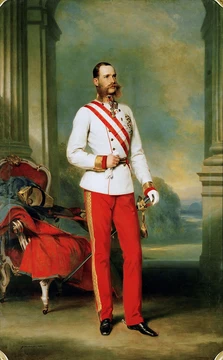
The protagonist is the horse Florian, born in Lipizza on 4 May 1901. He is cared for by stable-boy Anton Pointner, who follows him to Vienna. A fox terrier named Bosco has a deep co-dependent relationship with Florian. The animals are depicted somewhat anthropomorphically, with the narrator imagining their thoughts. Human characters include Captain von Neustift, his wife Elisabeth, riding master Ennsbauer, state coachman Konrad Gruber, Emperor Francis Joseph, and Archduke Franz Ferdinand. The riding master Ennsbauer and his mistress Gabriele Menzinger were modelled after real figures Johann Meixner and Helene Odilon. The portrayals of royalty are considered compelling; Franz Ferdinand is shown as coarse and impatient, and the antagonism between him and the emperor is detailed. Visiting monarchs Edward VII and Nicholas II also appear.
Variety of versions
The novel was first published in German by Paul Zsolnay Verlag in 1933 and quickly went into a second printing. After Salten's exile to Switzerland in 1939, a heavily abridged edition with illustrations by Philipp Arlen was released in 1942. An earlier abridgement appeared in Holland in 1937. The unabridged German text has not been available in print since the 1930s. English translations appeared in 1934 in the United States and the United Kingdom, both reproducing the complete text with slight modifications and no illustrations. The Finnish translation from 2021 presents the full text with Arlen's illustrations.
Reception
Critics called the novel a passionate tribute to Austria, and one review described it as a story of a horse, a dog, a stable hand, and the old empire. A 1934 American review compared it to the revelation of Nijinsky. Eddy called it Salten's finest blend of animal and human life.
More in Cultural Depictions of Franz Joseph I of Austria
Spotted an error? Know more?
Reader corrections go straight into our review queue. Suggest an edit · How this site is sourced