Northrop Grumman
American aerospace and defense contractor formed by 1994 merger.

Clearfieldcity · CC BY-SA 3.0
Northrop Grumman, based in West Falls Church, Virginia, is an American aerospace and defense firm that builds systems for aeronautics, defense, missions, and space. It ranks as the fifth-largest contractor for the U.S. federal government, accounting for more than 2% of all federal contractor spending. The company sits at number 110 on the Fortune 500 list of America’s biggest corporations. In 2024, 87% of its revenue came from the U.S. federal government, with 12% from international clients. Northrop Grumman and its industry partners have received the Collier Trophy nine times, including for work on the James Webb Space Telescope, which launched in 2021. The company was created in 1994 when Northrop Corporation merged with Grumman Aerospace.
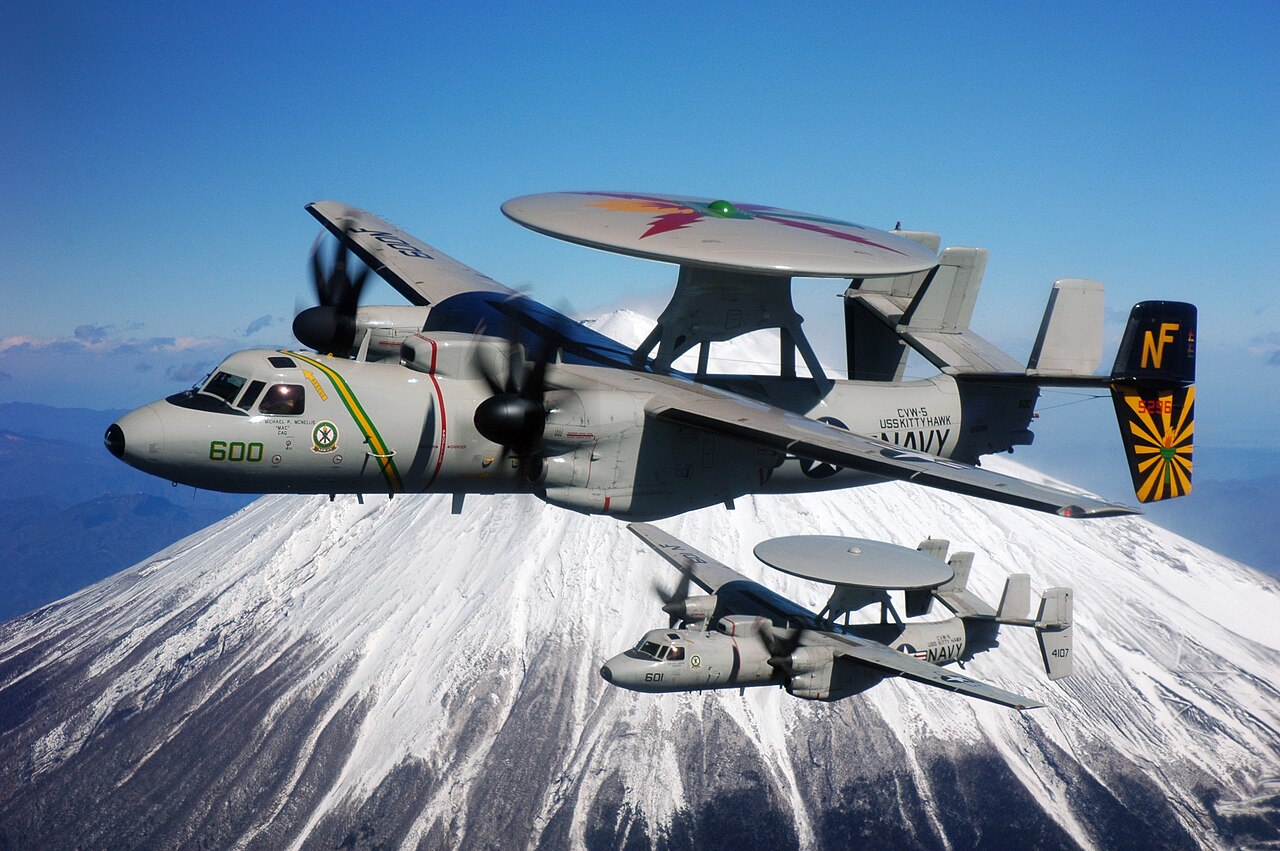
Its Aeronautics Systems division, which brought in 29% of 2024 revenue, works on the B-21 Raider strategic bomber—capable of carrying conventional and thermonuclear weapons and expected to be combat-ready by 2029—and the B-2 Spirit strategic bomber, which the B-21 will eventually replace. This division also produces fuselages and radars for the Lockheed Martin F-35 Lightning II Joint Strike Fighter and the F/A-18 Super Hornet, as well as the Grumman E-2 Hawkeye airborne early warning and control aircraft, the MQ-4C Triton unmanned aerial vehicle, and the NATO Alliance Ground Surveillance Force.
The defense systems division, accounting for 19% of 2024 revenue, handles modernization of the intercontinental ballistic missile system, including the LGM-35 Sentinel, the Integrated Air and Missile Defense Battle Command System, Vinnell training services, and the M1156 precision guidance kit.
The mission systems division, responsible for 25% of 2024 revenue, produces military radar, sensors, and related equipment. This includes C4I radar systems for air defense, Airspace Management radar systems like AWACS, the Multi-Platform Radar Technology Insertion Program, night vision goggles, the Airport Movement Area Safety System, and battlefield surveillance systems such as the Airborne Reconnaissance Low. Tactical aircraft sensors in this division include the AN/APG-68 radar, the AN/APG-80 active electronically scanned array radar, the AN/APG-83 AESA radar for the F-16 Fighting Falcon, the AN/APG-77 AESA radar for the F-22 Raptor, the AN/APG-81 AESA radar for the F-35 Lightning II, the AN/AAQ-37 electro-optical Distributed Aperture System for the F-35, and the APQ-164 Passive Electronically Scanned Array radar for the B-1 Lancer.
The space systems division, generating 27% of 2024 revenue, develops Satcom communications satellites, Next-Generation Overhead Persistent Infrared satellites, the Cygnus uncrewed spacecraft, motors for the NASA Space Launch System, logistics support for the Lunar Gateway, Graphite-Epoxy Motor solid rocket boosters, and satellites for the Norwegian Space Agency. Northrop Grumman Computing Systems, Inc., offers computing services to businesses.
Leroy R. Grumman founded the Grumman Aircraft Engineering Corporation in December 1929 on Long Island, New York. By 1939, the company had moved to Bethpage, New York. Grumman’s well-known naval aviation products include the F-14 Tomcat. During World War II, the company built most U.S. Navy aircraft, such as the TBF Avenger, F4F Wildcat, and F6F Hellcat. After the war, it branched out into making the first aluminum canoes from leftover aircraft materials. Later, Grumman produced ballistic missiles, all-weather radars, the Apollo Lunar Module, land and sea-based fighter aircraft, and stealth bombers.
Jack Northrop founded the Northrop Corporation in California in 1939, and it was reincorporated in Delaware in 1985. Northrop produced lightweight fighter aircraft like the F-5, YF-17, and F-20. It was best known for experimental flying wing aircraft—the XB-35 and YB-49 from the late 1940s and early 1950s—which, though unsuccessful, paved the way for the B-2 Spirit Stealth Bomber, where Northrop served as prime contractor. During World War II, Northrop built the P-61 Black Widow, the first aircraft designed as a night fighter. After the Cold War, Northrop made several acquisitions, buying Grumman Aerospace, Westinghouse, and TRW Inc., along with other enterprises. In 2018, Northrop Grumman completed its purchase of Orbital ATK, which was renamed Northrop Grumman Innovation Systems and later integrated into other parts of the business in a 2019 reorganization.
In 1994, Northrop Aircraft bought Grumman Aerospace—builder of the Apollo Lunar Module—for $2.1 billion, creating Northrop Grumman. After that, the company acquired Vought, Logicon, Xetron Corporation, the defense electronics business of Westinghouse Electronic Systems, and Ryan Aeronautical. Northrop competed in the Advanced Tactical Fighter program, submitting the YF-23 against the F-22 Raptor in 1991. It also partnered with Lockheed on the F-35 and is a principal member of the Lockheed Martin-led industry team. In 1998, a proposed merger with Lockheed Martin was dropped after opposition from the Department of Defense and Department of Justice. That same year, Northrop Grumman bought Inter-National Research Institute Inc. In 1999, it acquired Teledyne Ryan, California Microwave, Inc., and the Data Procurement Corporation. Also in 1999, Northrop Grumman and SAIC formed AMSEC LLC as a joint venture, which grew from $100 million in revenue in 2000 to about $500 million in fiscal year 2007.
In 2000, the company bought Federal Data Corporation, Navia Aviation As, Comptek Research, Inc., and Sterling Software, Inc. In 2001, it acquired Litton Industries, a shipbuilder.
- field
- Aerospace and defense
- nationality
- American
- known_for
- B-2 Spirit, B-21 Raider, James Webb Space Telescope, F-35 components, Apollo Lun
- headquarters
- West Falls Church, Virginia
- fortune_500_rank
- 110
- revenue_from_us_federal_government_2024
- 87%
Verified Timeline
Lore & Background
Northrop Grumman was created in 1994 when Northrop Aircraft bought Grumman Aerospace for $2.1 billion. Grumman had been founded by Leroy R. Grumman in December 1929 on Long Island, New York, and during World War II built most U.S. Navy aircraft, including the TBF Avenger, F4F Wildcat, and F6F Hellcat. After the war, Grumman branched into aluminum canoes, ballistic missiles, all-weather radars, the Apollo Lunar Module, and stealth bombers. Northrop Corporation, founded in California in 1939 by Jack Northrop, was known for lightweight fighters like the F-5 and experimental flying wings such as the XB-35 and YB-49, which paved the way for the B-2 Spirit Stealth Bomber. After the merger, Northrop Grumman made several major acquisitions, including Vought, Logicon, Westinghouse Electronic Systems, Litton Industries, Newport News Shipbuilding, TRW Inc., and Orbital ATK (renamed Northrop Grumman Innovation Systems). The company's divisions include Aeronautics Systems (29% of 2024 revenues), Defense Systems (19%), Mission Systems (25%), and Space Systems (27%). Notable products include the B-21 Raider strategic bomber, B-2 Spirit, fuselage and radar for the F-35 Lightning II, Cygnus uncrewed spacecraft, and satellites for the Norwegian Space Agency. Northrop Grumman and its industry partners have won the Collier Trophy nine times, including for the James Webb Space Telescope.
Reader's Guide
Northrop Grumman's significance lies in its role as a major supplier of advanced military aircraft, space systems, and defense electronics to the U.S. federal government, from which it derived 87% of its 2024 revenues. The company's legacy includes pioneering stealth technology with the B-2 Spirit and B-21 Raider bombers, contributing to the F-35 Joint Strike Fighter program, and building the Apollo Lunar Module. Its space systems division supports NASA missions with the Cygnus spacecraft and motors for the Space Launch System. The company's history of mergers and acquisitions, including the 1994 union of Northrop and Grumman, consolidated key capabilities in aerospace, shipbuilding, and electronics. Northrop Grumman's continued development of next-generation systems, such as the LGM-35 Sentinel intercontinental ballistic missile and the B-21 bomber, ensures its ongoing influence on U.S. defense strategy.
Did You Know?
- Northrop Grumman receives over 2% of all federal government spending at contractors.
- The company was formed in 1994 when Northrop Aircraft bought Grumman Aerospace for $2.1 billion.
- Grumman built the Apollo Lunar Module, which landed astronauts on the Moon.
- Northrop Grumman and its industry partners have won the Collier Trophy nine times, including for the James Webb Space Telescope.
- In 2018, Northrop Grumman completed the purchase of Orbital ATK for $7.8 billion in cash.
The Merger That Built a Giant
The company we know today was born in 1994 when Northrop Aircraft purchased Grumman Aerospace for $2.1 billion, fusing two storied aerospace lineages into a single entity headquartered in West Falls Church, Virginia. The resulting Northrop Grumman quickly established itself as a pillar of American defense procurement, growing to become the fifth-largest contractor to the U.S. federal government and capturing more than two percent of all federal spending directed to outside vendors. By 2024, the company sat at the 110th position on the Fortune 500 list, with 87 percent of its revenue flowing from Washington and the remaining 12 percent from international customers. This concentration of federal business underscores how deeply the company is woven into the machinery of national defense, from strategic bombers to space infrastructure. The merger was not merely a financial transaction; it combined Northrop's California-born experimental aircraft tradition with Grumman's Long Island naval aviation heritage, creating a portfolio broad enough to span every domain of modern warfare and exploration.
Four Divisions, One Ecosystem
Northrop Grumman organizes its work into four major divisions, each representing a substantial share of 2024 revenue. Aeronautics Systems, at 29 percent, develops the B-21 Raider strategic bomber—forecasted for combat readiness in 2029—alongside the legacy B-2 Spirit, fuselage and radar work for the F-35 and F/A-18 Super Hornet, the E-2 Hawkeye, and the MQ-4C Triton drone. Space Systems, at 27 percent, builds Satcom satellites, the Cygnus uncrewed spacecraft, solid rocket boosters for NASA's Space Launch System, and logistics support for the Lunar Gateway. Mission Systems, at 25 percent, produces an extensive catalog of radar and sensor hardware, including AESA radars for the F-16, F-22, F-35, and B-1 Lancer, night vision goggles, and the Distributed Aperture System. Defense Systems, at 19 percent, handles the LGM-35 Sentinel intercontinental ballistic missile modernization and the Integrated Air and Missile Defense Battle Command System. Together these divisions form a vertically integrated ecosystem covering air, sea, space, and cyber-adjacent domains.
Two Lineages, A Century of Flight
The corporate identity of Northrop Grumman rests on two distinct heritages. Grumman Aircraft Engineering, founded by Leroy R. Grumman in December 1929 on Long Island, New York, grew into a dominant naval aviation manufacturer during World War II, building the TBF Avenger, F4F Wildcat, and F6F Hellcat. After the war, the firm pivoted to aluminum canoes made from surplus materials, then went on to produce the Apollo Lunar Module, the F-14 Tomcat, and stealth bombers. Across the Pacific, Jack Northrop established his California company in 1939, where it produced the P-61 Black Widow—the first purpose-built night fighter—and a string of lightweight fighters including the F-5, YF-17, and F-20. Northrop's most celebrated contribution was the experimental flying wing, embodied in the XB-35 and YB-49 of the late 1940s and early 1950s. Though those prototypes never entered service, their aerodynamic philosophy directly paved the way for the B-2 Spirit, on which Northrop served as prime contractor. The 1994 merger united these two traditions under one roof.
A Decade of Deals and One Abandoned Dream
Growth through acquisition has been the defining corporate strategy since 1994. In the years immediately following the Grumman merger, Northrop Grumman absorbed Vought, Logicon, Xetron Corporation, Westinghouse's defense electronics business, and Ryan Aeronautical, rapidly broadening its technical base. In 1998, a full merger with rival Lockheed Martin was explored but ultimately abandoned after pushback from both the Department of Defense and the Department of Justice. That same year the company added Inter-National Research Institute, and in 1999 it brought in Teledyne Ryan, California Microwave, and Data Procurement Corporation. A joint venture with SAIC, AMSEC LLC, grew from roughly $100 million in revenue in 2000 to about $500 million by fiscal 2007. The 2001 acquisition of Litton Industries required creating a new Delaware holding company, NNG Inc., through a one-for-one share exchange. Then in 2018, the purchase of Orbital ATK—renamed Northrop Grumman Innovation Systems—added propulsion and space capabilities before being folded into the broader organization in 2019.
Gallery

Frequently Asked Questions
What is Northrop Grumman?
Northrop Grumman is an American aerospace and defense corporation that designs and builds systems spanning aeronautics, space, and national defense. It ranks as the fifth-largest contractor to the U.S. federal government.
What iconic projects is Northrop Grumman known for?
The company is widely recognized for designing the B-2 Spirit and B-21 Raider stealth bombers, building the James Webb Space Telescope, and manufacturing the Apollo Lunar Module. It also supplies critical components for the F-35 fighter jet.
How did Northrop Grumman come into existence?
The corporation was created in 1994 when Northrop Corporation and Grumman Aerospace merged into a single entity. This combination brought together two major players in military aviation and space systems under one roof.
How much of Northrop Grumman's revenue comes from the U.S. government?
In 2024, roughly 87% of the company's total revenue was generated from contracts with the U.S. federal government. This makes it one of the most heavily government-dependent major corporations in the country.
Where is Northrop Grumman headquartered?
The company's corporate headquarters sits in West Falls Church, Virginia, within the Washington, D.C. metropolitan area. That location places it in close proximity to the Pentagon and major national-security policy centers.
More in Corporations 1-22
Spotted an error? Know more?
This is a living reference — every entry is fact-audited, and reader corrections feed straight into our audit queue. Suggest an edit · See this site's audit record