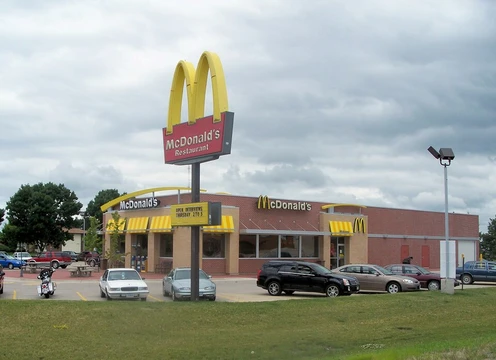
McKesson Corporation
Largest U.S. healthcare company by revenue, distributing a third of North American pharmaceuticals.

Schwede66 · CC BY-SA 4.0
McKesson Corporation, an American publicly traded firm, operates in the healthcare sector by distributing pharmaceuticals, supplying medical equipment, offering health information technology, and providing management tools. It moves roughly one-third of all pharmaceutical products used across North America and has a workforce exceeding 80,000 people. In 2024, its revenue reached $308.9 billion, making it the ninth-largest U.S. company by revenue and the country’s biggest healthcare enterprise. Headquartered in Irving, Texas, it is part of the S&P 500 and trades on the New York Stock Exchange under the ticker “MCK.”
The company built a broad infrastructure for healthcare and was an early user of technologies like barcode scanning in distribution, pharmacy robotics, and RFID tags. It has faced a federal lawsuit over allegations it profited from the U.S. opioid epidemic. During the COVID-19 pandemic, McKesson acted as a key vaccine distributor, serving as the U.S. government’s centralized distributor for hundreds of millions of vaccine doses and ancillary supply kits for over a billion doses.
**History**
**19th century** McKesson began in 1828 in New York City as Charles M. Olcott, founded by Charles M. Olcott. It was later renamed Olcott, McKesson & Co., and then John McKesson in 1833. The business started as an importer and wholesaler of botanical drugs. After Olcott’s death in 1853, the company became McKesson & Robbins, with Daniel Robbins—who had been an assistant to the original partners—joining as a third partner.
**20th century** In 1938, the company was embroiled in the McKesson and Robbins scandal under CEO Phillip Musica, one of the most infamous business and accounting frauds of the 20th century. Exposed that year, it triggered major shifts in U.S. auditing standards and securities regulations. Investigators found that a quarter of the company’s $86,556,270 in assets existed only as fabricated figures to maintain the appearance of profitability, while Musica—posing as F. Donald Coster—and his brothers siphoned funds. The firm survived through an equity receivership.
In 1967, Foremost Dairies, founded by James Cash Penney and based in San Francisco since 1954, acquired McKesson & Robbins in a hostile takeover, creating Foremost-McKesson Inc. The dairy operations were sold in 1982, and the name reverted to McKesson Corporation, though the headquarters stayed in San Francisco. In 1999, McKesson bought medical information systems firm HBO & Company (HBOC). The combined entity operated as McKessonHBOC for two years, but accounting irregularities at HBOC halved the company’s share price and led to the dismissal and prosecution of several HBOC executives.
**21st century** The company returned to the name McKesson in 2001. Early in the 21st century, it expanded its medical technology footprint through acquisitions, including Per Se Technologies and RelayHealth in 2006, and Practice Partner in 2007. On January 6, 2006, McKesson acquired NDCHealth Corporation. In 2010, it bought oncology and physician services firm US Oncology, Inc. for $2.16 billion, folding it into McKesson Specialty Health. In April 2012, McKesson agreed to pay the U.S. $190 million to settle claims it had inflated prices and overbilled Medicaid. Three months later, in July 2012, it paid California and 28 other states $151 million for similar allegations.
On June 24, 2013, *The Wall Street Journal* reported that Chairman and CEO John Hammergren’s $159 million pension benefits set a record for the largest pension on file for a current executive of a public company, and likely the largest ever in corporate America. In 2013, McKesson acquired PSS World Medical. In 2014, it bought Celesio, becoming one of the world’s largest healthcare companies with over $179 billion in annual revenue. In June 2016, it announced plans to merge its IT business with Change Healthcare.
In 2017, McKesson faced multiple lawsuits in Arkansas over the supply of vecuronium bromide, as it was under contract with Pfizer not to sell to any correctional facility that authorized or carried out capital punishment. In November 2018, the company announced it would move its headquarters from San Francisco to Irving, Texas, effective April 1, 2019. That same month, Brian Tyler became CEO. In February 2020, McKesson ended its relationship with Change Healthcare, giving up its ownership stake and three board seats. In February 2025, it signed a definitive agreement to acquire an 80% interest in PRISM Vision Holdings. In August 2026, the company was hacked by ShinyHunters.
**Opioid epidemic** In 2008, McKesson paid $13 million in fines for failing to report large orders of hydrocodone. In January 2017, it agreed to a $150 million civil penalty for similar alleged violations of the Controlled Substances Act regarding opioid distribution, plus another $150 million to settle claims it had not done enough to track and stop suspicious opioid sales. The agreement also required McKesson to suspend all sales of controlled substances from its distribution centers in Colorado, Florida, Ohio, and Michigan for multiple years. In May 2020, Oklahoma Attorney General Michael J. Hunter sued McKesson in Bryan County District Court, alleging the company’s actions helped fuel the state’s opioid crisis. The suit was filed alongside lawsuits against Cardinal Health and AmerisourceBergen, all three claiming the companies provided “enough opioids” to drive the epidemic.
- founded
- 1828
- field
- Pharmaceutical distribution, health information technology, medical supplies
- nationality
- American
- known_for
- Distributing a third of North America's pharmaceuticals; key distributor of COVI
- 2024_revenue
- $308.9 billion
- headquarters
- Irving, Texas
Verified Timeline
Lore & Background
McKesson was founded in 1828 in New York City as Charles M. Olcott by Charles M. Olcott. It was later renamed Olcott, McKesson & Co. and John McKesson in 1833. The business began as an importer and wholesaler of botanical drugs. A third partner, Daniel Robbins, who joined the enterprise as it grew, and who previously "was an assistant to the original partners", was the "Robbins" when the company was renamed McKesson & Robbins following Olcott's death in 1853. In 1938, the company was involved in the McKesson and Robbins scandal under CEO Phillip Musica. It was one of the most notorious business and accounting scandals of the 20th century, a watershed event that led to major changes in American auditing standards and securities regulations after being exposed in 1938. It was found that one fourth of the $86,556,270 assets of the company was just figures recorded to keep McKesson looking profitable while Musica, who was posing as F. Donald Coster, and his brothers stole the funds. The company was able to weather the crisis after an equity receivership. In 1967, Foremost Dairies, a company founded by James Cash Penney, which was headquartered in San Francisco since 1954, acquired McKesson & Robbins in a hostile takeover to form Foremost-McKesson Inc. The Foremost dairy operations were sold in 1982 and the name changed to McKesson Corporation but headquarters remained in San Francisco. In 1999, McKesson acquired medical information systems firm HBO & Company (HBOC). The combined firm operated as McKessonHBOC for two years. Accounting irregularities at HBOC reduced the company's share price by half and resulted in the dismissal and prosecution of many HBOC executives. In 2001, the company's name reverted to McKesson. In 2017, McKesson was involved in many lawsuits against the state of Arkansas over the supply of vecuronium bromide. McKesson was under contract by Pfizer not to sell to any correctional facility that authorized and carried out capital punishment. In November 2018, the company announced it would relocate its headquarters from San Francisco to Irving, Texas, effective April 1, 2019. Also in April 2019, Brian Tyler took over as CEO of the company. In 2008, McKesson paid $13 million in fines for failing to report large orders of hydrocodone. In January 2017, McKesson agreed to pay a $150 million civil penalty for alleged similar violations of the Controlled Substances Act regarding the distribution of opioids and another $150M to settle allegations that it had not done enough to track and stop suspicious opioid sales. The agreement also obligated McKesson to suspend all sales of controlled substances from its distribution centers in Colorado, Florida, Ohio, and Michigan for multiple years. In January 2022, McKesson, AmerisourceBergen, Cardinal Health, and Johnson & Johnson agreed to pay $26 billion to settle with all but five of the states suing them. Had the states gone to court, the companies could have faced up to $95 billion in penalties. In August 2020, during the COVID-19 pandemic, the CDC and HHS selected McKesson as the US government's centralized distributor for COVID-19 vaccine doses and ancillary supply kits under Operation Warp Speed. The company has played a key role in distributing the Moderna and Johnson & Johnson vaccines while also distributing ancillary supply kits for these as well as for the Pfizer–BioNTech vaccine across the US (in addition to supporting the US government in efforts to send doses and kits abroad).
Reader's Guide
McKesson Corporation's significance lies in its dominant role as the largest healthcare company in the United States by revenue, distributing a third of all pharmaceutical products used in North America. Its extensive infrastructure and early adoption of technologies such as barcode scanning, pharmacy robotics, and RFID tags have made it a critical backbone of the healthcare supply chain. The company's involvement in the opioid epidemic, including major lawsuits and settlements, highlights the complex ethical and legal challenges faced by large pharmaceutical distributors. During the COVID-19 pandemic, McKesson's role as the centralized distributor for hundreds of millions of vaccine doses underscored its logistical importance in public health emergencies. The company's history includes notable scandals, such as the 1938 McKesson and Robbins scandal, which led to major changes in auditing standards and securities regulations. Its legacy is a mix of essential healthcare infrastructure and significant legal controversies, reflecting the power and responsibility of a company that touches nearly every aspect of pharmaceutical distribution in North America.
Did You Know?
- McKesson delivers a third of all pharmaceutical products used or consumed in North America.
- In 1938, one fourth of the company's $86,556,270 assets were fictitious figures in the McKesson and Robbins scandal.
- McKesson was the US government's centralized distributor for COVID-19 vaccine doses under Operation Warp Speed.
- In January 2022, McKesson and three other companies agreed to pay $26 billion to settle opioid lawsuits with most states.
- McKesson relocated its headquarters from San Francisco to Irving, Texas, effective April 1, 2019.
Scale & Market Dominance
McKesson operates at a scale that few American enterprises can match. With 2024 revenue reaching $308.9 billion, it stands as the ninth-largest company by revenue in the United States and the nation's largest health care company. The firm employs more than 80,000 people and delivers roughly one-third of all pharmaceutical products used or consumed across North America. Headquartered in Irving, Texas, it trades on the New York Stock Exchange under the ticker MCK and is a component of the S&P 500. Its business spans pharmaceutical distribution, health information technology, medical supplies, and health management tools, making it a critical infrastructure layer for the entire healthcare system. No prescription reaches a patient's hands, no hospital restocks its shelves, and no clinic updates its records without the company's network likely playing a role somewhere in that chain.
The 1938 Scandal & Corporate Resilience
In 1938, McKesson & Robbins became the center of one of the most notorious accounting scandals of the twentieth century. Under CEO Phillip Musica, who operated under the alias F. Donald Coster, Musica and his brothers allegedly siphoned off one-quarter of the company's $86.5 million in assets, replacing the stolen funds with fabricated book entries to maintain the illusion of profitability. The exposure of the fraud became a watershed moment in American business history, directly prompting major reforms in auditing standards and securities regulations. The company survived the crisis through an equity receivership, a process that allowed it to restructure and continue operations. This episode remains a cautionary tale in corporate governance, illustrating how even a century-old firm originally built on legitimate trade in botanical drugs could be hollowed out from within by those entrusted with its books.
Opioid Accountability
McKesson's distribution network, while essential to public health, drew intense legal scrutiny over its role in America's opioid crisis. In 2008, the company paid $13 million in fines for failing to report large hydrocodone orders. Penalties escalated in January 2017, when McKesson agreed to a $150 million civil penalty for Controlled Substances Act violations and another $150 million to settle claims it had not done enough to track suspicious opioid sales. That settlement also required suspending controlled-substance sales from distribution centers in Colorado, Florida, Ohio, and Michigan for multiple years. In May 2020, Oklahoma's Attorney General sued McKesson alongside Cardinal Health and AmerisourceBergen, alleging the three firms supplied enough opioids for every adult in Bryan County to hold 144 hydrocodone tablets. The saga culminated in January 2022, when McKesson, AmerisourceBergen, Cardinal Health, and Johnson & Johnson collectively agreed to pay $26 billion to settle with all but five of the states that had sued them, avoiding the potential $95 billion in penalties had the cases gone to trial.
Strategic Evolution & Pandemic Response
McKesson's modern identity was shaped by a series of bold acquisitions and a pivotal role in national public health. In 2014, the company absorbed Celesio, instantly becoming one of the world's largest healthcare firms with over $179 billion in annual revenue. Earlier, the 2010 purchase of US Oncology for $2.16 billion expanded its reach into specialty physician services, while the 1999 acquisition of HBOC laid the groundwork for its health information technology arm. During the COVID-19 pandemic, the company's distribution infrastructure proved indispensable: the CDC and HHS selected McKesson as the US government's centralized distributor for hundreds of millions of vaccine doses, along with ancillary supply kits supporting over a billion doses. The firm had long been an early adopter of technologies like barcode scanning, pharmacy robotics, and RFID tags, and that operational backbone made it uniquely positioned to move vaccines at a speed and scale the country had never before required.
Gallery

Frequently Asked Questions
Who is McKesson Corporation?
McKesson is an American publicly traded company founded in 1828 in New York City that operates in pharmaceutical distribution and health technology. It trades on the NYSE under the ticker symbol MCK and is a component of the S&P 500.
What does McKesson Corporation actually do?
The company distributes pharmaceuticals, supplies medical equipment, and provides health information technology and management tools to providers across North America. It handles roughly one-third of all pharmaceutical products used in the region.
How large is McKesson Corporation?
McKesson employs more than 80,000 people and generated approximately $308.9 billion in revenue in 2024. By that revenue figure, it stands as the largest healthcare company in the United States.
Where is McKesson Corporation headquartered?
The company's current headquarters sits in Irving, Texas, even though it was originally founded in New York City back in 1828.
Why is McKesson Corporation important in the healthcare landscape?
As the primary distributor for a third of North America's pharmaceuticals, McKesson serves as a critical supply-chain link between manufacturers and end users. Its role also made it a key distributor of COVID-19 vaccines, while its opioid-related distribution has drawn significant legal scrutiny.
More in Corporations 1-22
Spotted an error? Know more?
This is a living reference — every entry is fact-audited, and reader corrections feed straight into our audit queue. Suggest an edit · See this site's audit record