
Nokia
Finnish telecom giant that dominated mobile phones for a decade.

Strubbl · CC BY-SA 4.0
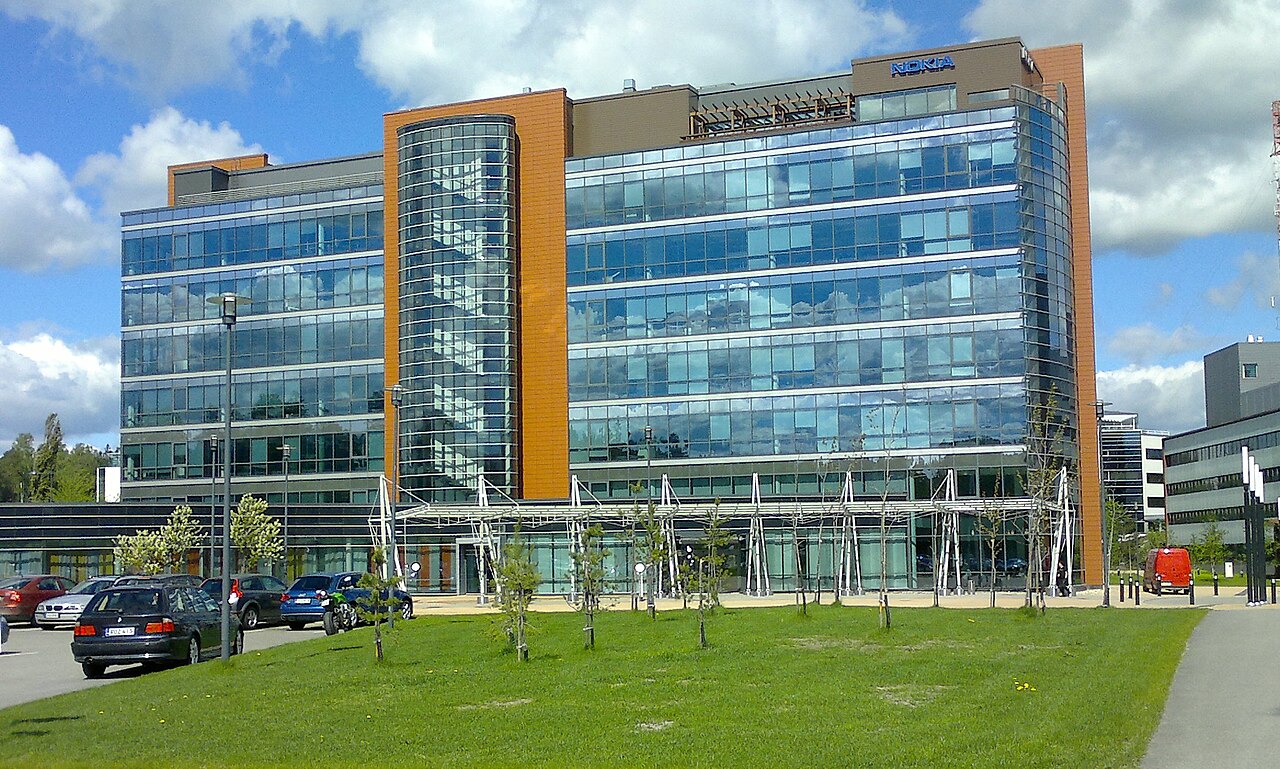
Nokia Corporation is a Finnish multinational focused on telecommunications, information technology, and consumer electronics. It was originally founded as a pulp mill in 1865, with its roots in the Tampere region of Pirkanmaa, though its main headquarters are now in Espoo, within the Helsinki metropolitan area. By 2020, the company employed around 92,000 people across over 100 countries, conducted business in more than 130 nations, and reported annual revenues of roughly €23 billion. It is a public limited company listed on the Nasdaq Helsinki and New York Stock Exchange, and a component of the Euro Stoxx 50. In 2016, it ranked as the world’s 415th-largest company by revenue on the Fortune Global 500, having peaked at 85th place in 2009.
Over 150 years, Nokia has operated in diverse industries. It began as a pulp mill and was long associated with rubber and cables, but since the 1990s has concentrated on large-scale telecommunications infrastructure, technology development, and licensing. The company made major contributions to mobile telephony, aiding the development of GSM, 3G, and LTE standards. From 1998 for a decade, it was the world’s largest vendor of mobile phones and smartphones. However, poor management decisions in the later 2000s caused its market share to drop sharply. After a partnership with Microsoft and subsequent struggles, Microsoft bought Nokia’s mobile phone business in 2014, incorporating it as Microsoft Mobile. Following that sale, Nokia refocused on telecommunications infrastructure and Internet of things technologies, divesting its Here mapping division and acquiring Alcatel-Lucent, including Bell Labs. It also experimented with virtual reality and digital health, purchasing Withings. The Nokia brand returned to mobile phones in 2016 through a licensing deal with HMD. Nokia remains a major patent licensor for most large mobile phone vendors and is the world’s third-largest network equipment manufacturer.
Nokia was a source of national pride in Finland, as its mobile phone business made it the country’s largest company and brand globally. At its peak in 2000, it accounted for 4% of Finland’s GDP, 21% of total exports, and 70% of the Nasdaq Helsinki market capital. The company’s history began in 1865 when mining engineer Fredrik Idestam established a pulp mill near Tampere, then part of the Russian Empire. A second mill opened in 186
- headquarters
- Espoo, Finland
- field
- Telecommunications, information technology, consumer electronics
- nationality
- Finnish
- known_for
- Mobile phone industry leadership, GSM/3G/LTE standards, network equipment
Lore & Background
In the 1970s and 1980s, under CEO Kari Kairamo, Nokia transformed its business through a series of acquisitions, purchasing television manufacturer Salora in 1984, Swedish electronics and computer maker Luxor AB in 1985, and French television maker Oceanic in 1987. These moves made Nokia the third-largest television manufacturer in Europe, behind only Philips and Thomson. The company had been restructured in 1967 following the merger of three firms—Nokia, Kaapelitehdas, and Finnish Rubber Works—into a new Nokia Corporation with four main divisions: forestry, cable, rubber, and electronics. During this era, Nokia entered the networking and radio industries, and began producing military equipment for Finland’s defence forces, including the Sanomalaite M/90 communicator (introduced in 1983) and the M61 gas mask (developed in the 1960s). It also manufactured professional mobile radios, telephone switches, capacitors, and chemicals. Nokia expanded into the Soviet market following a trade agreement in the 1960s, and by the late 1970s the Soviet Union had become a major, highly profitable market for the company, trading in items ranging from automatic telephone exchanges to robotics. This trade drew concern from the U.S. government over potential high-technology exports, leading Finland to join the Coordinating Committee for Multilateral Export Controls in 1987.
Reader's Guide
Nokia’s significance is rooted in its long evolution from a 19th-century pulp mill into a global telecommunications leader, a journey that made it a symbol of national pride in Finland. At its peak in 2000, the company contributed 4% of Finland’s GDP, 21% of total exports, and 70% of the Nasdaq Helsinki market capital. The company’s behaviour was shaped by strategic pivots: it began as a pulp mill, expanded into rubber and cables, and later entered electronics, networking, and mobile telephony. Nokia played a key role in developing GSM, 3G, and LTE standards, and for a decade starting in 1998, it was the world’s largest vendor of mobile phones and smartphones. However, poor management decisions in the late 2000s caused a sharp decline in its mobile phone market share. After selling its mobile phone business to Microsoft in 2014, Nokia refocused on telecommunications infrastructure and Internet of things technologies, acquiring Alcatel-Lucent and its Bell Labs research arm. It also licensed the Nokia brand to HMD for smartphones from 2016 onward. Today, Nokia is the world’s third-largest network equipment manufacturer and a major patent licensor for mobile phone vendors.
Did You Know?
- At its peak in 2000, Nokia accounted for 4% of Finland's GDP and 70% of the Nasdaq Helsinki market capital.
- Nokia assisted in the development of the GSM, 3G, and LTE mobile standards.
From Pulp to Power: Nokia's Industrial Roots
Nokia's story begins not with a phone but with wood pulp. In 1865, mining engineer Fredrik Idestam built a pulp mill along the Tammerkoski rapids near Tampere, in what was then the Russian Empire's Grand Duchy of Finland. A second mill followed in 1868 near the small town of Nokia, where superior hydropower made operations more efficient. In 1871, Idestam and his friend Leo Mechelin formalized their partnership into Nokia Ab, named after that second site. After Idestam's retirement in 1896, Mechelin steered the company toward electricity generation by 1902. The rubber and cable businesses joined the fold through Eduard Polón's Finnish Rubber Works in 1904 and the Cable Factory partnership in 1922. By 1967, all three entities merged into a single Nokia Corporation organized around four divisions: forestry, cable, rubber, and electronics. The company also produced respirators for civilian and military use from the 1930s into the early 1990s, and manufactured defense equipment such as the Sanomalaite M/90 communicator for Finland's armed forces. This sprawling industrial foundation laid the groundwork for everything that followed.
The Mobile Phone Decade and National Pride
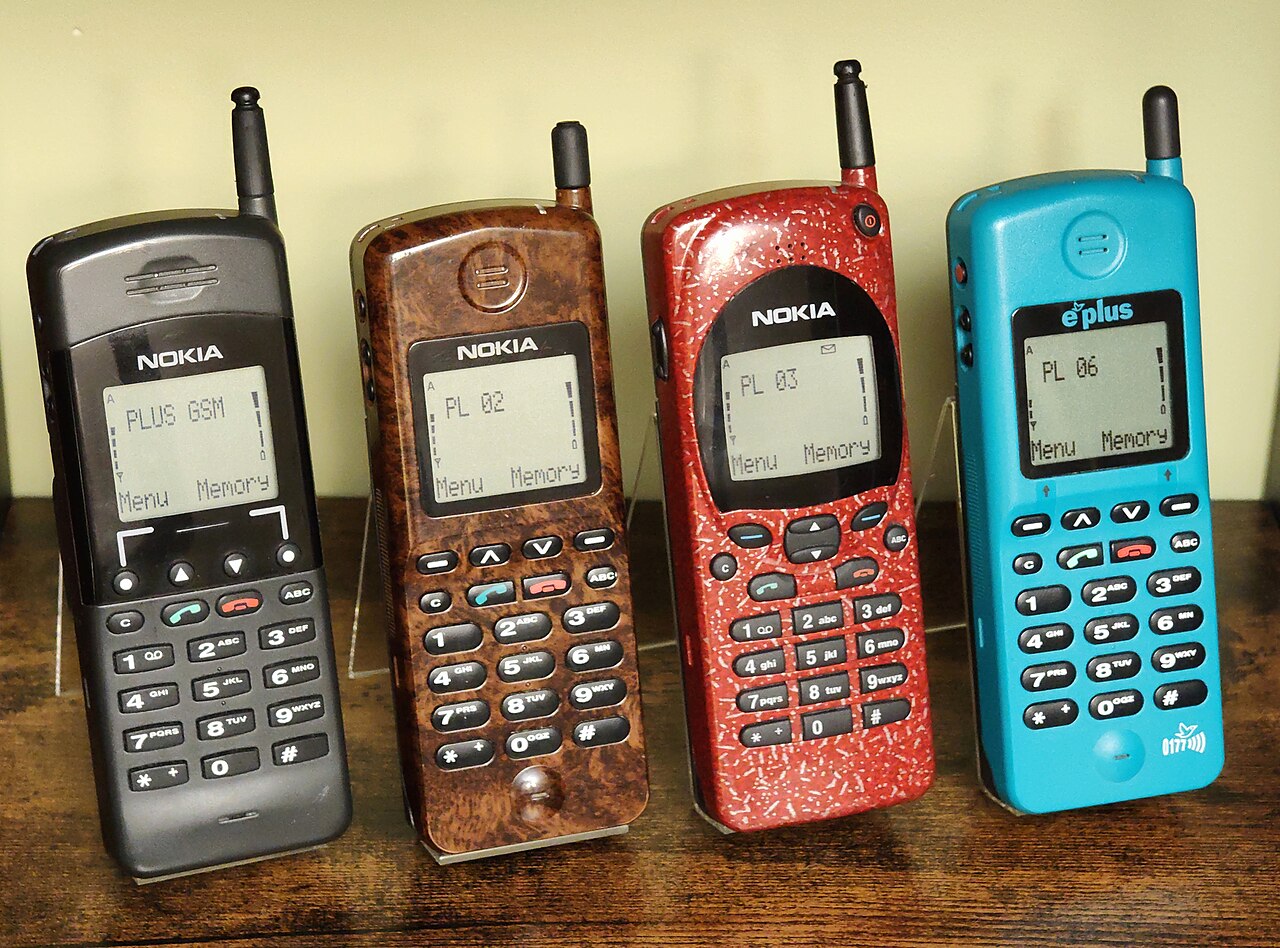
What began as an afterthought became a global empire. In 1979, Nokia established Mobira as a joint venture with Salora Oy to manufacture mobile radio telephones. The company's executive board at the time dismissed mobile phones as improbably futuristic niche gadgets, comparable to James Bond's props. Yet in 1981, Mobira launched the Nordic Mobile Telephone service, the world's first international cellular network with roaming capability, and in 1982 the Mobira Senator car phone became Nokia's first mobile phone. Nokia acquired Mobira outright in 1984. By the late 1990s, the company had helped shape the GSM, 3G, and LTE standards that underpin modern wireless communication. Beginning in 1998, Nokia held the top spot globally in mobile phone and smartphone sales for an entire decade. At its 2009 peak, it ranked 85th on the Fortune Global 500. In 2000, the company represented four percent of Finland's GDP, 21 percent of its total exports, and a staggering 70 percent of the Nasdaq Helsinki market capitalization. For Finns, Nokia was not merely a corporation; it was a national symbol of industrial achievement.
The Collapse and the Microsoft Sale
The very decade that made Nokia a household name worldwide also sowed the seeds of its consumer-device downfall. In the later 2000s, a string of poor management decisions eroded the company's competitive edge, and its share of the global mobile phone market plummeted. The situation deteriorated further through a partnership with Microsoft, which ultimately failed to restore Nokia's position in the smartphone era. In 2014, Microsoft purchased Nokia's entire mobile phone division, Nokia Devices & Services, and folded it into Microsoft Mobile, effectively ending Nokia's direct presence in the consumer handset market. The loss was profound for a company that had, just fifteen years earlier, dominated the industry. The sale marked a painful but decisive pivot: Nokia would no longer compete as a phone maker. Instead, it redirected its enormous engineering capabilities toward telecommunications infrastructure and Internet of Things technologies. The Here mapping division was divested, and the company made a bold strategic move by acquiring Alcatel-Lucent, bringing the storied Bell Labs research organization under its roof. This transformation signaled that Nokia's future lay in the networks that connect devices, not the devices themselves.
Reinvention, Licensing, and Lasting Influence
Post-2014, Nokia reinvented itself as a backbone of global connectivity. The acquisition of Alcatel-Lucent and its Bell Labs research arm gave the company deep roots in advanced telecommunications R&D. By 2018, Nokia had climbed to become the world's third-largest network equipment manufacturer, a position built on decades of contributions to GSM, 3G, and LTE standards. The company also ventured into virtual reality and digital health, the latter through its purchase of the Withings brand. Meanwhile, the Nokia name re-entered the smartphone arena in 2016, but through a licensing arrangement with HMD rather than in-house production. Nokia remains a major patent licensor to most large mobile phone vendors, ensuring its technological fingerprints appear across the industry even without manufacturing its own handsets. As of 2020, the company employed roughly 92,000 people across more than 100 countries, conducted business in over 130 nations, and generated approximately €23 billion in annual revenue. Listed on both Nasdaq Helsinki and the New York Stock Exchange and a component of the Euro Stoxx 50 index, Nokia endures as a Finnish multinational whose 155-year journey from a riverside pulp mill to a global infrastructure giant remains one of the most remarkable corporate transformations of the modern era.
Gallery
Frequently Asked Questions
Why is Nokia important to the telecom industry?
Nokia contributed to the development of the GSM, 3G, and LTE standards that underpin virtually every modern mobile network, giving its influence a reach well beyond any single product line.
More in Corporations 1-22
Spotted an error? Know more?
This is a living reference — every entry is fact-audited, and reader corrections feed straight into our audit queue. Suggest an edit · See this site's audit record