Computer science
Study of computation, information, and automation spanning theory to application.

Computer science examines computation, information, and automation. It is broadly considered a science, covering both theoretical areas—like algorithms, the theory of computation, and information theory—and applied ones, such as designing and building hardware and software. Someone who specializes in this field is called a computer scientist.
Central to the discipline are algorithms and data structures. The theory of computation explores abstract models of computing and the general types of problems these models can solve. Cryptography and computer security focus on enabling secure communication and defending against security flaws. Computer graphics and computational geometry deal with creating images. Programming language theory examines different methods for describing computational processes, while database theory looks at managing collections of data. Human–computer interaction studies the interfaces between people and machines, and software engineering concentrates on the principles behind developing software. Fields like operating systems, networks, and embedded systems investigate the design of complex systems. Computer architecture covers how computer components and related equipment are built. Artificial intelligence and machine learning aim to create goal-driven processes—such as problem-solving, decision-making, adapting to environments, planning, and learning—that are found in humans and animals. Within AI, computer vision processes image and video data, and natural language processing handles text and language.
The core question of computer science is what can and cannot be automated. The Turing Award is widely seen as the field's highest honor.
The earliest roots of computer science go back long before the modern digital computer. Devices like the abacus, used for fixed calculations such as multiplication and division, have existed since ancient times. Algorithms for performing computations also date back to antiquity, even before sophisticated computing machines existed.
Wilhelm Schickard built the first working mechanical calculator in 1623. In 1673, Gottfried Leibniz demonstrated a digital mechanical calculator called the Stepped Reckoner. Leibniz is sometimes considered the first computer scientist and information theorist, partly because he documented the binary number system (though Thomas Harriot had done so earlier). In 1820, Thomas de Colmar launched the mechanical calculator industry with his simplified arithmometer, the first calculating machine reliable enough for daily office use. Charles Babbage began designing the first automatic mechanical calculator, his Difference Engine, in 1822, which led him to conceive the first programmable mechanical calculator, the Analytical Engine. He started developing it in 1834, and within two years had sketched many of the modern computer's key features. A crucial step was adopting a punched card system from the Jacquard loom, making the machine infinitely programmable. In 1843, while translating a French article on the Analytical Engine, Ada Lovelace included an algorithm for computing Bernoulli numbers—considered the first published algorithm specifically designed for a computer. Around 1885, Herman Hollerith invented the tabulator, which used punched cards to process statistical data; his company later became part of IBM. In 1909, Percy Ludgate published the second known design for a mechanical analytical engine, unaware of Babbage's earlier work. In 1914, Spanish engineer Leonardo Torres Quevedo published *Essays on Automatics* and designed a theoretical electromechanical calculating machine controlled by a read-only program, also introducing floating-point arithmetic. In 1920, to mark the arithmometer's centenary, Torres demonstrated the Electromechanical Arithmometer in Paris, a prototype showing that an electromechanical analytical engine was feasible—commands could be typed in and results printed automatically. In 1937, Howard Aiken convinced IBM to build the ASCC/Harvard Mark I, a giant programmable calculator based on Babbage's Analytical Engine, using punched cards and a central processing unit. When finished, some called it "Babbage's dream come true."
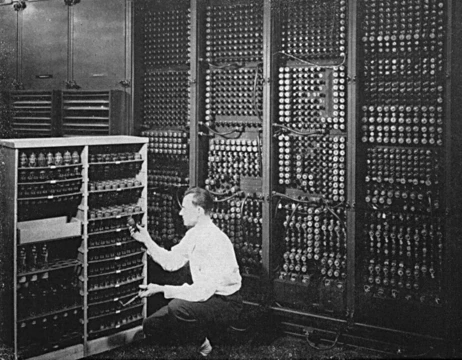
During the 1940s, with machines like the Atanasoff–Berry computer and ENIAC, the term "computer" shifted from referring to human calculators to the machines themselves. As it became clear that computers could do more than math, computer science expanded to study computation generally. In 1945, IBM founded the Watson Scientific Computing Laboratory at Columbia University in New York City, its first lab devoted to pure science. This lab was the forerunner of IBM's Research Division, which now operates facilities worldwide. The close partnership between IBM and Columbia University helped give rise to a new science.
- field
- Computer science
- known_for
- Study of computation, information, and automation; central role of algorithms and data structures; determining what can and cannot be automated
- highest_distinction
- Turing Award
- earliest_foundations
- Predate the invention of the modern digital computer; abacus and algorithms from antiquity
- first_degree_program
- Cambridge Diploma in Computer Science, 1953
- first_US_department
- Purdue University, 1962
Lore & Background
Computer science is the study of computation, information, and automation, spanning theoretical fields like algorithms and information theory to applied fields like hardware and software design. Its fundamental concern is determining what can and cannot be automated. Central to the discipline are algorithms and data structures. The theory of computation examines abstract models and the classes of problems solvable by them. Cryptography and computer security focus on secure communication and preventing vulnerabilities. Computer graphics and computational geometry generate images, while programming language theory describes computational processes. Database theory manages data repositories, and human–computer interaction studies interfaces between humans and machines. Software engineering addresses the principles of developing software, while operating systems, networks, and embedded systems investigate complex system design. Computer architecture concerns the construction of computer components. Artificial intelligence and machine learning synthesize goal-oriented processes like problem-solving and learning; within AI, computer vision processes images and video, and natural language processing handles text. The Turing Award is the field's highest honor. The earliest foundations predate the modern digital computer, with calculating machines like the abacus and algorithms existing since antiquity. Wilhelm Schickard built the first working mechanical calculator in 1623, and Gottfried Leibniz demonstrated a digital mechanical calculator in 1673, also documenting the binary number system, though Thomas Harriot had done so earlier. Charles Babbage designed the Difference Engine in 1822 and later the Analytical Engine, the first programmable mechanical calculator, adopting a punched card system from the Jacquard loom. In 1843, Ada Lovelace published the first algorithm intended for a computer. Herman Hollerith invented the tabulator around 1885, and his company became part of IBM. Leonardo Torres Quevedo published *Essays on Automatics* in 1914, introducing floating-point arithmetic, and demonstrated the Electromechanical Arithmometer in 1920. In 1937, Howard Aiken convinced IBM to build the ASCC/Harvard Mark I, based on Babbage's Analytical Engine.
Reader's Guide
Computer science became established as a distinct academic discipline in the 1950s and early 1960s. The first computer science degree program began at the University of Cambridge Computer Laboratory in 1953, and the first U.S. department was formed at Purdue University in 1962. Alternative names such as computing science, datalogy, and data science have been proposed. The field's fundamental concern is determining what can and cannot be automated. Its scope includes algorithms, theory of computation, cryptography, computer graphics, programming language theory, database theory, human–computer interaction, software engineering, operating systems, artificial intelligence, and machine learning. The Turing Award is generally recognized as the highest distinction in computer science.
Did You Know?
- The first computer science degree program was the Cambridge Diploma in Computer Science, beginning in 1953.
- The Turing Award is generally recognized as the highest distinction in computer science.
More in Computing & Digital 1-24
Spotted an error? Know more?
This is a living reference — every entry is fact-audited, and reader corrections feed straight into our audit queue. Suggest an edit · See this site's audit record