Computer keyboard
Primary computer input device since the 1970s.

A computer keyboard is a built-in or peripheral input device modeled after the typewriter keyboard, using an arrangement of buttons or keys to act as mechanical levers or electronic switches. It has been the main input method for computers since the 1970s, supplemented by the computer mouse since the 1980s and the touchscreen since the 2000s. Keyboards remain central to human-computer interaction, though mobile devices often use virtual keyboards.
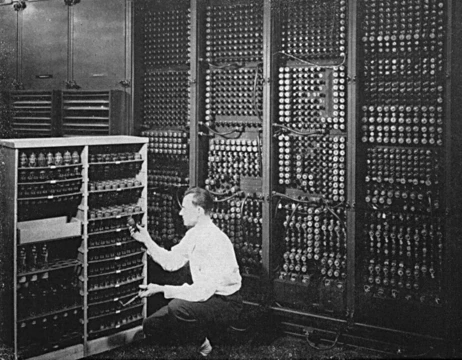
The keyboard’s lineage traces back to two key electromechanical devices: the teleprinter and the keypunch. Teleprinter-like devices were used as early as the 1870s to transmit stock market data across telegraph lines. The modern teleprinter was developed between 1907 and 1910 by American engineer Charles Krum and his son Howard, building on earlier work by inventors such as Royal Earl House and Frederick G. Creed. Separately, Herman Hollerith created the first keypunch devices, which by the 1930s had evolved to include text and number keys similar to typewriters. Early computers like the ENIAC used a keypunch for input and output, while the BINAC employed an electromechanically controlled typewriter for data entry onto magnetic tape. Teleprinter keyboards dominated point-to-point communication throughout the 20th century, while keypunch keyboards were essential for data entry and storage.
Keyboard keys typically bear engraved or printed characters, and pressing a key usually produces a single written symbol, though some symbols require pressing multiple keys simultaneously or in sequence. Most keys generate letters, numbers, or symbols, but others, like the escape key, issue system commands. In modern computers, the interpretation of key presses is handled by software; the keyboard sends a scan code identifying only which physical key was pressed or released. Keyboards are primarily used for text entry into applications such as word processors, web browsers, and social media. Touchscreens provide virtual keyboards for this purpose.
Modern keyboards follow standard mechanical layouts, most commonly ISO, ANSI, and JIS, named after the organizations that publish the relevant standards. ANSI alphanumeric keys are spaced on three-quarter inch centers with a key travel of at least a certain minimum. Full-size keyboards typically have 101, 104, or 105 keys; US models often have 104 keys, while 105-key layouts are commo
- type
- Input device
- ancestor
- Typewriter
- key predecessors
- Teleprinter and keypunch
- common layouts
- ISO, ANSI, JIS
- key spacing (ANSI)
- 0.75 inches (19 mm) centers
- key travel (ANSI)
- at least 0.15 inches (3.8 mm)
Lore & Background
A computer keyboard is a peripheral or built-in input device modeled after the typewriter, using an arrangement of buttons or keys that act as mechanical levers or electronic switches. It replaced earlier punched cards and paper tape technology, and since the 1970s, teleprinter-style keyboards have been the primary input method for computers, later supplemented by the computer mouse in the 1980s and touchscreens in the 2000s. The keyboard’s ancestry lies in two key devices: the teleprinter, developed from 1907 to 1910 by Charles Krum and his son Howard, building on earlier work by Royal Earl House and Frederick G. Creed, and the keypunch, first created by Herman Hollerith and later evolved to include typewriter-like keys by the 1930s. Teleprinters were used for point-to-point and point-to-multipoint communication throughout much of the 20th century, while keypunches served data entry and storage. Early computers like the ENIAC and BINAC incorporated these devices for input and output. Keyboards remained the most integrated computer peripheral until the mouse’s consumer introduction in 1984. Modern keyboards typically follow standard mechanical layouts known as ISO, ANSI, or JIS, with full-size models having 101 to 105 keys; US conventions use 104 keys, while 105 is common elsewhere. Tenkeyless designs omit the numeric keypad for compactness. Keys usually have engraved or printed characters, and pressing a key sends a scan code to the computer, which software interprets. Keyboards are used for text entry into word processors, web browsers, and social media apps, while touchscreens employ virtual keyboards.
Reader's Guide
The computer keyboard is a foundational input device that replaced earlier punched cards and paper tape technology. Its design inherits from teleprinters and keypunches, which were developed in the late 19th and early 20th centuries. Keyboards have been the main method for text entry into computers since the 1970s, and despite the introduction of the mouse and touchscreen, they remain essential for human-computer interaction. The interpretation of key presses is left to software, with the computer receiving only scan codes indicating which physical keys were pressed or released. Keyboards come in various types—desktop full-size, laptop, flexible, handheld, and thumb-sized—each suited to different needs. Standards like ANSI, ISO, and JIS define mechanical layouts and key spacing. The keyboard's role in data entry, communication, and system command execution has made it a lasting interface, even as mobile devices shift to virtual keyboards.
Did You Know?
- Herman Hollerith developed the first keypunch devices, which evolved to include keys for text and number entry by the 1930s.
- The ENIAC computer used a keypunch device for both input and paper-based output.
- ANSI standard alphanumeric keyboards have keys on three-quarter inch centers (0.75 inches) and key travel of at least 0.15 inches.
Frequently Asked Questions
What exactly is a computer keyboard?
It is an input device, either built into the machine or connected as a peripheral, that lets you enter text and commands by pressing individual keys. Each key functions as a small mechanical lever or electronic switch, and the overall design is modeled on the typewriter.
Where did the computer keyboard's design come from?
The layout is directly inherited from the typewriter keyboard, although earlier data-entry machines such as the teleprinter and the keypunch also shaped its development.
What keyboard layouts are used around the world?
The three most common standards are ISO, ANSI, and JIS, each adjusting key shapes and positions to match regional typing conventions.
Is the keyboard still the main way people interact with computers?
Yes; it has served as the primary input method since the 1970s. The mouse (1980s) and touchscreen (2000s) added supplementary options, and mobile devices now often rely on virtual on-screen keyboards instead of physical ones.
More in Computing & Digital 1-24
Spotted an error? Know more?
This is a living reference — every entry is fact-audited, and reader corrections feed straight into our audit queue. Suggest an edit · See this site's audit record