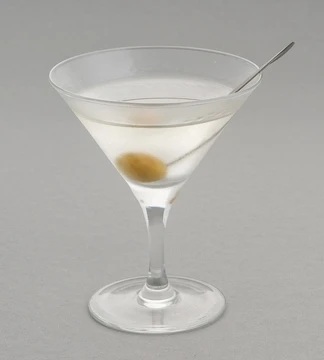
Caesar (cocktail)
A Canadian cocktail of vodka, Clamato, and spices.

A Minty Penguin · CC BY-SA 4.0
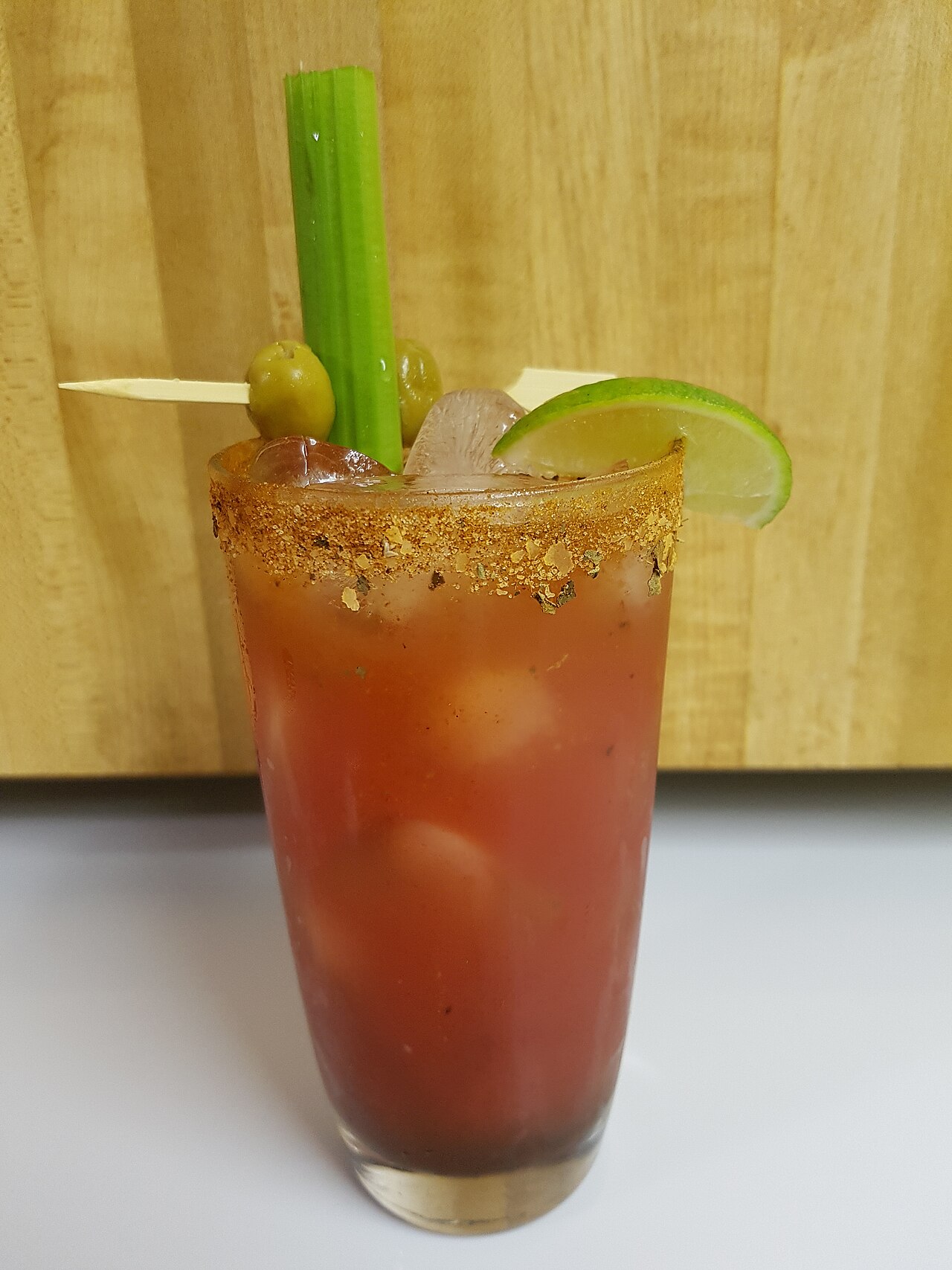
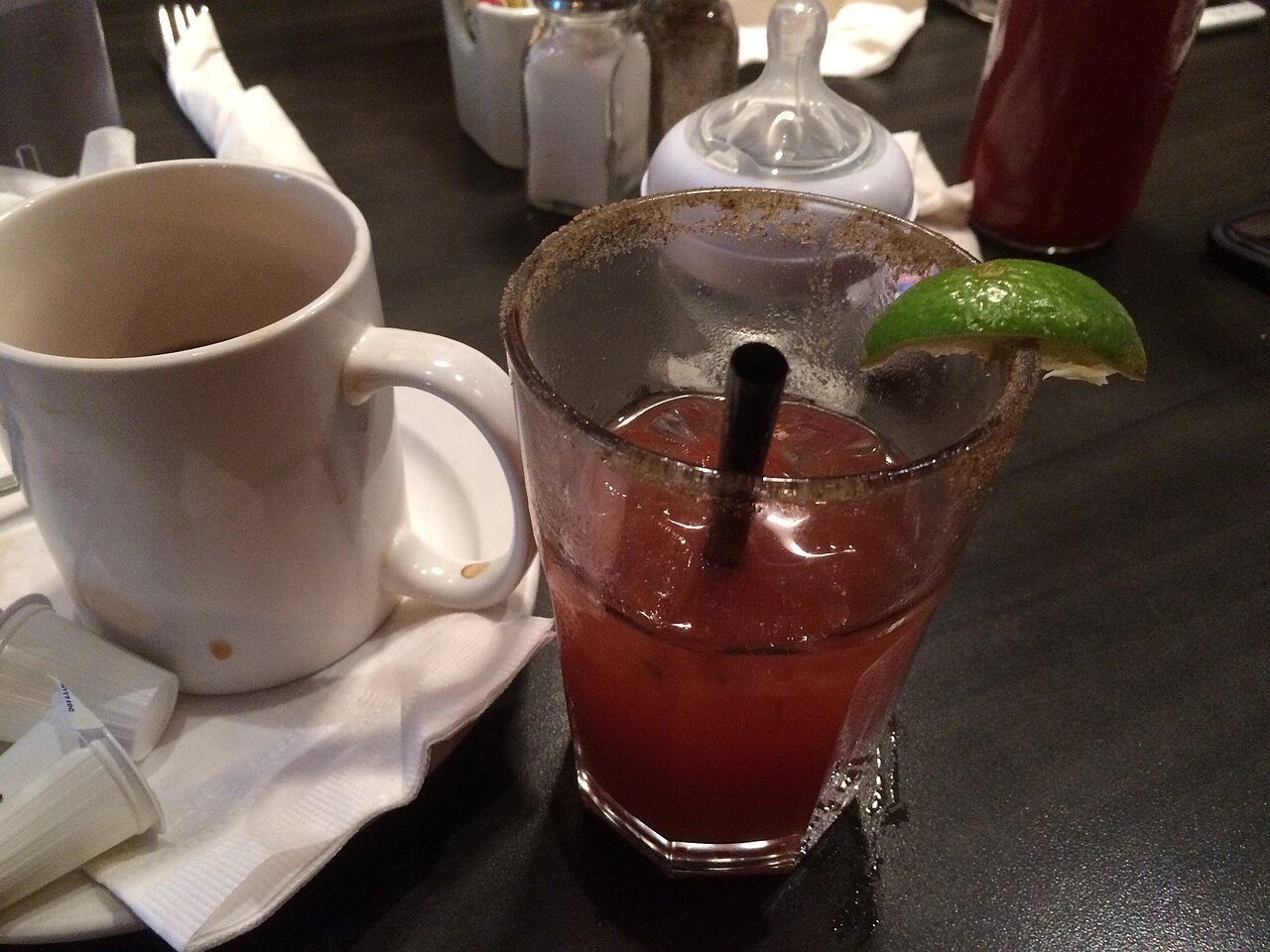
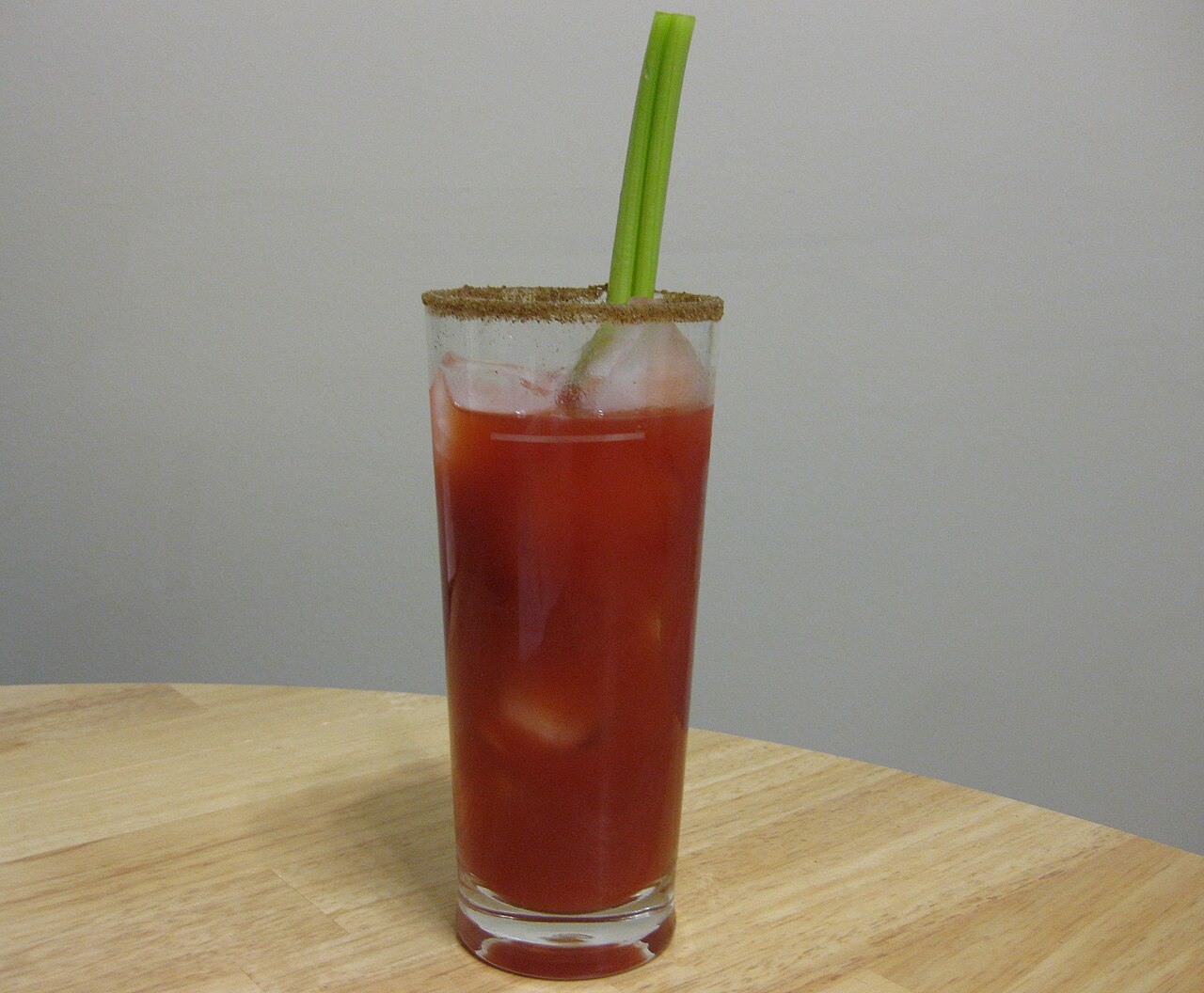
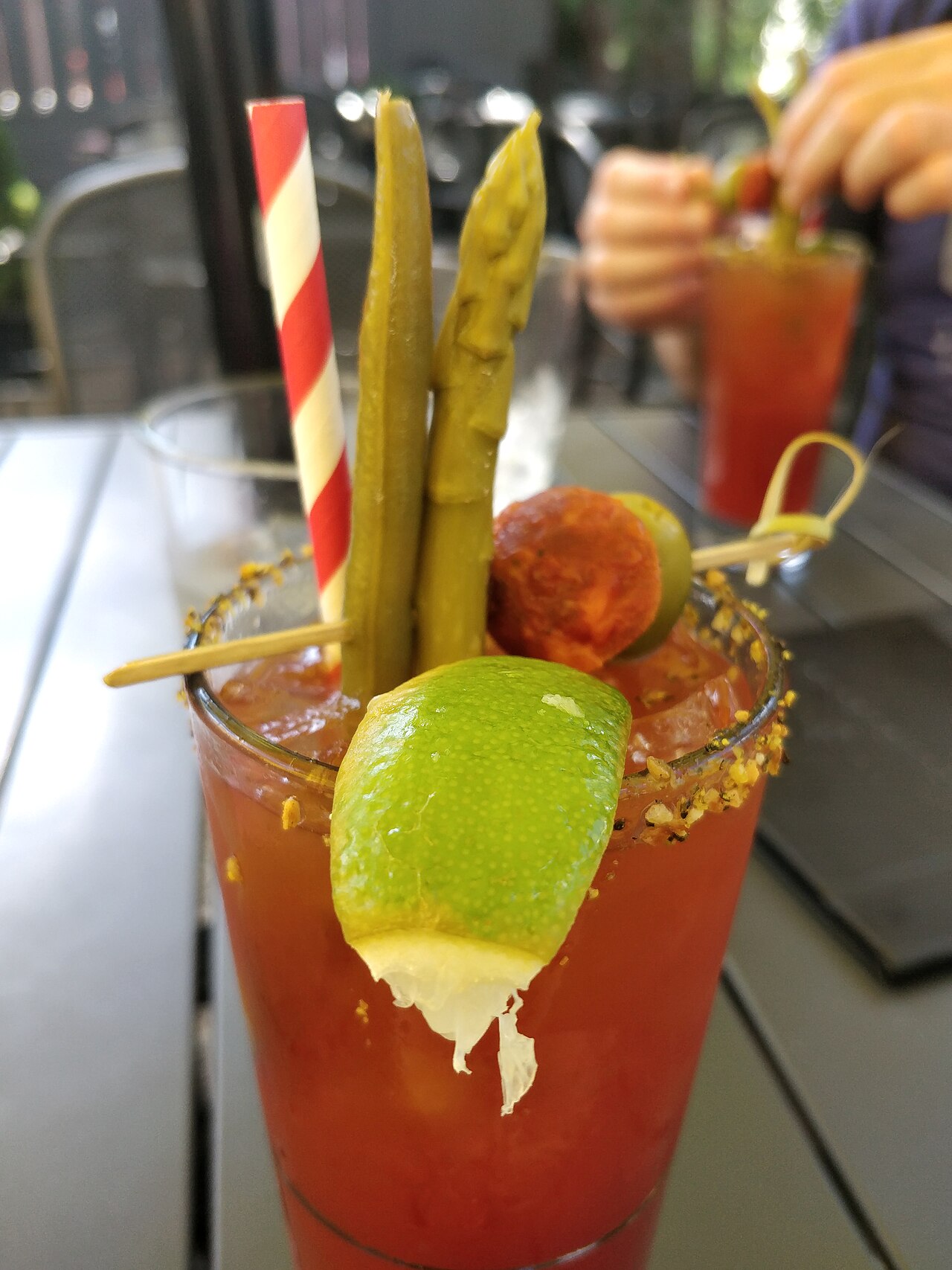
The Caesar is a Canadian cocktail made with vodka, Clamato, hot sauce, and Worcestershire sauce, served over ice in a tall glass with a celery salt rim and garnished with a celery stalk and lime wedge. Its key difference from a Bloody Mary is the addition of clam broth, and it is also distinct from a Michelada, which uses beer instead of vodka.
The drink’s origins trace back to earlier recipes. The 1951 cocktail book *Bottoms Up* included a "Bloody Mary a La Milo" with vodka, tomato juice, clam juice, and Worcestershire sauce, credited to publisher Milo J. Sutliff. In November 1953, the Polonaise nightclub in Manhattan introduced a similar drink called the "Smirnoff Smiler," which columnist Walter Winchell noted was seasoned with Worcestershire sauce. In 1959, *Addams Family* creator Charles Addams claimed to have invented the "Gravel Gertie," a mix of clam and tomato juice with vodka and Tabasco. In 1962, Dallas bar manager Carl La Marca created the "Imperial Clam Digger" at the Baker Hotel, adding basil and lime to an existing "Clam Digger" version. In 1968, Seagram president Victor Fischel and Mott’s marketer Ray Anrig claimed to have invented the "Clamdigger" in Manhattan, and Seagram filed a trademark for the name that year, promoting the recipe in national magazines through 1969.
The Caesar itself was invented in 1969 by Walter Chell, a restaurant manager at the Calgary Inn (now the Westin Hotel) in Calgary, Alberta. Tasked with creating a signature drink for the inn’s new Italian restaurant, Chell combined vodka with clam and tomato juice, Worcestershire sauce, and spices, aiming for a spicy twist on a Bloody Mary. His inspiration came from Venice, where spaghetti alle vongole—spaghetti with tomato sauce and clams—led him to mash clams into a "nectar" for the drink. Chell’s Italian ancestry prompted him to name it a "Caesar," though the longer name "Bloody Caesar" distinguishes it from the Bloody Mary. Chell also credited a regular English patron who, after sampling the drink, called it "a damn good bloody Caesar."
The Caesar was an immediate success, with Chell saying it "took off like a rocket." Within five years, it became Calgary’s most popular mixed drink, spreading across Western Canada and then eastward. In 2009, Calgary Mayor Dave Bronconnier declared May 13 Caesar Day.
Quick Facts
- Ingredients
- 6 oz. Clamato Juice / 1–1 · 1 · 2 oz. vodka / 2 dashes hot sauce / 4 dashes Worcestershire sauce / Celery salt / Freshly ground pepper / Lime wedge / 1 crisp celery stalk
- Served
- on the rocks
- Garnish
- stalk of celery and wedge of lime
- Prep
- Rim glass with celery salt, and a lime wedge.
- Drinkware
- Highball glass
Facts from the source article.
Lore & Background
The Caesar was invented in 1969 by restaurant manager Walter Chell of the Calgary Inn (today the Westin Hotel) in Calgary, Alberta, Canada. Chell devised the cocktail after being tasked to create a signature drink for the Calgary Inn's new Italian restaurant. He mixed vodka with clam and tomato juice, Worcestershire sauce, and other spices, creating a drink similar to a Bloody Mary, but with a uniquely spicy flavour. Chell said his inspiration came from Italy; he recalled that in Venice, they served Spaghetti alle vongole, spaghetti with tomato sauce and clams, and reasoned that the mixture of clams and tomato sauce would make a good drink. He mashed clams to form a 'nectar' that he mixed with other ingredients.
According to Chell's granddaughter, his Italian ancestry led him to call the drink a 'Caesar'. The longer name of 'Bloody Caesar' is said to differentiate the drink from the Bloody Mary, but Chell said it was a regular patron at the bar who served as the inspiration. During the three months he spent working to perfect the drink, he had customers sample it and offer feedback. One regular customer, an Englishman, who often ordered the drink said one day, 'Walter, that's a damn good bloody Caesar'.
Earlier cocktails with similar ingredients predate Chell's invention. The 'Bloody Mary a La Milo' in the 1951 Ted Saucier cocktail book appears to be the first published recipe including vodka, tomato juice, clam juice, and Worcestershire sauce. Other precursors include the 'Smirnoff Smiler' (debuting November 1953 at the Polonaise nightclub in Manhattan), the 'Gravel Gertie' (claimed by Charles Addams in 1959), the 'Imperial Clam Digger' (invented in 1962 by Carl La Marca), and the 'Clamdigger' (claimed by Seagram and Mott's in 1968).
Reader's Guide
The Caesar is significant as Canada's most popular mixed drink, having spread from Calgary throughout Western Canada and then eastward. Within five years of its introduction, it had become Calgary's most popular mixed drink. The Mott's company, which was independently developing Clamato at the same time the Caesar was invented, saw sales of Clamato increase dramatically after distributors discovered Chell's drink: by 1994, 70% of Mott's Clamato sales in Canada were made to mix Caesars. The drink's popularity is celebrated annually, with Calgary Mayor Dave Bronconnier declaring May 13, 2009 Caesar Day in the city. Mott's holds an annual 'Best Caesar in Town' competition as part of the Prince Edward Island International Shellfish Festival. The first liquor store dedicated to the Caesar opened on July 1, 2023 in Calgary, Alberta. Outside Canada, the Caesar is typically available at bars along the Canada–United States border, and in Europe wherever there are higher concentrations of Canadians. Its anonymity outside Canada has continued despite concerted marketing efforts, with producers citing a 'clam barrier' among U.S. consumers. The basic preparation follows a 'one, two, three, four' rule: 1 imp fl oz of vodka, two dashes of hot sauce, three dashes of salt and pepper, four dashes of Worcestershire sauce, topped with Clamato, served in a glass rimmed with celery salt and garnished with celery and lime.
Did You Know?
- Chell's inspiration came from Spaghetti alle vongole, a Venetian dish of spaghetti with tomato sauce and clams.
- The drink is sometimes called a 'Bloody Caesar' to differentiate it from the Bloody Mary, but Chell said the name came from a regular customer who called it 'a damn good bloody Caesar'.
Birth of a Canadian Classic
Walter Chell, restaurant manager at the Calgary Inn (now the Westin Hotel) in Calgary, Alberta, created the Caesar in 1969. Tasked with devising a signature drink for the hotel's new Italian restaurant, he combined vodka with clam and tomato juice, Worcestershire sauce, and spices, producing a spicier cousin to the Bloody Mary. His inspiration traced back to Venice, where he recalled Spaghetti alle vongole—spaghetti with tomato sauce and clams—and reasoned that mashing clams into a nectar and blending them with other ingredients would yield a compelling cocktail. Over three months, he refined the recipe by having patrons sample it and offer feedback. The name Caesar reportedly stemmed from his Italian ancestry, while a regular English patron at the bar is credited with exclaiming that it was a damn good bloody Caesar, a phrase that helped cement the longer Bloody Caesar moniker to distinguish it from the Bloody Mary.
A Drink That Stuck and Stayed Home
The Caesar exploded in popularity almost immediately. Chell recalled it took off like a rocket, and within five years it had become Calgary's most popular mixed drink before spreading across Western Canada and eventually eastward. Its success was inextricably linked to Mott's Clamato, which was being developed around the same time. Clamato sales were sluggish at first—only 500 cases in 1970—but surged once distributors connected the juice to Chell's cocktail. By 1994, seventy percent of Canadian Clamato sales were tied to Caesar preparation, with half of all Clamato sales concentrated in Western Canada. Despite this domestic dominance, the drink remains largely unknown beyond Canada's borders. In the United States, it is typically found only at bars near the border, and in Europe, only where Canadian communities cluster. Producers of clam-tomato juice have attributed this limitation to what they call the clam barrier, a consumer fear that the beverages contain too much clam.
The One-Two-Three-Four Rule
Preparing a Caesar follows a memorable numerical pattern often called the one-two-three-four rule. The standard recipe calls for one imperial fluid ounce of vodka, two dashes of hot sauce, three dashes of salt and pepper, and four dashes of Worcestershire sauce, with the glass then topped up with Clamato. The vessel itself is distinctive: a large glass rimmed with celery salt or a salt-and-pepper blend, garnished with a stalk of celery and a wedge of lime. What sets the Caesar apart from a Bloody Mary is specifically the inclusion of clam broth in the juice mix, while a Michelada shares similar flavouring but substitutes beer for vodka. The drink is also unusual in that it can be mixed in bulk and stored for a period before serving. Variants are common: Tabasco sauce and horseradish are frequent additions, vodka is sometimes swapped for gin, tequila, or rum (though the Clamato base typically remains), and a beer-based version is known as a Red Eye.
Celebrations, Competitions, and a Dedicated Storefront
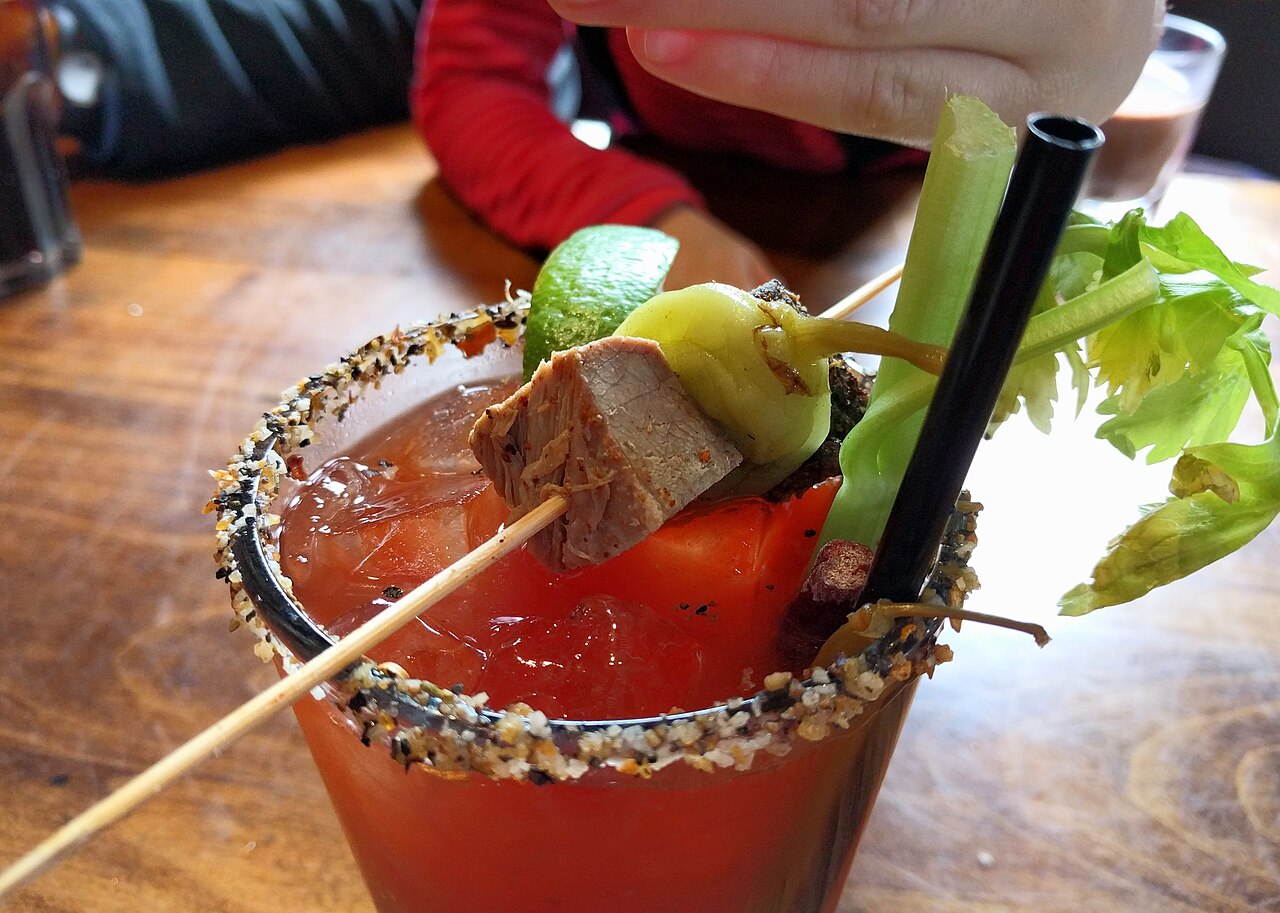
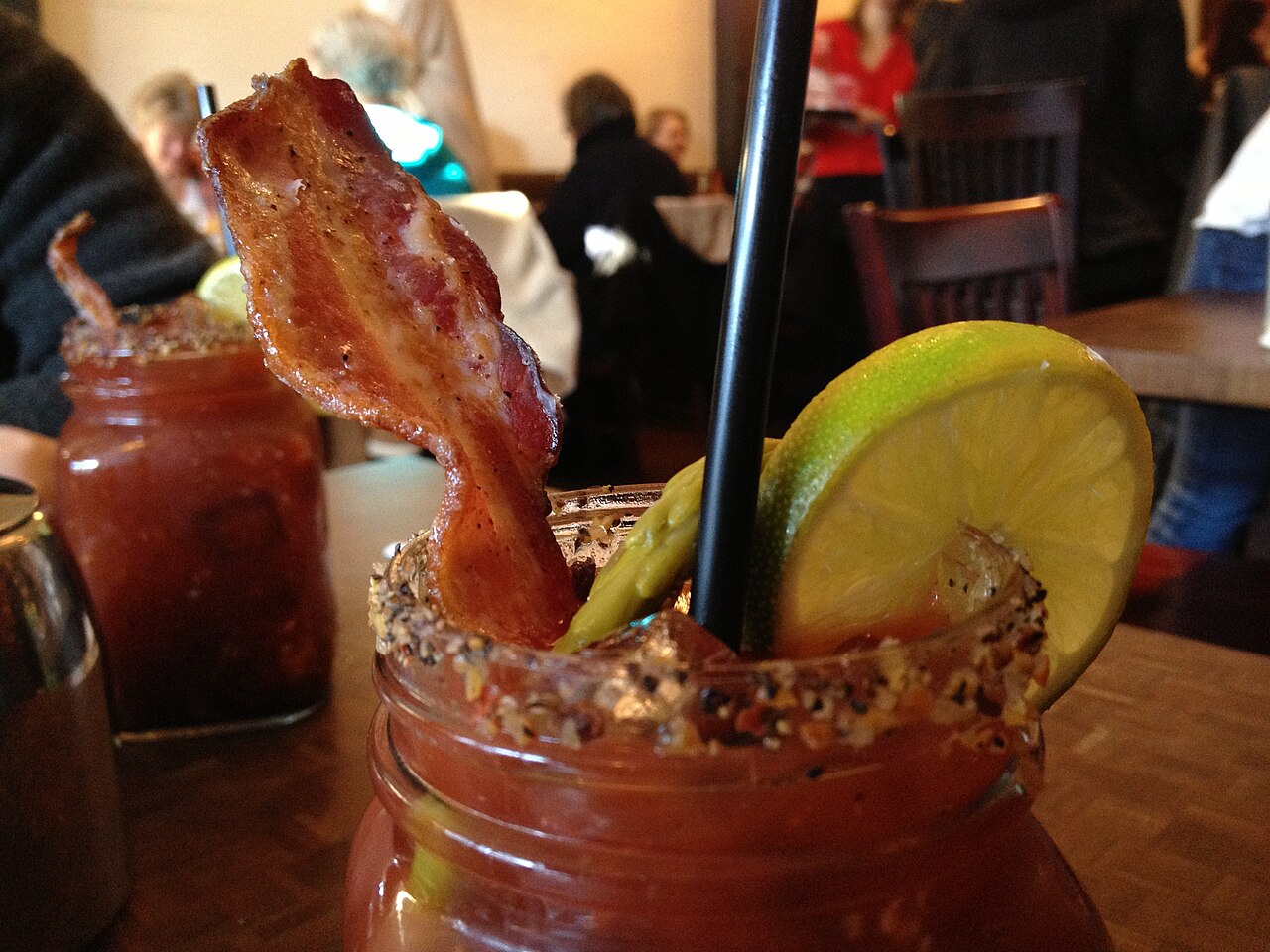
The Caesar has become a fixture of Canadian cultural celebration. In 2009, marking its 40th anniversary, Calgary's Mayor Dave Bronconnier declared May 13 Caesar Day, and Mott's backed a national recognition campaign. That same year, contests across the country encouraged creative variants, including glasses rimmed with Tim Hortons coffee grounds, Caesars laced with maple syrup, and versions using bacon-infused vodka. Mott's also hosts an annual Best Caesar in Town competition as part of the Prince Edward Island International Shellfish Festival. In 2013, Walter Caesar—a brand named in honour of Chell—entered the market as an all-natural alternative to Clamato and became the first Caesar mix in Canada approved by Ocean Wise for using ocean-friendly North Atlantic clam juice. The drink is also popularly consumed as a hangover remedy, though its actual effectiveness is debated. On July 1, 2023, Calgary opened the first liquor store in the world dedicated entirely to the Caesar.
Gallery
Frequently Asked Questions
What is a Caesar cocktail?
It's a Canadian mixed drink built on vodka and Clamato (a blend of clam and tomato juice), finished with hot sauce and Worcestershire sauce over ice in a tall, celery-salt-rimmed glass. A celery stalk and lime wedge typically top the drink as garnish.
Who invented the Caesar cocktail?
Walter Chell is credited with creating the drink back in 1969. It has since become one of Canada's most recognizable signature cocktails.
How is a Caesar different from a Bloody Mary?
The key distinction is the clam broth: a Caesar uses Clamato, which combines clam juice with tomato juice, while a Bloody Mary relies on plain tomato juice without any clam component. Everything else—vodka, spices, the celery-salt rim—can look similar.
What are the core ingredients in a Caesar cocktail?
You'll need vodka, Clamato, a dash of hot sauce, and a splash of Worcestershire sauce, all shaken or stirred over ice. The finished drink is served in a tall glass with a celery-salt rim and usually garnished with a celery stalk and a lime wedge.
Where did the Caesar cocktail originate?
It was born in Calgary, Alberta, Canada in 1969, which is why it's considered a distinctly Canadian creation rather than an import from elsewhere.
More in Cocktails with vodka 1-24
Spotted an error? Know more?
Reader corrections go straight into our review queue. Suggest an edit · How this site is sourced