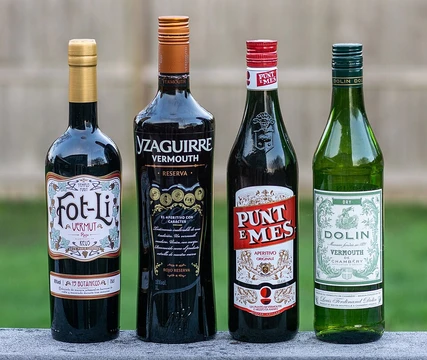
Perfect Manhattan
A Manhattan made with equal parts sweet and dry vermouth.

The Perfect Manhattan is a variation of the classic Manhattan cocktail. It is made with equal parts sweet vermouth and dry vermouth, replacing the standard use of only sweet vermouth. This version is one of several named variations of the Manhattan, a whiskey-based cocktail that is one of several drinks named for a New York City borough.
Quick Facts
- Base
- Whiskey
- Ingredients
- 50 ml Rye whiskey / 20 ml Sweet red vermouth / 1 dash Angostura bitters
- Served
- Straight up: chilled, without ice
- Garnish
- Maraschino cherry
- Prep
- Pour all ingredients into mixing glass with ice cubes. Stir well. Strain into a chilled cocktail glass.
- Drinkware
- Cocktail glass
Facts from the source article.
Lore & Background
The Perfect Manhattan is a variation of the Manhattan cocktail, which popular history suggests originated at the Manhattan Club in New York City in the mid-1870s, though this story is likely fiction as Lady Randolph Churchill was in France at the time. Earlier references to similar cocktails called 'Manhattan' exist from the 1860s, and the drink appears in bartending guides from 1884. The Perfect Manhattan uses equal parts sweet and dry vermouth, a modification that reduces the cocktail's sweetness compared to the standard recipe. The Manhattan is one of six basic drinks listed in David A. Embury's 1948 classic The Fine Art of Mixing Drinks.
Reader's Guide
The Perfect Manhattan is significant as a classic variation of the Manhattan, one of the foundational cocktails in mixology. By balancing sweet and dry vermouth, it offers a less sweet alternative while maintaining the structure of the original. The Manhattan itself is closely related to the Brooklyn cocktail, which uses dry vermouth and Maraschino liqueur instead of sweet vermouth. The Perfect Manhattan is part of a broader tradition of variation and innovation, where bartenders may substitute different bitters (such as orange or Peychaud's), use different whiskeys, or alter preparation methods. The drink is typically stirred with ice and strained into a chilled glass, though some shake it to create froth. Its legacy lies in demonstrating how a simple ratio change can create a distinct and enduring cocktail variation.
Did You Know?
- The Perfect Manhattan is made with equal parts sweet and dry vermouth.
- A Manhattan made with dry vermouth but retaining the cherry garnish is sometimes called a 'half-dry Manhattan', which risks confusion with the Perfect Manhattan.
- The Manhattan is one of several cocktails named for a New York City borough.
Composition & Preparation
The Perfect Manhattan is built on a foundation of whiskey, sweet vermouth, and bitters. While rye whiskey is the traditional choice, the drink readily accepts bourbon, Canadian whisky, blended whiskey, and Tennessee whiskey. The classic preparation involves stirring the ingredients with ice before straining into a chilled cocktail glass, traditionally garnished with a maraschino cherry. However, it can also be served in a champagne coupe or over ice in a lowball glass. The Perfect Manhattan specifically uses equal parts sweet and dry vermouth, distinguishing it from the standard Manhattan which relies solely on sweet vermouth. Angostura bitters serve as the classic bittering agent, though orange bitters or Peychaud's Bitters are acceptable alternatives. The drink's balance between the richness of whiskey, the sweetness of vermouth, and the aromatic complexity of bitters makes it a canvas for considerable variation and innovation.
Origin & Historical Mystery
The true origins of the Manhattan remain shrouded in uncertainty. The most popular narrative places its invention at the Manhattan Club in New York City during the mid-1870s, where bartender Iain Marshall supposedly created it for a banquet hosted by Jennie Jerome—later Lady Randolph Churchill, mother of Winston Churchill—in honor of presidential candidate Samuel J. Tilden. The banquet's success allegedly made the drink fashionable, with guests requesting it by the club's name. However, this account is almost certainly fiction, as Lady Randolph was in France and pregnant at the time. Earlier references suggest a bartender named Black created a similar drink on Broadway near Houston Street in the 1860s. The cocktail appears in print by 1884, in both Charlie Paul's and O.H. Byron's guides, with Paul specifying Scotch whiskey and Byron offering versions with both French and Italian vermouth. William Schmidt's 1891 guide adds absinthe and gomme syrup to the mix.
Variations & Creative Interpretations
The Manhattan's status as one of David A. Embury's six basic drinks in his 1948 classic has made it a playground for bartenders seeking to showcase creativity. The Perfect Manhattan itself, using equal parts sweet and dry vermouth, sits alongside a constellation of named variations. The Black Manhattan, created in 2005 by Todd Smith at San Francisco's Bourbon & Branch, swaps vermouth for Averna amaro. The Brandy Manhattan, popular in Wisconsin, replaces whiskey with brandy. The Rob Roy calls for Scotch whisky, while the Tipperary uses Irish whiskey. The Cuban Manhattan substitutes dark rum, and the Blonde Manhattan features moonshine with orange liqueur. Other twists include the Fanciulli with Fernet-Branca, the Greenpoint incorporating yellow Chartreuse, and the Fourth Regiment, a circa-1889 classic using three different bitters. Some bartenders shake rather than stir to create surface froth, add cherry jar juice for sweetness, or craft their own bitters and syrups.
Cultural Footprint & Legacy
Beyond its New York roots, the Manhattan has carved out unexpected cultural niches worldwide. On the small North Frisian island of Föhr, the cocktail has become a standard offering at virtually every cafe, restaurant, and local gathering. The local legend holds that islanders who traveled to Manhattan during deep-sea fishing trips fell in love with the drink and carried the tradition home. There, it is typically mixed at a ratio of one part vermouth to two parts whiskey, served ice cold in an ice cold glass or with ice and a cherry garnish. The Manhattan also occupies a unique place among five cocktails named for New York City boroughs, with its closest relative being the Brooklyn, which substitutes dry vermouth and Maraschino liqueur for sweet vermouth and angostura bitters. During Prohibition, the drink adapted by relying on Canadian whisky, which remained available when American spirits were banned, ensuring its survival through a decade of legal prohibition.
Frequently Asked Questions
Who is Perfect Manhattan?
The Perfect Manhattan is a well-known twist on the classic Manhattan cocktail. Instead of relying on sweet vermouth alone, it balances both sweet and dry vermouth in equal measure alongside a whiskey base.
What are Perfect Manhattan's powers/role?
Its defining trait is the 1:1 split between sweet and dry vermouth, which gives the drink a drier, more balanced profile than the traditional Manhattan. It sits in the same family as the Classic Manhattan, the Rob Roy, and other named variations of the drink.
What ingredients does Perfect Manhattan require?
The build calls for whiskey (rye, bourbon, Canadian, blended, or Tennessee), equal parts sweet and dry vermouth, and a dash of bitters. A maraschino cherry or a twist of lemon peel finishes the drink.
How is Perfect Manhattan served?
It is traditionally presented in a chilled cocktail glass or a champagne coupe, though some prefer it over ice in a lowball glass. The garnish is typically a maraschino cherry or a strip of lemon peel.
Why is Perfect Manhattan important in the cocktail world?
It shows how a single substitution—swapping one vermouth for two—can shift a drink's character while keeping the same spirit base. As one of several Manhattan variations named after the New York City borough, it highlights the family's versatility.
More in Cocktails with vermouth 1-24
Spotted an error? Know more?
Reader corrections go straight into our review queue. Suggest an edit · How this site is sourced