Gibson (cocktail)
A martini cousin garnished with a pickled onion.

The Gibson is a cocktail made from gin and dry vermouth, typically finished with a pickled onion. Today, it is seen as a relative of the martini, set apart mainly by the use of an onion rather than an olive.
The drink’s origins are uncertain, with several competing stories. The earliest known recipe, from 1908, differs from later versions mainly in how it handles bitters. Earlier recipes from before Prohibition sometimes include orange bitters (as in Boothby's 1908 recipe) and never include an onion; some call for a citrus twist, while others use no garnish at all. One popular tale credits illustrator Charles Dana Gibson, who supposedly asked a New York bartender to improve a martini, resulting in an onion swapped for the olive. A more likely account, supported by a 1968 interview and earlier reporting, traces the drink to San Francisco businessman Walter D. K. Gibson, who is said to have created it at the Bohemian Club in the 1890s. The first known mention of the Gibson in print appeared in an 1898 essay by Edward Townsend, a former vice president of that club.
Quick Facts
- Base
- Gin
- Ingredients
- 60 ml (6 parts) gin / 10 ml (1 part) dry vermouth
- Served
- Straight up: chilled, without ice
- Garnish
- silverskin onion
- Prep
- Stir well in a shaker with ice, then strain into a chilled martini glass. Garnish and serve
- Drinkware
- Cocktail glass
Facts from the source article.
Lore & Background
The exact origin of the Gibson is unclear, with numerous popular tales and theories about its genesis. According to one theory, it was invented in the early 20th century by Charles Dana Gibson, who created the popular Gibson Girl illustrations. Supposedly, he challenged Charley Connolly, the bartender of the Players Club in New York City, to improve upon a martini. As the story goes, Connolly simply substituted an onion for the olive and named the drink after the patron.
Another version now considered more probable recounts a 1968 interview with a relative of a prominent San Francisco businessman named Walter D. K. Gibson, who claimed to have created the drink at the Bohemian Club in the 1890s. Charles Clegg, when asked about it by Herb Caen, also said it was from San Francisco, not New York. Other reporting supports this theory: Edward Townsend, former vice president of the Bohemian Club, is credited with the first mention of the Gibson in print, in a humorous essay he wrote for the New York World published in 1898.
Reader's Guide
The Gibson holds significance as a classic cocktail whose history reflects competing origin stories, much like many iconic drinks. Its earliest known recipe, published in 1908 by William Boothby, differs from later versions primarily in its treatment of bitters. Pre-Prohibition recipes omit bitters and never use an onion garnish, instead employing citrus twists or no garnish at all. The modern Gibson is defined by its pickled onion garnish, which distinguishes it from the martini. The drink's legacy is tied to two main theories: one linking it to illustrator Charles Dana Gibson and New York's Players Club, and another, considered more probable, tracing it to San Francisco businessman Walter D. K. Gibson and the Bohemian Club in the 1890s. The first known print mention of the Gibson appears in an 1898 essay by Edward Townsend, a former vice president of the Bohemian Club. This uncertainty about its origins adds to the drink's mystique and historical interest.
Did You Know?
- The earliest known recipe for a Gibson was published in 1908 by William Boothby and includes orange bitters.
- No known recipe for the Gibson garnished with an onion exists before William Boothby's 1908 recipe.
- The first mention of the Gibson in print is credited to Edward Townsend in an 1898 essay for the New York World.
- One theory claims the drink was invented by Charles Dana Gibson, creator of the Gibson Girl illustrations.
From Wormwood to the Cocktail Cabinet
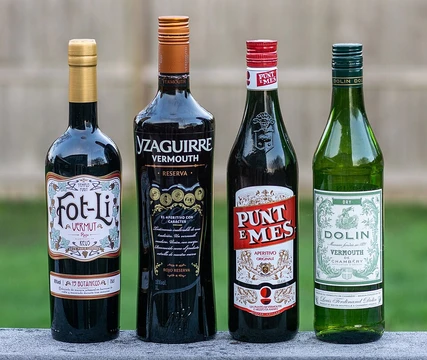
Long before the modern cocktail bar existed, the idea of fortifying wine with aromatic botanicals was already ancient. Evidence of herb- and root-fortified wines appears in Chinese records stretching back to the Shang and Western Zhou dynasties, roughly 1250 to 1000 BC, where such drinks served medicinal purposes. Similar fermented herbal preparations show up in early Indian medical texts, and by around 400 BC the Greeks were infusing white wine with wormwood to treat stomach ailments and intestinal parasites. In Hungary, a wormwood-based wine called ürmösbor had been in common use since at least the 15th century, later enriched with imported spices like cinnamon and clove. The name we know today traces to the German Wermut, the word for wormwood, which was adopted into French as vermouth. An Italian merchant named D'Alessio began crafting a wormwood wine in Piedmont during the 16th century, and competing French producers followed with their own proprietary blends. By the mid-17th century the drink had crossed the Channel into England under the name vermouth, a label it has carried ever since.
The Alchemy Behind the Bottle
Every bottle of vermouth begins with a humble foundation: a low-alcohol white wine drawn from grapes such as Clairette blanche, Piquepoul, Bianchetta Trevigiana, Catarratto, or Trebbiano. From there, the manufacturer's proprietary recipe takes over. A measured dose of additional alcohol is introduced, followed by a carefully guarded blend of dried botanicals—aromatic herbs, roots, barks, flowers, seeds, and spices. These ingredients may be steeped into the base wine directly, into a wine-and-spirit mixture, or into spirit alone, which can even be redistilled before it meets the wine or unfermented must. Once the aromatization and fortification steps are complete, the liquid is sweetened, either with cane sugar or caramelized sugar, depending on the target style. This single process gives rise to a wide spectrum of products: the two classic families of sweet and dry, plus the modern variations of extra-dry white, sweet white (blanc or bianco), red (rosso), amber, and rosé. Italian, French, and Spanish houses account for the vast majority of vermouth consumed worldwide, each guarding its own secret proportions.
The Bartender's Quiet Revolution
Vermouth's second act as a cocktail ingredient began in the late 19th century, when bartenders recognized it as an ideal mixer. The Manhattan, emerging around 1880, and the early precursors to the martini both leaned heavily on vermouth. A dedicated Vermouth cocktail first appeared in print in 1868, calling for chilled vermouth, a twist of lemon peel, and the occasional dash of bitters or maraschino. Across the Atlantic, American bars in the 1880s and 1890s poured vermouth-heavy drinks, sometimes using twice as much vermouth as gin or whiskey. The 1950s brought a new wave of visibility: liquor companies marketed the martini aggressively, and celebrity endorsements from Ernest Hemingway and Humphrey Bogart helped cement its cultural cachet. The fictional James Bond proved to be the most effective ambassador of all. Although vermouth's share of the American and British cocktail scene shrank after the mid-20th century, it remained a staple in classics like the Manhattan, simply in smaller measured amounts. In recent years, bartenders have rediscovered it as a key building block, and its presence behind the bar has grown noticeably.
From Turin Cafés to Argentine Kitchens
Beyond the cocktail shaker, vermouth has always had a life of its own. In Turin, fashionable cafés once served it to guests around the clock, and that apéritif tradition persists across Italy, France, and Spain, where it is routinely enjoyed by the glass at the table or just after a meal. In Argentina, the story takes on a distinctly familial tone: waves of Italian immigration in the late 19th and early 20th centuries carried the custom across the Atlantic, and vermouth there became more than a beverage—it is a cultural ritual woven into family gatherings, shared at the table and lingered over afterward. The drink also found a secondary role in the kitchen, occasionally standing in for white wine in cooking. After a long lull in the United States and Great Britain, the years since 2013 have seen a genuine renaissance. Artisanal producers have launched new brands that deliberately avoid imitating European templates, and vermouth has become one of the fastest-growing categories within the broader wine trade, signaling that its story is far from finished.
Frequently Asked Questions
What is a Gibson cocktail?
The Gibson is a gin-and-dry-vermouth drink that sits in the martini family, identified by its pickled onion garnish in place of the usual olive.
How is a Gibson different from a martini?
The two share nearly the same spirit-and-vermouth base, but the Gibson swaps the traditional olive for a pickled onion as its finishing touch.
What is the origin of the Gibson cocktail?
No single definitive story has settled the debate, though Edward Townsend referenced the name in print as early as 1898, and William Boothby published what is regarded as the first written recipe in 1908.
What do you need to make a Gibson?
At minimum, gin and dry vermouth form the base, finished with a pickled onion; some pre-Prohibition versions also called for orange bitters or a citrus twist rather than the onion.
Why does a Gibson use a pickled onion instead of an olive?
The pickled onion is the one defining element that separates the Gibson from a standard martini, lending a sharper, tangy note that complements the dry vermouth.
More in Cocktails with vermouth 1-24
Spotted an error? Know more?
Reader corrections go straight into our review queue. Suggest an edit · How this site is sourced