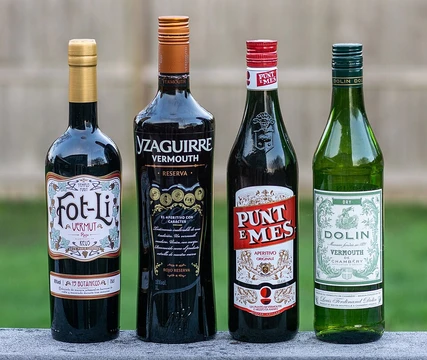
Boulevardier (cocktail)
A rediscovered classic: equal parts Campari, Italian vermouth, and Bourbon whisky.

The boulevardier is a cocktail made with whiskey, sweet vermouth, and Campari. It first appeared in print in the 1927 Parisian cocktail book *Barflies and Cocktails*, where it was attributed to American writer Erskine Gwynne, who published a magazine called *Boulevardier* from 1927 to 1932. The recipe was not in the main list of drinks but in an essay by Arthur Moss, which described cocktails associated with men-about-town. The original formula called for equal parts Campari, Italian vermouth, and bourbon whiskey. Despite this, the boulevardier failed to gain traction; no references to it have been found in cocktail books between 1927 and 2007, and it was absent from major collections. This obscurity contrasts with the similar "Old pal" cocktail, which appeared in the same essay but used Canadian Club whisky instead of bourbon, and which later appeared in the main recipe list of later editions of MacElhone and was included in the inaugural 1961 IBA official cocktail list. The negroni, which emerged in the late 1940s, also became popular by the 1950s and made the 1961 IBA list. The boulevardier was rediscovered and popularized first by Ted Haigh, writing as "Dr. Cocktail," in a 2007 article in *Imbibe*. Haigh later published a recipe and further articles. Paul Clarke, who learned of the drink from Haigh, helped spread it through recipes on Serious Eats and other outlets. The cocktail remained rare in the early 2010s but became popular by the mid-2010s. It was added to the IBA official cocktail list in 2020, in the "Unforgettables" section. The Old pal, a contemporary from the same essay, originally used rye whiskey (Canadian Club) instead of bourbon, but is now distinguished by using dry French vermouth instead of sweet Italian vermouth; the IBA recipes also differ in proportions (equal parts for the Old pal versus 1½:1:1 for the boulevardier) and in that the whiskey is always rye. The boulevardier is similar to a Negroni, sharing two of three ingredients, but uses bourbon or rye whiskey instead of gin. In the IBA standard, it is also served straight up in a stemmed glass (no ice), has a higher spirit ratio (1½:1:1), and is garnished with an orange twist rather than an orange slice, though these details vary in other recipes. Variations of the boulevardier adjust the proportions: the original 1927 recipe is equal parts (1:1:1), while Haigh's 2007 revival uses 3:2:2, which became the IBA standard. Some recipes are even heavier on whiskey, calling for 2:1:1.
Quick Facts
- Ingredients
- 45 ml bourbon or rye whiskey / 30 ml bitter Campari / 30 ml sweet red vermouth
- Served
- Straight up: chilled, without ice
- Garnish
- Orange zest, optionally a lemon zest
- Prep
- Pour all ingredients into mixing glass with ice cubes. Stir well. Strain into a chilled cocktail glass.
- Drinkware
- Cocktail glass
Facts from the source article.
Lore & Background
The Boulevardier first appeared in print in the Parisian cocktail book Barflies and Cocktails (1927), where it is ascribed to Erskine Gwynne, an American-born writer who founded a monthly magazine in Paris called Boulevardier, which appeared from 1927 to 1932. The cocktail appears, not in the main list of recipes, but in the essay 'Cocktails About Town' by Arthur Moss, which describes cocktails by men-about-town. The boulevardier is described as an equal parts cocktail: 1/3 Campari, 1/3 Italian vermouth, 1/3 Bourbon whisky. The cocktail did not catch on: no references to it have been found in cocktail books between 1927 and 2007, and it is absent from major collections. The cocktail was rediscovered and popularized first by Ted Haigh, later by others, starting with an article in the 2007 March/April issue of Imbibe, writing as 'Dr. Cocktail'. The boulevardier was still rare in the early 2010s, but by the mid-2010s was popular.
Reader's Guide
The original 1927 recipe is equal parts (1:1:1), but Haigh's 2007 revival is 3:2:2, calling for 1½ parts rather than 1 part whiskey, and these are the proportions used in the IBA standard and many boulevardier recipes. Others are heavier still (2:1:1), and call for two parts bourbon to one part vermouth and one part Campari. The IBA standard recipe also specifies serving straight up (no ice, stemmed glass) and garnishing with an orange twist.
Did You Know?
- The very similar 'Old pal' cocktail appears in the same 1927 essay, differing only in using Canadian Club whisky rather than bourbon.
- The boulevardier became an IBA official cocktail in 2020, in the 'Unforgettables' section.
A Parisian Debut in 1927
The Boulevardier first entered the written record in 1927, tucked away in the Parisian cocktail volume Barflies and Cocktails. It was credited to Erskine Gwynne, an American-born writer who had launched a monthly magazine in Paris under the same name, running from 1927 through 1932. The recipe did not sit among the book's main recipe listings; instead, it surfaced in an essay titled "Cocktails About Town" by Arthur Moss, a piece profiling drinks favored by men-about-town. Gwynne's creation was described as a straightforward equal-parts blend: one-third Campari, one-third Italian vermouth, and one-third bourbon whisky. In that same essay, a near-identical drink called the Old Pal appeared, swapping in Canadian Club whisky for the bourbon. The Boulevardier's placement in a casual essay rather than a formal recipe list may have foreshadowed its long absence from the cocktail canon.
Eight Decades of Silence
For roughly eighty years, the Boulevardier vanished from the cocktail world. Between its 1927 debut and 2007, no references to the drink surfaced in any cocktail book, and it was conspicuously absent from major collections. This silence stands in sharp contrast to its contemporary, the Old Pal, which made it into the main recipe lists of later editions of MacElhone, including the 1952 version, and earned a spot among the fifty cocktails on the inaugural 1961 IBA official list. The Negroni, though it did not appear in print until the late 1940s, climbed to popularity in the 1950s and also secured a place on that same 1961 IBA roster. The Boulevardier, by comparison, simply fell out of memory. No bartender's guide, no bar manual, no cocktail anthology carried its name through the mid-twentieth century or into the early twenty-first. It existed only as a footnote in a single Parisian volume, waiting for someone to rediscover it.
The Craft Cocktail Resurrection
The Boulevardier's second life began in 2007, when Ted Haigh, writing under the pen name "Dr. Cocktail," featured the drink in the March/April issue of Imbibe magazine. Haigh went on to publish a recipe in his 2009 book, followed by additional articles that kept the cocktail in the public eye. The revival was amplified by Paul Clarke, who learned about the drink from Haigh and then shared recipes on Serious Eats and in his own 2015 publication. Riding the wave of the broader craft cocktail movement that was reshaping bars in the late 2000s, the Boulevardier moved from obscurity to regular menu presence. While it was still a rarity in the early 2010s, by the mid-2010s it had become a recognizable offering in cocktail bars. Its rise was closely tied to its identity as a whiskey-based variant of the Negroni, a connection that made it an easy sell to patrons already familiar with that classic.
Defining the Boulevardier's Identity
The Boulevardier occupies a distinctive niche among stirred cocktails. It shares two of its three core ingredients with the Negroni—Campari and sweet vermouth—but replaces gin with bourbon or rye whiskey as its backbone. The IBA standard recipe, adopted in the 2020 "Unforgettables" list, calls for a 1½-to-1-to-1 ratio, giving the spirit a fuller voice than the equal-parts proportions of the original 1927 recipe. It is served straight up in a stemmed glass rather than over ice in a tumbler, and garnished with an orange twist instead of an orange slice. The Old Pal, its closest relative, distinguishes itself by using dry French vermouth and rye whiskey exclusively, with an equal-parts ratio. In practice, recipes vary widely: some stick to the original 1:1:1, others follow Haigh's 3:2:2 revival proportions, and still others push the spirit even heavier at 2:1:1. This flexibility in proportion and presentation is part of what keeps the Boulevardier feeling both classic and constantly evolving.
Frequently Asked Questions
What is a Boulevardier cocktail made of?
It is a stirred drink built on whiskey (usually bourbon or rye), sweet vermouth, and Campari, traditionally mixed in equal parts. Think of it as the whiskey-based counterpart to the gin-forward Negroni.
Who is the Boulevardier named after?
The name traces back to American writer Erskine Gwynne, who edited a Parisian magazine called *Boulevardier* from 1927 to 1932. Gwynne is credited as the drink's creator, though the first printed recipe actually appeared in an essay by Arthur Moss within the 1927 book *Barflies and Cocktails*.
How does a Boulevardier differ from a Negroni?
Both follow the same equal-parts structure of spirit, sweet vermouth, and Campari, but the Boulevardier replaces the Negroni's gin with whiskey. That single swap gives it a warmer, oakier backbone while keeping the same bitter-sweet balance.
Why did the Boulevardier disappear from cocktail books for eighty years?
After its single 1927 mention, the recipe simply never caught on and went absent from every major cocktail collection through 2007. It was only in the 2000s cocktail renaissance that bartenders rediscovered the drink and reintroduced it to bars worldwide.
Is the Boulevardier an official IBA cocktail?
Yes—the International Bartenders Association inducted it into its official list in 2020, placing it in the "Unforgettables" category to acknowledge a historically important drink that had been overlooked for decades.
More in Cocktails with vermouth 1-24
Spotted an error? Know more?
Reader corrections go straight into our review queue. Suggest an edit · How this site is sourced