El Presidente (cocktail)
A classic Cuban cocktail from Prohibition-era Havana.

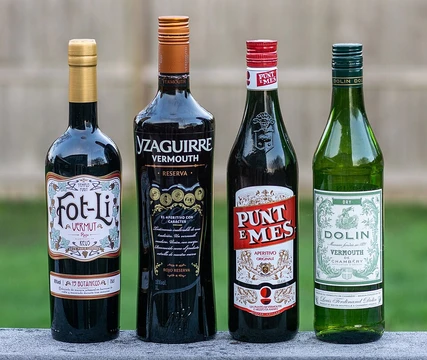
The El Presidente is a Cuban cocktail that blends rum, orange curaçao, vermouth, and grenadine. Early published recipes often call for French or dry vermouth, though modern interpretations sometimes use blanc vermouth. The drink is traditionally red in color, achieved through red curaçao or, when paler liqueurs are used, the grenadine; blue curaçao should therefore be avoided.
The cocktail gained fame in Havana between the 1920s and 1940s, during American Prohibition, and became the favored drink of Cuba’s upper class. Two rival stories exist about whom it is named after: either Mario García Menocal, president from 1913 to 1921, or Gerardo Machado, a general and president from 1925 to 1933. There are also competing claims about its invention. One holds that American bartender Eddie Woelke created it and named it after General Menocal after moving to Havana. Another claims it was invented as early as 1915 in Cuba, five years before Woelke arrived in 1920—either at the Vista Alegre, a Havana establishment popular with Americans, or by President Menocal himself. However, the earliest known published recipe dates to 1924, and the exact origins remain unverified.
A related cocktail, the clipper cocktail, is sometimes mentioned in anecdotal accounts as a variation served by Pan American Airways on their larger planes, consisting only of gold rum, vermouth, and grenadine, and may have been linked to President Machado granting Pan Am exclusive rights to the Florida–Havana route.
Quick Facts
- Base
- Rum
- Ingredients
- One part white rum / One part blanc vermouth / One teaspoon curaçao / Half teaspoon grenadine (pomegranate syrup)
- Served
- Straight up: chilled, without ice
- Garnish
- twist of orange peel, optional cherry
- Prep
- Stir well with ice, then strain into glass. Garnish and serve.
- Drinkware
- Cocktail glass
Facts from the source article.
Lore & Background
The El Presidente has two rival stories of who it is named after: Mario García Menocal, president from 1913 to 1921, or Gerardo Machado, general and president from 1925 to 1933. There are also multiple claims as to its invention. One story says American bartender Eddie Woelke named it after Gen. Menocal after moving to Havana. Another claim is that it was invented as early as 1915 in Cuba, five years before Woelke arrived in 1920. This earlier origin is further debated as either being invented at the Vista Alegre, a Havana establishment frequented by Americans, or by President Menocal himself. However, the earliest known published recipe dates to 1924, and these earlier claims are not documented in standard cocktail histories.
Reader's Guide
The El Presidente is significant as a classic cocktail that reflects the cultural exchange between the United States and Cuba during Prohibition. Some believe it is the only bona fide classic cocktail that is supposed to use harder-to-find blanc vermouth (Chambéry vermouth) and is frequently mismade with dry vermouth. While variations use other orange liqueurs than curaçao, the drink is traditionally meant to be red in color, so blue curaçao should not be used. The red comes from red curaçao, or when paler colors are used, from the grenadine. President Machado gave Pan American Airways exclusive rights to fly the Florida–Havana route, which may be why Pan Am served a variation called the clipper cocktail on their larger planes, consisting of only gold rum, vermouth, and grenadine.
Did You Know?
- The El Presidente is traditionally made with French or dry vermouth, though some modern recipes use blanc vermouth.
- The cocktail is meant to be red in color, achieved through red curaçao or grenadine.
- There are two rival stories of who the drink is named after: President Mario García Menocal or General/President Gerardo Machado.
- A variation called the clipper cocktail is sometimes anecdotally linked to Pan American Airways, but this is not a widely documented fact in cocktail history.
Composition & the Blanc Vermouth Question
The El Presidente stands as a distinctly Cuban creation built on four core components: rum, orange curaçao, vermouth, and grenadine. Yet beneath this seemingly straightforward recipe lies a persistent point of contention among cocktail purists. The original formulation specifically calls for blanc vermouth, more precisely the rare Chambéry vermouth, making the drink arguably the only bona fide classic cocktail that genuinely requires this harder-to-find ingredient. In practice, however, the El Presidente is frequently mismade with dry vermouth, a substitution that strips away a layer of the drink's intended character. The color palette also demands attention. Tradition insists the finished pour should appear red, achieved either through the use of red curaçao or, when paler liqueurs are employed, through the grenadine. Blue curaçao, despite being a common orange liqueur in modern bars, is considered entirely inappropriate for this recipe. While some bartenders experiment with alternative orange liqueurs, the red hue remains a non-negotiable hallmark of the authentic drink.
Havana's Gilded Age & the Cocktail's Rise
The El Presidente found its natural habitat in the glittering salons and hotel bars of Havana during the 1920s through the 1940s. This was the era of American Prohibition, a period when the United States' domestic ban on alcohol created an enormous demand for legal drinking destinations, and Cuba—particularly Havana—became the undisputed playground for American tourists seeking spirited refreshment. Into this vibrant scene the El Presidente emerged and rapidly seized the attention of the island's upper class. It was not merely a drink served in passing; it became the preferred libation of Havana's elite, a symbol of sophistication and cosmopolitan taste that distinguished the cocktail from the simpler rum-based drinks that also flourished in Cuban bars. The cocktail's rise was inextricable from the broader cultural moment: a decade-plus window in which Havana's nightlife thrived on foreign currency, American visitors, and a sense of untouchable glamour that the El Presidente embodied in its layered, elegant construction. The drink's acclaim during this period cemented its place in the canon of classic cocktails, a status it retains to this day.
The Naming Dispute & Origin Myths
No classic cocktail carries more tangled questions about its own identity than the El Presidente. Two rival presidential figures lay claim to the name: Mario García Menocal, who served as Cuba's president from 1913 to 1921, and Gerardo Machado, a military general who held the presidency from 1925 to 1933. Beyond the naming dispute, the very invention of the drink is hotly contested. One widely circulated account credits American bartender Eddie Woelke, who reportedly moved to Havana and named the cocktail in honor of General Menocal. However, another tradition pushes the origin back to as early as 1915, a full five years before Woelke is said to have set foot on Havana's Malecón in 1920. If that earlier date holds, the story branches further: some point to the Vista Alegre, a Havana establishment well known for attracting American patrons, as the birthplace, while others suggest President Menocal himself may have conceived the recipe. The result is a cocktail whose name and origins remain as layered and debated as its flavor profile.
The Pan Am Legacy & the Clipper Cocktail
The El Presidente's story extends beyond Havana's bars into the skies above the Caribbean, thanks to a political decision with unexpected barroom consequences. President Gerardo Machado granted Pan American Airways exclusive rights to operate the Florida-to-Havana air route, a concession that made Pan Am the dominant carrier between the two destinations. The airline, in turn, wove the El Presidente into its in-flight service, offering passengers a streamlined variation known as the clipper cocktail aboard its larger aircraft. This airborne version simplified the recipe to just three components: gold rum, vermouth, and grenadine, dropping the orange curaçao that defines the barroom original. The clipper cocktail thus represents a fascinating offshoot, a travel-era adaptation that carried the spirit of Havana into the cabins of trans-Caribbean flights. It is a reminder that the El Presidente was never confined to a single city or a single glass; it traveled, evolved, and left its mark on the culture of long-distance air travel in the mid-twentieth century.
Frequently Asked Questions
What is the El Presidente cocktail?
It is a Cuban cocktail that became a staple of Havana's bars between the 1920s and 1940s, particularly during American Prohibition. It was the go-to drink of the island's upper class during that era.
What goes into an El Presidente?
The recipe calls for rum, orange curaçao, vermouth, and grenadine. The grenadine doubles as the colorant, giving the drink its characteristic red appearance when a paler curaçao is chosen.
What kind of vermouth should I use in an El Presidente?
Early published recipes specify French or dry vermouth, while many contemporary versions substitute blanc vermouth. Either works, but the vermouth should complement rather than overpower the drink's red color.
Why is the El Presidente red, and what should I avoid?
The red hue traditionally comes from red curaçao or from the grenadine when a lighter curaçao is used. Blue curaçao must be avoided, as it would ruin the drink's expected appearance.
Who is the El Presidente cocktail named after?
Two competing origin stories circulate, with one linking the name to a figure named Mario García. The definitive namesake remains a point of debate among cocktail historians.
More in Cocktails with vermouth 1-24
Spotted an error? Know more?
Reader corrections go straight into our review queue. Suggest an edit · How this site is sourced