Marine regression
Geological process exposing seafloor during sea level drops.
Last updated
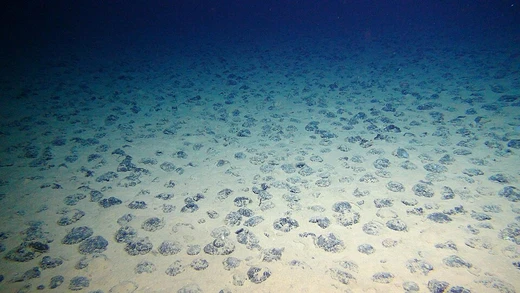
A marine regression is a geological process where submerged seafloor becomes exposed due to a drop in sea level.[1] When sea level drops, previously submerged seafloor becomes exposed; the reverse process, where the sea floods land that was once above water, is called marine transgression.[1]
Quick Facts
- Opposite event
- Marine transgression
- Associated extinctions
- Permian–Triassic (250 Ma) and Cretaceous–Paleogene (66 Ma)
Facts from the source article.
Key facts and history
Evidence of marine regressions and transgressions occurs throughout the fossil record.[2] According to one hypothesis, regressions may be linked to a slowdown in sea-floor spreading, leading to a generalized drop in sea level.[3] That view considers major marine regressions to be one aspect of a normal variation in rates of plate tectonic activity.[3] A major regression could cause marine organisms in shallow seas to go extinct.[4]
However, mass extinctions tend to involve both terrestrial and aquatic species, and it is harder to see how a marine regression could cause widespread extinctions of land animals.[4] According to Courtillot (1999), evidence of sea-level fluctuations appears throughout the fossil record, and these changes are believed to have caused or contributed to several mass extinctions, including the Permian–Triassic extinction (250 million years ago) and the Cretaceous–Paleogene extinction (66 million years ago).[2] Ward (2000) explains that the merging of all major landmasses into a single continent could have promoted a regression by causing "a slight enlargement of the ocean basins as the great continents coalesced," though this mechanism could not account for most other regressions.[4]
What the research sources say
Monroe and Wicander's 2005 textbook defines marine regression as a process where areas of submerged seafloor become exposed due to a drop in sea level.[1] Courtillot's 1999 book provides evidence that marine regressions and transgressions appear throughout the fossil record and have contributed to mass extinctions.[2]
References
- Wikipedia, "Marine regression" (CC BY-SA 4.0), which cites: Monroe, James Stewart, and Reed Wicander. Physical Geology: Exploring the Earth. Fifth edition; Thomson Brooks/Cole, 2005; p. 162. (original not read by us) en.wikipedia.org
- Wikipedia, "Marine regression" (CC BY-SA 4.0), which cites: Courtillot, Vincent. Evolutionary Catastrophes: The Science of Mass Extinction. Cambridge, Cambridge University Press, 1999; p. 89. (original not read by us) en.wikipedia.org
- Wikipedia, "Marine regression" (CC BY-SA 4.0), which cites: Courtillot, p. 141. (original not read by us) en.wikipedia.org
- Wikipedia, "Marine regression" (CC BY-SA 4.0), which cites: Ward, Peter D. Rivers in Time: The Search for Clues to Earth's Mass Extinctions. New York, Columbia University Press, 2000; p. 77. (original not read by us) en.wikipedia.org
Each numbered sentence above was checked against the source it cites before publication. Sentences citing Wikipedia adapt text from the English Wikipedia article Marine regression (contributors), used under CC BY-SA 4.0; this entry is available under the same licence. Other sources were used for facts only; no text or images are copied from them.
More in Coastal & Marine Geology
Sources
Compiled from Wikipedia and the sources listed below. Text from Wikipedia is available under CC BY-SA 4.0; this entry is adapted from it.
- Wikipedia: Marine regression (CC BY-SA 4.0).
- Word definitions: the Codexery glossary, each quoted from its Wikipedia article.
Spotted an error? Know more?
Reader corrections go straight into our review queue. Suggest an edit · How this site is sourced