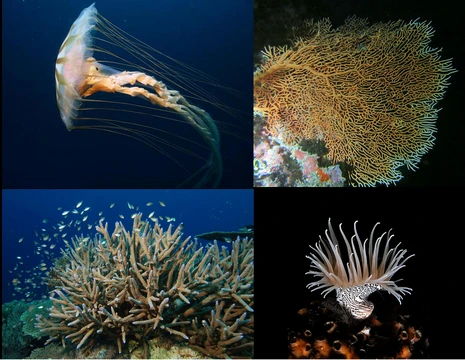
Aurelia (cnidarian)
Moon jellies are widely studied gelatinous zooplankton with cryptic species diversity.

Image courtesy of Aquapix and Expedition to the Deep Slope 2007, NOAA-OE · Public domain
**Aurelia** is a genus of jellyfish in the class Scyphozoa, commonly known as moon jellies. The genus currently includes 25 accepted species, with many others yet to be formally described. It was first named in 1816 by Jean-Baptiste Lamarck in his work *Histoire Naturelle des Animaux sans Vertèbres*. Moon jellies are often regarded as the most thoroughly studied group of gelatinous zooplankton, with *Aurelia aurita* being the most researched species within the genus. During the 20th century, *Aurelia labiata* and *Aurelia limbata* were also commonly investigated. However, genetic studies in the early 2000s revealed that the diversity within *Aurelia* is greater than what morphology alone had suggested, making it difficult to confidently assign the results of earlier studies to specific species. More recent research has highlighted significant morphological variation—including possible phenotypic plasticity—in the genus, further complicating the identification of cryptic species.
Species of *Aurelia* are found across the Atlantic, Arctic, Pacific, and Indian Oceans, and appear most common in temperate regions, including waters off northern China, Japan, Korea, New Zealand, the northeastern and northwestern coasts of the United States, and northern Europe.
Unlike many other jellyfish, moon jellies lack long, potent stinging tentacles. Instead, they have hundreds of short, fine tentacles lining the bell margin. Their sting is mild for humans, with most people experiencing little or no reaction.
*Aurelia* undergoes alternation of generations: the pelagic medusa stage reproduces sexually and is either male or female, while the benthic polyp stage reproduces asexually. Life cycle reversal—where polyps form directly from juvenile or sexually mature medusae, or from their fragments—has been observed in *Aurelia coerulea* (also referred to as *Aurelia* sp. 1).
**Description**
The similar appearance of moon jellyfish species has made them difficult to identify. Their sizes vary, but they typically range from 5 to 38 cm (2.0–15.0 in) in diameter, averaging about 18 cm (7.1 in) wide and 8 cm (3.1 in) tall. Polyps can grow up to 1.6 cm (0.63 in) tall, and ephyrae average 0.4 cm (0.16 in) in diameter.
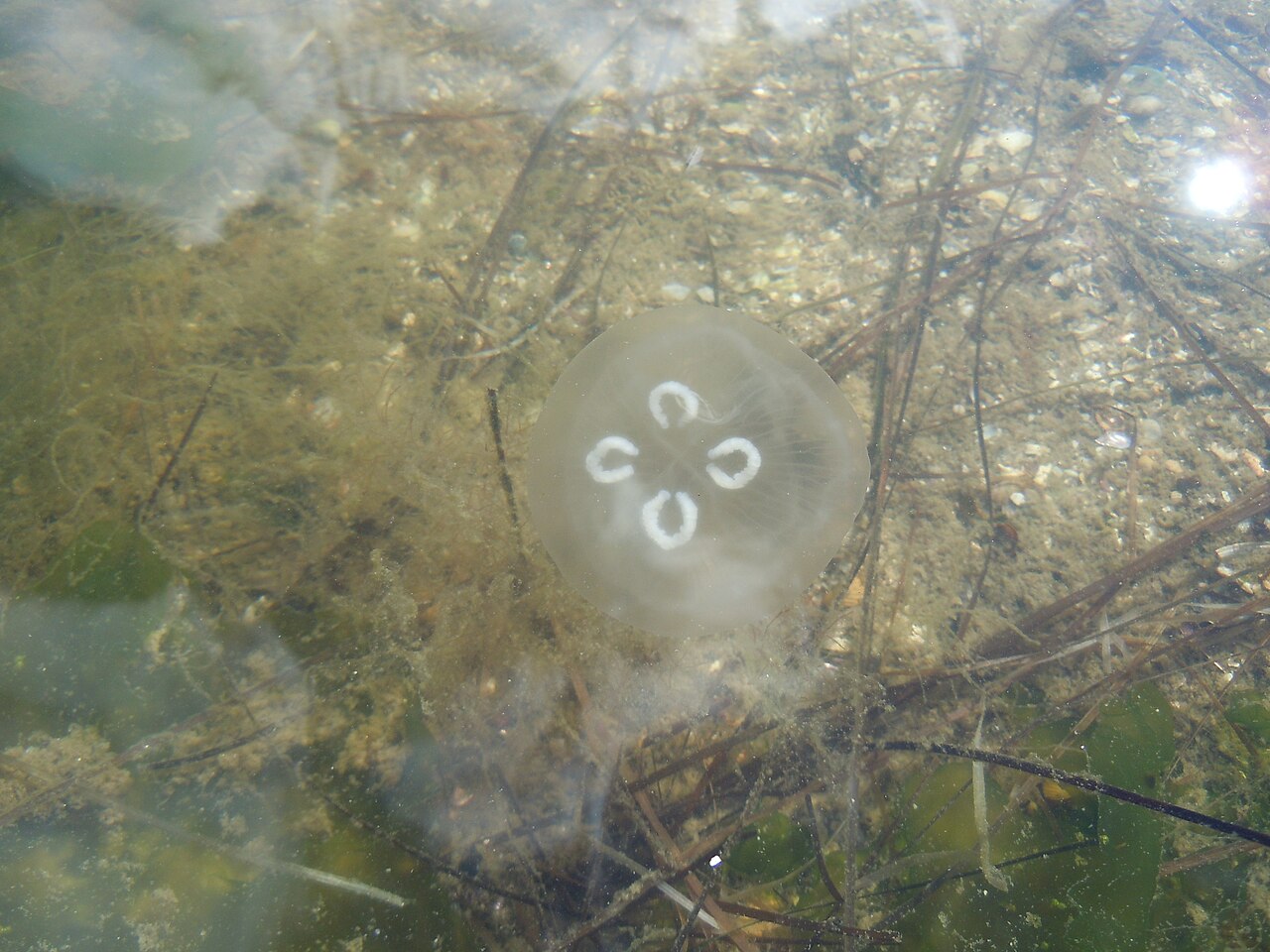
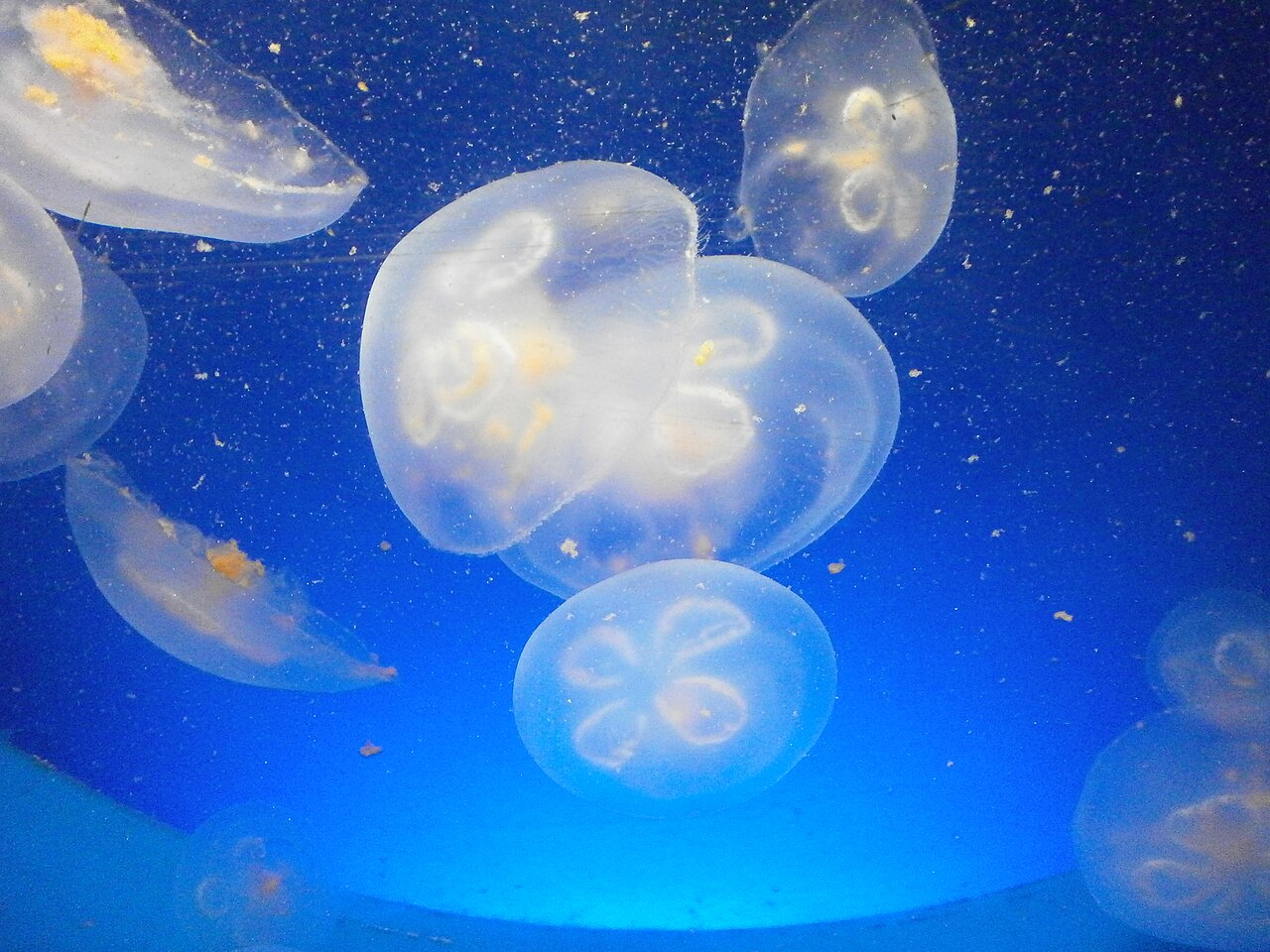
The basic body plan of *Aurelia* includes several parts. The animal lacks respiratory, excretory, and circulatory systems. The adult medusa is transparent, with an umbrella margin membrane and tentacles attached to the underside. It has four bright gonads located beneath the stomach. Medusae are either male or female (gonochoric). Adults are typically translucent, but the color of their gut can change depending on diet—for instance, eating certain crustaceans may give them a pink or lavender tint, while brine shrimp can produce an orange hue. Polyps usually have about 16 tentacles (though *Aurelia insularia* has 27–33), which aid in feeding.
**Physiology**
*Aurelia* has no respiratory organs like gills, lungs, or trachea; it respires by diffusing oxygen from water through its thin body membrane. Within the gastrovascular cavity, low-oxygen water can be expelled and oxygen-rich water drawn in by ciliary action, enhancing oxygen diffusion. The large surface-area-to-volume ratio helps the animal absorb more oxygen and nutrients into its cells. Food moves through the muscular manubrium, while radial canals help distribute it. The body consists of an outer epidermis, a middle mesoglea layer, and an inner gastrodermis lining the gastrovascular cavity. A nerve net controls contractions in the swimming muscles and feeding responses. Rhopalia around the bell margin allow the jellyfish to sense light versus dark and up versus down.
**Venom**
Tests on frogs have shown that *Aurelia aurita* produces a proteinaceous venom that causes muscle twitching by inducing irreversible depolarization of the muscle membrane, likely due to increased membrane permeability to sodium ions.
**Species**
The following species of *Aurelia* are accepted by the World Register of Marine Species:
*Aurelia aurita*, *Aurelia ayla*, *Aurelia cebimarensis*, *Aurelia clausa*, *Aurelia coerulea*, *Aurelia colpota*, *Aurelia columbia*, *Aurelia dubia*, *Aurelia hyalina*, *Aurelia insularia*, *Aurelia labiata*, *Aurelia limbata*, *Aurelia malayensis*, *Aurelia maldivensis*, *Aurelia marginalis*, *Aurelia mianzani*, *Aurelia miyakei*, *Aurelia montyi*, *Aurelia mozambica*, *Aurelia persea*, *Aurelia profunda*, *Aurelia pseudosolida*, *Aurelia rara*, *Aurelia relicta*, *Aurelia smithsoniana*, *Aurelia solida*.
- Described by
- Jean-Baptiste Lamarck
- Class
- Scyphozoa
- Number of accepted species
- 25
- Best-studied species
- Aurelia aurita
- Typical medusa diameter
- 5–38 cm (average 18 cm)
- Habitat
- Atlantic, Arctic, Pacific, and Indian Oceans; temperate regions
Lore & Background
Aurelia species are found in oceans worldwide, particularly in temperate regions such as the waters off northern China, Japan, Korea, New Zealand, the northeastern and northwestern coasts of the United States, and northern Europe. They inhabit inshore environments like estuaries and harbors, tolerating water temperatures from 6–31 °C and salinities as low as 6 parts per thousand. Moon jellies show a strong tolerance to low dissolved oxygen, thriving in hypoxic conditions that reduce competition from fish predators. The medusa stage is either male or female (gonochory), and the genus undergoes alternation of generations: a sexually reproducing pelagic medusa and an asexually reproducing benthic polyp. Life cycle reversal, where polyps form directly from juvenile or mature medusae, has been observed in *Aurelia coerulea*. The medusae are typically translucent, with gut color varying based on diet—pink or lavender from crustaceans, orange from brine shrimp. They lack long, potent stinging tentacles, having instead hundreds of short, fine tentacles along the bell margin; their sting is mild to humans.
Reader's Guide
Aurelia is significant as the most studied group of gelatinous zooplankton, providing foundational knowledge on jellyfish biology, ecology, and life cycles. However, genetic studies in the early 2000s revealed that morphological similarity masks high cryptic diversity, meaning many earlier studies cannot be confidently assigned to named species. This has reshaped research priorities, emphasizing the need for genetic identification. The genus also demonstrates remarkable ecological adaptability, tolerating low oxygen and variable salinity, which allows it to dominate in hypoxic coastal waters where fish competitors decline. Their simple body plan—lacking respiratory, excretory, and circulatory systems—makes them models for studying diffusion-based physiology. The venom of *Aurelia aurita*, a proteinaceous toxin causing muscle depolarization, has been studied in frogs. Ongoing taxonomic revisions continue to expand the list of accepted species, highlighting the genus as a dynamic subject in marine biology.
Did You Know?
- Genetic studies in the early 2000s showed that diversity in Aurelia is higher than morphology alone suggests.
- Moon jellies have a mild sting and lack long, potent stinging tentacles.
- Life cycle reversal, where polyps form directly from medusae, has been observed in Aurelia coerulea.
Distinguishing Features & Body Architecture
What sets cnidarians apart from every other animal on Earth is a combination of structural and cellular traits that have persisted for hundreds of millions of years. At the cellular level, cnidocytes are the phylum's signature innovation: specialized cells that discharge harpoon-like organelles primarily to subdue prey, though in certain species they also function as anchoring devices. The body itself is built around a sandwich of two epithelial layers, each typically only one cell thick, enclosing a non-living, gelatinous middle called mesoglea. This diploblastic construction places cnidarians alongside sponges and ctenophores in overall complexity, above the former but below the three-layered bilaterians that make up nearly all other animals. Digestion and gas exchange share a single opening—there is no separate mouth and anus—and coordination relies on a diffuse nerve net rather than a centralized brain. Simple receptors and, in some groups, gravity-sensing rhopalia or balance-sensing statocysts round out a sensory toolkit that is remarkable for an organism without a head.
Body Forms & Life Cycles
Cnidarians come in two fundamental adult shapes: the free-swimming medusa, a thick, springy bell that propels itself through water by contracting muscles along its margin and squeezing water out in a jet, and the sessile polyp, a tube-like form anchored to a substrate. Both are radially symmetrical, with tentacles fringed around the oral end and bearing the stinging cnidocytes. Because they lack a head, their two poles are labeled oral and aboral. Many hydrozoan species flip between these two forms across their lifespan, and some colonial organisms pack together medusa-like and polyp-like zooids into a single trimorphic body, with individual units dedicated to defense, reproduction, or prey capture. Reproduction is equally flexible: many species alternate asexual polyp stages with sexual medusa stages in complex life cycles, while others skip one form entirely. The parasitic classes have shed both body plans altogether, evolving a radically different existence.
Taxonomic Classification & Grouping
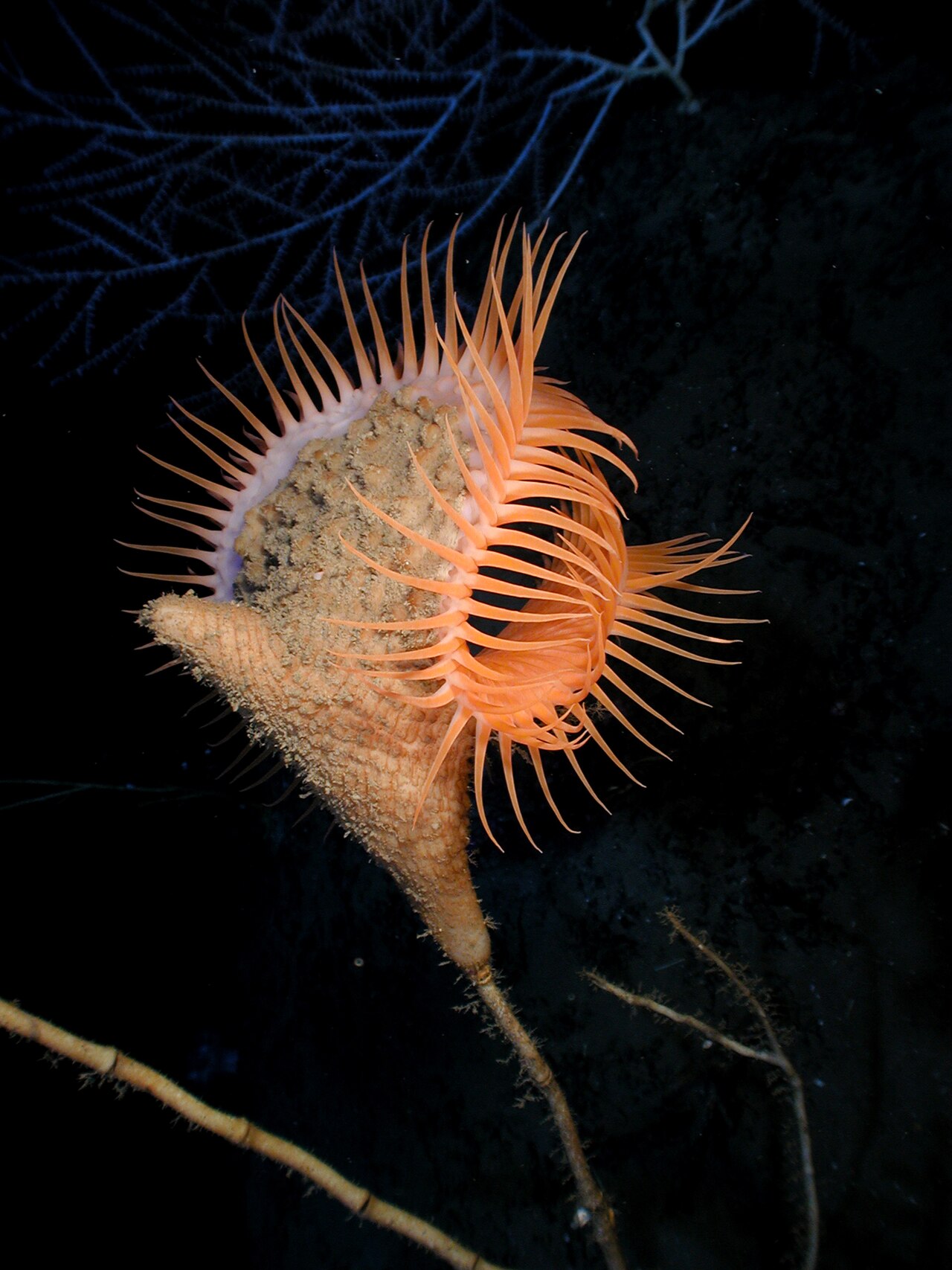
The name Cnidaria traces back to the Ancient Greek knídē, meaning "nettle," a nod to the coiled, thread-like structures housed within cnidocytes. For much of the nineteenth and twentieth centuries, cnidarians were lumped together with comb jellies under the umbrella phylum Coelenterata, but growing recognition of their fundamental differences prompted taxonomists to split them into separate phyla. Today the group is organized into four principal classes: Anthozoa, the almost entirely sessile sea anemones, corals, and sea pens; Scyphozoa, the familiar swimming jellyfish; Cubozoa, the box jellies; and Hydrozoa, a remarkably diverse class spanning all freshwater cnidarians, the freshwater Hydra, and colonial swimmers like the Portuguese man o' war. In recent years, Staurozoa earned recognition as a full class rather than a subgroup of Scyphozoa, and the highly derived parasitic Myxozoa and Polypodiozoa were firmly confirmed as cnidarians in 2007, expanding the phylum's boundaries considerably.
Deep Time & Ecological Web
Fossil evidence pushes cnidarian history back to roughly 580 million years ago, in Ediacaran rocks that predate the Cambrian Explosion, while coral fossils appear shortly before 490 million years ago and diversified within a few million years. Molecular clock analyses of mitochondrial genes suggest the crown group of cnidarians may be even older, around 741 million years, nearly two hundred million years before the Cambrian and well before any known fossil. Phylogenetic work consistently positions cnidarians as the sister group to bilaterians, making them the closest living relatives of virtually every other animal. Ecologically, cnidarians occupy a wide range of niches: scleractinian corals build reef structures with the help of photosynthetic zooxanthellae, while other species thrive at great depths, in polar waters, or in freshwater. They prey on everything from plankton to animals several times their own size, yet they are themselves hunted by starfish, sea slugs, fish, turtles, and even fellow cnidarians.
Gallery



Frequently Asked Questions
What are Aurelia (cnidarian)'s powers/role?
Moon jellies are gelatinous zooplankton that drift through open ocean, their medusae typically spanning 5 to 38 cm in diameter with an average around 18 cm. They occupy the role of the most thoroughly investigated group within gelatinous zooplankton, serving as a go-to model for jellyfish biology.
How does Aurelia (cnidarian)'s story end?
As a living genus, Aurelia's narrative is still unfolding—25 species remain formally recognized and many cryptic lineages have not yet been described. Complicating matters, early-2000s genetic analyses showed that some earlier research may have conflated distinct species under a single morphological name, so parts of the historical record are still being untangled.
Why is Aurelia (cnidarian) important?
Aurelia aurita, the best-studied species in the genus, has long served as a primary model for cnidarian development, regeneration, and reproduction. The genus as a whole anchors decades of marine-biology research because it is the most well-characterized group of gelatinous zooplankton.
More in Cnidarians 1-18
Spotted an error? Know more?
This is a living reference — every entry is fact-audited, and reader corrections feed straight into our audit queue. Suggest an edit · See this site's audit record