Terry-Thomas
The gap-toothed cad of British comedy
Last updated

Joe Mabel · CC BY-SA 4.0
Terry-Thomas (born Thomas Terry Hoar Stevens; 10 July 1911 – 8 January 1990) was an English character actor and comedian who gained international fame in the 1950s and 1960s. He specialised in playing disreputable upper-class types—cads, toffs, and bounders—using a distinctive voice, and his typical costume included a monocle, waistcoat, and cigarette holder. His sharp fashion sense was accentuated by a one-third-inch gap between his two upper front teeth.

Born in London, he made an uncredited film debut in The Private Life of Henry VIII (1933). After years of small roles, he served during the war with ENSA and Stars in Battledress, which sharpened his cabaret and revue act, boosted his public profile, and helped shape his successful comic stage routine.

Early post-war work: 1946–1955
After demobilisation, he starred in the stage show Piccadilly Hayride and headlined the first British television comedy series, How Do You View? (1949). He also appeared on BBC Radio and moved smoothly into British films. His most creative period was the 1950s, with roles in Private's Progress (1956), The Green Man (1956), Blue Murder at St Trinian's (1957), I'm All Right Jack (1959), and Carlton-Browne of the F.O. (1959).
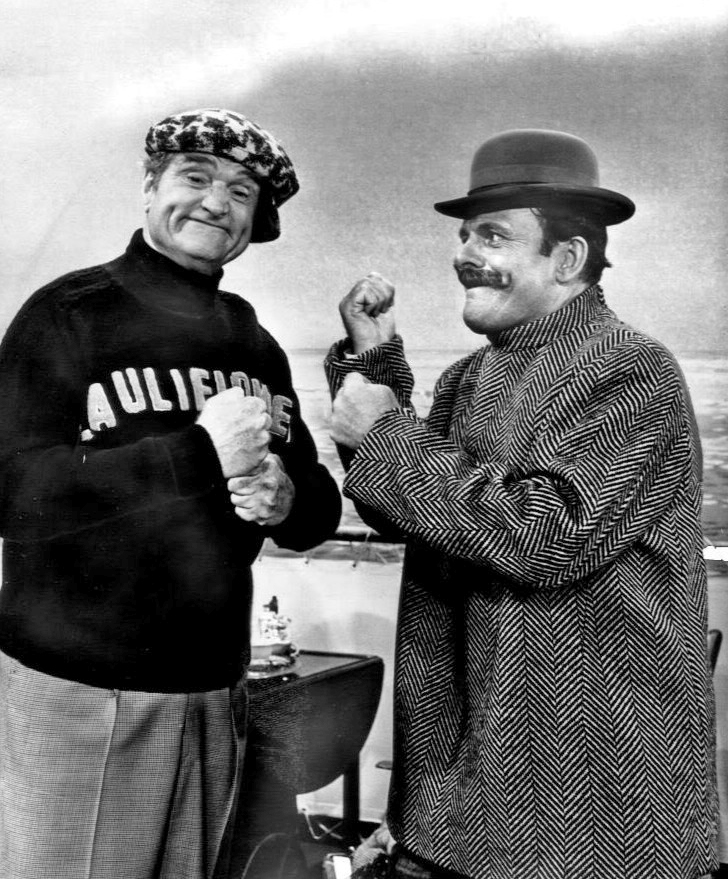
In the early 1960s, he began working in American films, coarsening his already broad screen persona in movies like Bachelor Flat (1962), It's a Mad, Mad, Mad, Mad World (1963), and How to Murder Your Wife (1965). From the mid-1960s, he also frequently appeared in European films, playing Sir Reginald in the successful French comedy La Grande Vadrouille.

Final years and death: 1983–1990
In 1971, he was diagnosed with Parkinson's disease, which gradually ended his career; his last film role came in 1980. He spent much of his fortune on medical treatment and, near the end of his life, lived in poverty, supported by charity from the Actors' Benevolent Fund. In 1989, a charity gala held in his honour raised enough money for him to spend his final months in a nursing home.

Quick Facts
- Field
- Character actor, comedian
- Nationality
- English
Facts from the source article.
Lore & Background
Terry-Thomas was the fourth of five children born to Ernest Frederick Stevens and his wife Ellen Elizabeth Stevens (née Hoar). He attended Ardingly College, where he briefly took up drama; the subject later led to his expulsion from the school, after his frequent and inappropriate use of ad lib during lessons. He also took up a position in the school jazz band, first playing the ukulele and then percussion.

Reader's Guide
Terry-Thomas made his film debut, uncredited, in The Private Life of Henry VIII (1933). He spent several years appearing in smaller roles, before wartime service with ENSA and Stars in Battledress.
His most creative period was the 1950s when he appeared in Private's Progress (1956), The Green Man (1956), Blue Murder at St Trinian's (1957), I'm All Right Jack (1959) and Carlton-Browne of the F.O. (1959). From the early 1960s he began appearing in American films, and from the mid-1960s on he also frequently starred in European films. In 1971 he was diagnosed with Parkinson's disease, which slowly brought his career to a conclusion; his last film role was in 1980.
Did You Know?
- He added the hyphen to his stage name 'to tie the two names together' and 'to match the gap in his front teeth'.
- He based his early look on actor Erich von Stroheim.
- He permanently damaged his hearing while filming the 1936 musical comedy This'll Make You Whistle.
Frequently Asked Questions
Who is Terry-Thomas?
Terry-Thomas was an English character actor and comedian best known for playing slick, upper-class rogues with a instantly recognizable gap-toothed grin. He built his career around a very specific type of disreputable toff rather than trying many different roles.
What made Terry-Thomas's physical comedy style distinctive?
His clowning relied less on slapstick and more on vocal delivery, a smug half-lidded stare, and the exaggerated confidence of a man who knows he's a cad. The tiny 3 mm gap between his front teeth became a visual punchline in every close-up, turning his smile into a recurring gag.
What was Terry-Thomas's signature look and props?
He almost always appeared in a crisp waistcoat, a monocle perched on one eye, and a cigarette holder held at a rakish angle. That ensemble became so tightly bound to his persona that audiences could identify his character before a single line was spoken.
What kinds of characters did Terry-Thomas typically play?
He specialized in cads, toffs, and bounders—members of the upper classes who were charming on the surface but thoroughly disreputable underneath. His distinctive nasal voice and air of self-importance made every villain or schemer feel like a slightly drunk uncle at a country-house party.
Also in the Codexery
More in Clowning & Physical Comedy
Sources
Compiled from Wikipedia and the sources listed below. Text from Wikipedia is available under CC BY-SA 4.0; this entry is adapted from it.
- Wikipedia: Terry-Thomas (CC BY-SA 4.0).
Spotted an error? Know more?
Reader corrections go straight into our review queue. Suggest an edit · How this site is sourced