Allen's Cider Mill
One of Connecticut's last operational cider mills, collapsed in 2019.
Last updated
Where it is
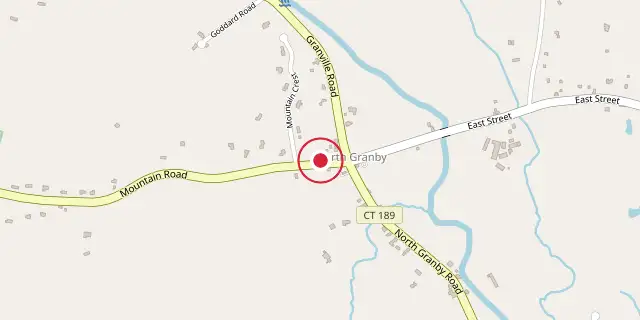
Coordinates: 41°59′46″N 72°49′55″W (41.9960, -72.8320) · Open in OpenStreetMap
Coordinates and connected clubs: the infobox of Wikipedia: Allen's Cider Mill (CC BY-SA 4.0). Map: drawn by Codexery from OpenStreetMap tiles.
Allen's Cider Mill, located at 7 Mountain Road in Granby, Connecticut, was a historic structure that, when added to the National Register of Historic Places in 1992, ranked among the few cider mills still operating in the state. The building collapsed in 2019 after a period of disuse.
The mill stood in the North Granby crossroads village, on the south side of Mountain Road just west of its intersection with Connecticut Route 189. It was a wood-frame building with a gable roof and a one-story shed addition, set close to the road and finished with vertical board siding. The main facade had three bays: doors occupied the center and right bays on the ground floor, while square multilight windows filled the other bays.
The central door was slightly off-center. Inside, the mill held functional cider-making equipment from the mid-20th century, along with remnants of older machinery, including a conveyor system that once moved apples into the hopper. The attic showed traces of plasterwork, suggesting it was a finished space likely used for aging cider.
The property had been used for cider production since at least 1783, when Silas Cossitt opened a mill across the street. That mill operated until about 1857, during a time when North Granby was a major center for cider brandy production in Connecticut. It is believed that the frame of Cossitt’s 18th-century house was reused in the construction of this building. The structure itself was built in the 1860s as an almshouse for the town’s poor.
Originally located at the road junction where the present post office stands, it was moved a short distance west and converted into a dance hall in the 1870s. A few years later, it was moved to its current location and housed the local Grange chapter. It was adapted for use as a cider mill in 1899.
In August 2019, the mill’s roof and upper floor collapsed, and its south wall fell down.
Lore & Background
The property on which the cider mill sat had been used for cider making since at least 1783, when Silas Cossitt opened a mill across the street. That mill operated until about 1857, during a period when North Granby was one of Connecticut's major cider brandy producing centers. It is believed that the frame of Cossitt's 18th-century house was used in the construction of this building.
In the 1860s the building was constructed as an almshouse for the town's indigent population. It was originally located at the road junction where the present post office stands, was moved a short way west and converted into a dance hall in the 1870s, then moved to its present location a few years later and housed the local Grange chapter. It was adapted for use as a cider mill in 1899.
The mill was a wood-frame structure with a gable roof and a shed addition, finished in vertical board siding. Its interior contained functional equipment for making cider dating to the mid-20th century, along with vestigial remains of older equipment including a conveyor mechanism for transporting apples into the mill's hopper. The attic space had traces of plasterwork, indicating it was a finished space probably used for aging cider.
Reader's Guide
Allen's Cider Mill stands as a rare surviving example of Connecticut's once-thriving cider industry. Its listing on the National Register of Historic Places in 1992 recognized it as one of the few operational cider mills remaining in the state at that time. The building's layered history—from almshouse to dance hall to Grange hall to cider mill—reflects the adaptive reuse common in rural New England structures.
The mill's equipment, including mid-20th-century machinery and older remnants like the apple conveyor, documented the evolution of cider production technology. The collapse of the roof and upper floor in August 2019, along with the south wall, marked the end of a structure whose site had been associated with cider making for over 230 years. Its loss removed a tangible link to North Granby's history as a major cider brandy producing center in the 19th century.
More in Cider
Elsewhere in Cider and Mead
Sources
Compiled from Wikipedia and the sources listed below. Text from Wikipedia is available under CC BY-SA 4.0; this entry is adapted from it.
- Wikipedia: Allen's Cider Mill (CC BY-SA 4.0).
Spotted an error? Know more?
Reader corrections go straight into our review queue. Suggest an edit · How this site is sourced