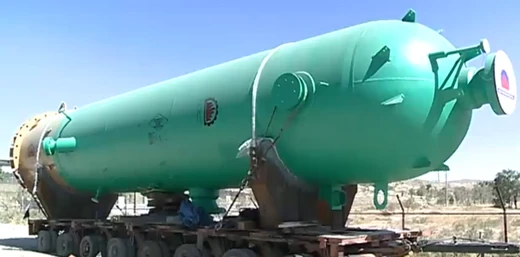
Cyclonic separation
Vortex-based method for removing particulates without filters.

Cyclonic separation is a technique for removing particulate matter from a stream of air, gas, or liquid by creating a vortex, without relying on filter media. When applied to liquids, the device is called a hydrocyclone; for gases, it is a gas cyclone. The process uses rotational forces and gravity to separate solids from fluids, and can also extract fine liquid droplets from a gas stream. In operation, a high-speed rotating flow is established inside a cylindrical or conical container known as a cyclone. The air moves in a helical pattern, entering at the wide top and spiraling downward to the narrow bottom, before exiting straight upward through the center. Larger or denser particles possess too much inertia to follow the tight curve of the airflow; they strike the outer wall and fall to the bottom for collection. As the rotating flow moves toward the narrower end, the rotational radius decreases, enabling the separation of progressively smaller particles. The cyclone’s geometry and the volumetric flow rate determine its cut point—the particle size removed with 50% efficiency. Particles larger than this are removed more effectively, while smaller ones separate with lower efficiency and may be re-entrained when the vortex reverses direction toward the outlet. An alternative design introduces a secondary air flow from the top to protect the walls from abrasion and to help move collected particulates toward the hopper, allowing the cyclone to be mounted horizontally. Cyclone separators are common in power and industrial settings such as pulp and paper mills, cement plants, steel mills, petroleum coke facilities, sawmills, and oil refineries. They are also used in household bagless vacuum cleaners, industrial kitchen ventilation to separate grease, and small wearable devices for analyzing respirable airborne particles. Multiple-cyclone separators, which consist of several small-diameter cyclones operating in parallel, remove more dust than single cyclones due to longer residence time and greater centrifugal force, though they require more energy.
- field
- Industrial separation technology
- known_for
- Removing particulates from fluid streams using vortex separation without filters
- applications
- Power plants, sawmills, oil refineries, cement plants, vacuum cleaners, kitchen ventilation
- types
- Single-cyclone, multiple-cyclone, secondary-air-flow separators
Lore & Background
Cyclonic separation relies on a high-speed rotating airflow established within a cylindrical or conical container known as a cyclone. The air enters and follows a helical path, beginning at the wide top and spiraling downward toward the narrow bottom, before reversing direction and exiting as a straight stream through the center at the top. Larger or denser particles possess too much inertia to follow the tight curve of the rotating stream, causing them to strike the outer wall and then fall to the bottom for removal. In a conical design, as the rotating flow progresses toward the narrow end, the rotational radius decreases, enabling the separation of progressively smaller particles. The specific geometry of the cyclone, combined with the volumetric flow rate, determines the cut point—the particle size at which 50% removal efficiency is achieved. Particles larger than this cut point are removed with greater efficiency, while smaller particles separate less effectively and may be re-entrained when the air vortex reverses direction toward the outlet. An alternative design injects a secondary air flow from the top, which moves downward to intercept particulates from the primary air entering at the bottom; this secondary flow protects the walls from abrasion and allows the collector to be mounted horizontally, as it does not rely solely on gravity to move collected material toward the hopper.
Reader's Guide
Cyclonic separation is significant for its ability to remove particulates from air, gas, or liquid streams without filters, making it a durable and low-maintenance solution in many industries. It is used in power and industrial applications such as pulp and paper plants, cement plants, steel mills, and sawmills. In households, it is the core technology in bagless vacuum cleaners. The method also separates grease from exhaust air in kitchen ventilation and respirable particles for analysis. Multiple-cyclone separators offer higher efficiency than single-cyclone designs but require more energy. Secondary-air-flow separators protect against abrasion and allow horizontal installation. The technology's legacy lies in its versatility and widespread adoption across industrial and domestic settings.
Did You Know?
- Cyclonic separation can remove fine droplets of liquid from a gaseous stream.
- The cut point of a cyclone is the particle size removed with 50% efficiency.
- Multiple-cyclone separators consist of small-diameter cyclones operating in parallel.
- Secondary-air-flow separators allow the collector to be mounted horizontally.
More in Chemical Reactors And Processes 1-24
Spotted an error? Know more?
This is a living reference — every entry is fact-audited, and reader corrections feed straight into our audit queue. Suggest an edit · See this site's audit record