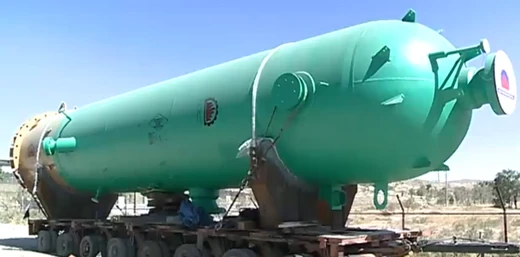
Chemical reactor
Enclosed vessel where chemical reactions are carried out in process engineering.

G YassineMrabet Talk ✉ · Public domain
A chemical reactor is a sealed container where chemical reactions occur. In chemical engineering, it is considered a process vessel and a standard unit operation in process analysis. Reactor design involves multiple engineering aspects, with the goal of maximizing net present value for a specific reaction. Designers aim for the highest efficiency and yield of the desired product while minimizing purchase and operating costs. Operating expenses include energy for heating, cooling, or pumping, raw materials, labor, and overcoming friction or agitation. Chemical reaction engineering applies chemical kinetics to industrial reactor design.
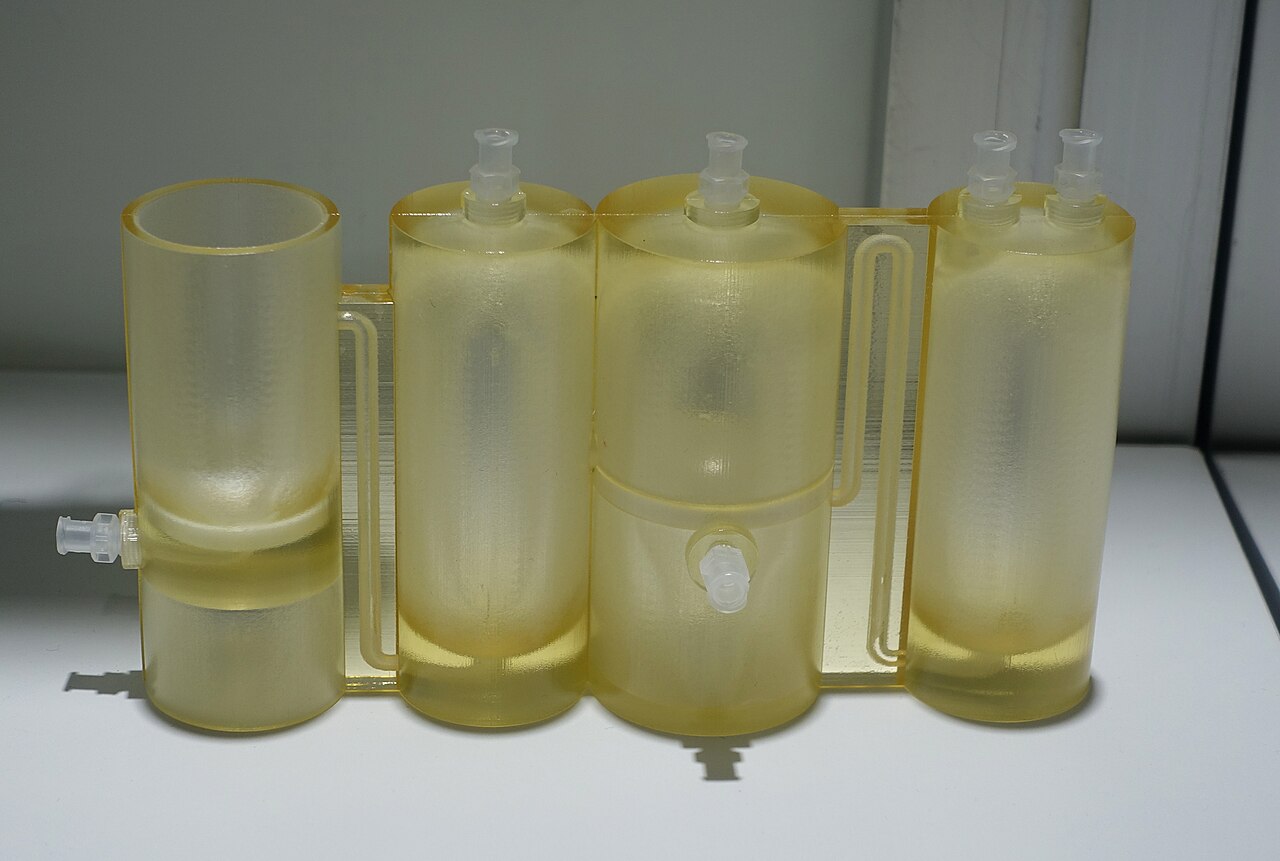
The most common reactor types are tanks, where reactants mix throughout the volume, and pipes or tubes, used for laminar or plug flow. Both can operate continuously or in batches, and may contain solids like reagents, catalysts, or inert materials, though reactants and products are usually fluids. Continuous reactors typically run at steady-state, while batch reactors operate in a transient state. Startup or restart also involves transient conditions where key variables change over time. Three idealized models estimate important process variables: the batch reactor model, the continuous stirred-tank reactor (CSTR) model, and the plug flow reactor (PFR) model. Many real reactors combine these types. Key variables include residence time, volume, temperature, pressure, species concentrations, and heat transfer coefficients. A tubular reactor may be a packed bed, where liquid or gas reactants flow through solid catalyst particles. A reactor can also be a fluidized bed. Reactions may be exothermic (releasing heat) or endothermic (absorbing heat). Tank reactors often have cooling or heating jackets or coils; tubular reactors can be designed as heat exchangers for exothermic reactions or as furnaces for endothermic ones.
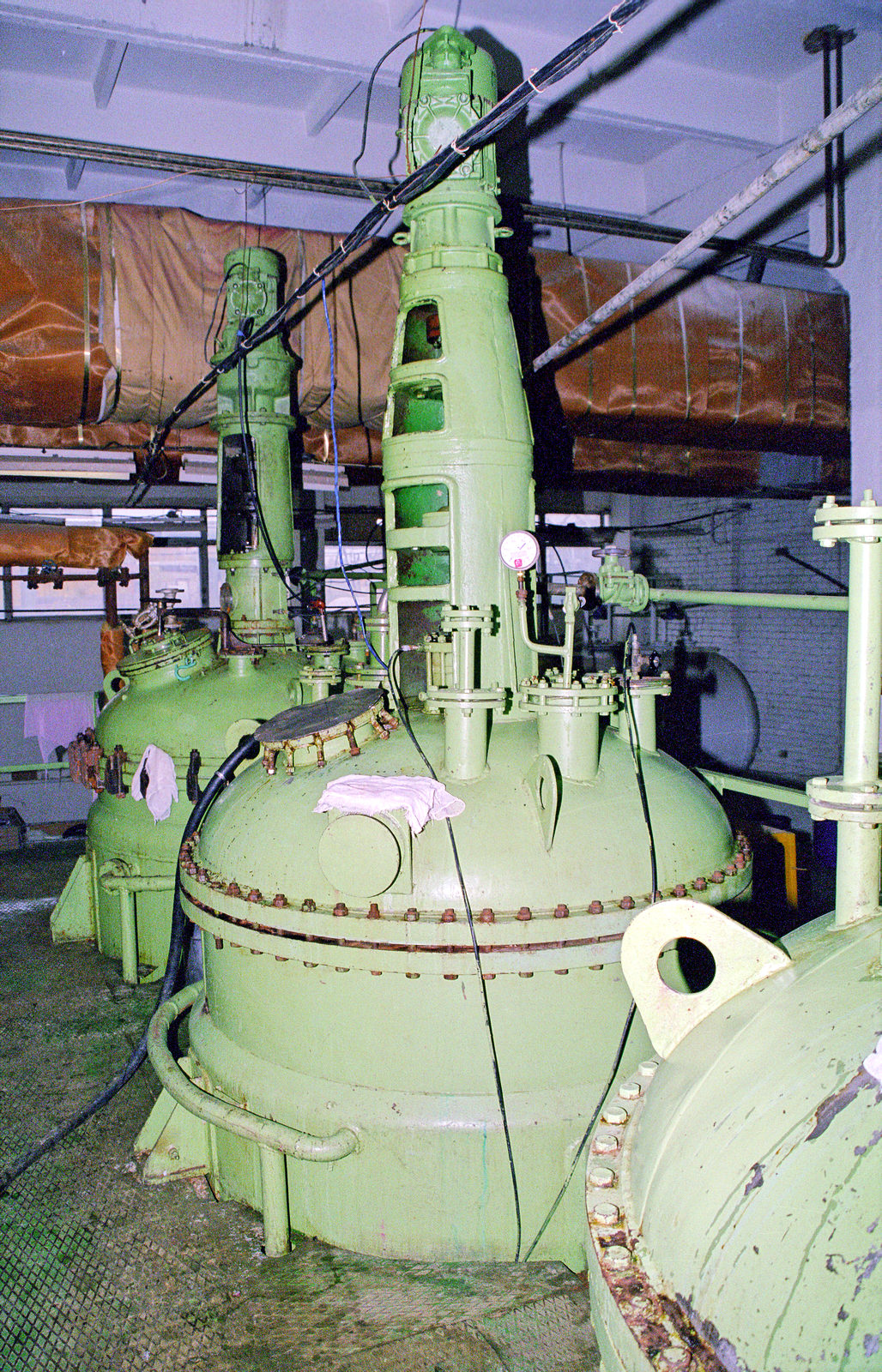
The simplest reactor is the batch reactor, where materials are loaded and the reaction proceeds over time without reaching steady state. Temperature, pressure, and volume control are often needed, so batch reactors typically have ports for sensors and material input or output. They are common in small-scale production and with biological materials, such as brewing, pulping, or enzyme production. A pressure reactor is one example.
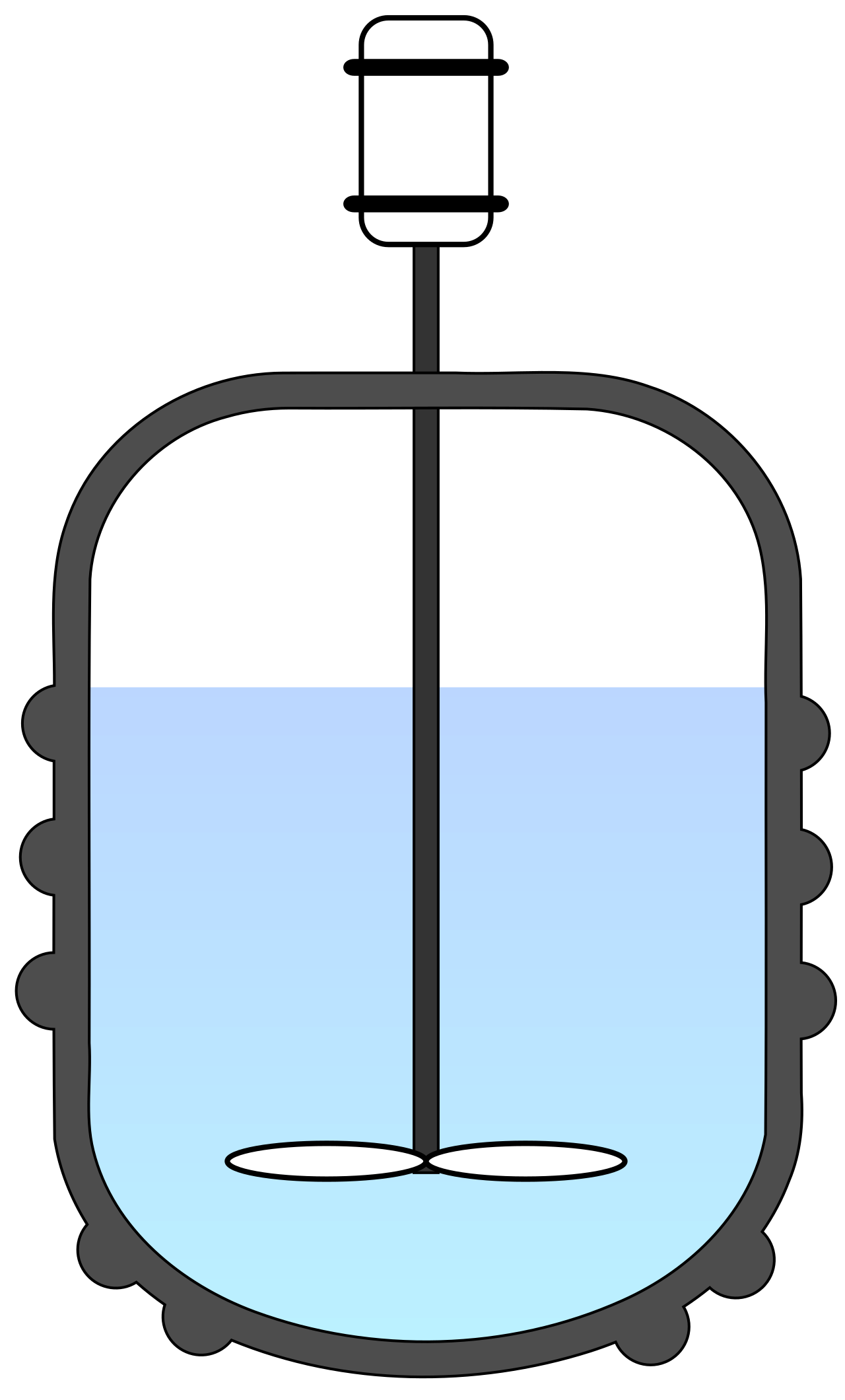
In a CSTR, fluid reagents enter a stirred tank, typically mixed by an impeller, while effluent is removed. Dividing tank volume by average volumetric flow rate gives space time. Using chemical kinetics, the expected reaction completion can be calculated. At steady-state, mass flow in equals mass flow out; otherwise, the tank overflows or empties in transient state. The reaction proceeds at the rate of the final output concentration, assumed homogeneous throughout. Operating several CSTRs in series can be economical, allowing higher reagent concentration and reaction rate in the first tank, with varying sizes to minimize capital investment. An infinite series of infinitely small CSTRs would equal a PFR. CSTR behavior is often modeled as a Continuous Ideally Stirred-Tank Reactor (CISTR), assuming perfect mixing. This approximation is valid if residence time is 5–10 times mixing time. In practice, perfect mixing is only approached, especially in large industrial reactors. A loop reactor is a hybrid that looks like a tubular reactor but operates like a CSTR, circulating the mixture in a jacketed loop with continuous feed and product flow.
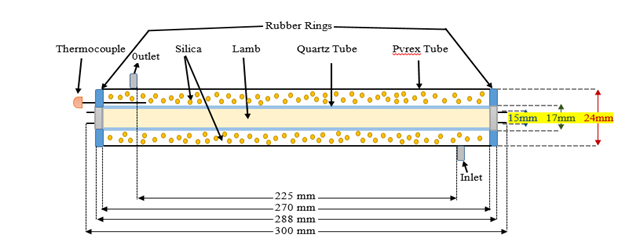
In a PFR, also called a continuous tubular reactor (CTR), fluid reagents are pumped through a pipe or tube.
- field
- Chemical engineering
- known_for
- Enclosed volume for chemical reactions; basic types include batch, CSTR, and PFR
- common_types
- Tanks and pipes/tubes
- key_process_variables
- Residence time, volume, temperature, pressure, concentrations, heat transfer coefficients
Lore & Background
The most common basic types of chemical reactors are tanks (where reactants mix in the whole volume) and pipes or tubes (for laminar flow reactors and plug flow reactors). Both types can be used as continuous reactors or batch reactors, and either may accommodate one or more solids, but the reagents and products are typically fluids. Reactors in continuous processes are typically run at steady-state, whereas reactors in batch processes are necessarily operated in a transient state.
There are three idealized models used to estimate the most important process variables: the batch reactor model, the continuous stirred-tank reactor model (CSTR), and the plug flow reactor model (PFR). Many real-world reactors can be modeled as a combination of these basic types. Key process variables include residence time, volume, temperature, pressure, concentrations of chemical species, and heat transfer coefficients.
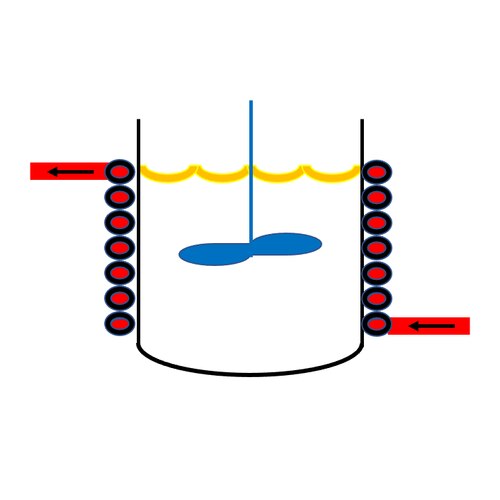
Chemical reactions occurring in a reactor may be exothermic (giving off heat) or endothermic (absorbing heat). A tank reactor may have a cooling or heating jacket or coils wrapped around the outside of its vessel wall, while tubular reactors can be designed like heat exchangers if the reaction is strongly exothermic, or like furnaces if the reaction is strongly endothermic.
Reader's Guide
Chemical reactors are central to chemical engineering as the vessels where chemical reactions are carried out. Their design aims to maximize net present value by achieving high efficiency and yield while minimizing operating expenses such as energy input, raw material costs, and labor. The three idealized models—batch, CSTR, and PFR—provide a framework for estimating key process variables like residence time, temperature, and concentration. These models help engineers predict reactor behavior and optimize performance. Real-world reactors often combine these basic types, and the choice of reactor depends on factors such as reaction kinetics, heat transfer needs, and whether the process is continuous or batch. The study of chemical reactors, known as chemical reaction engineering, applies chemical kinetics to industrial systems. Understanding reactor types and their characteristics is essential for designing processes that produce desired products efficiently, with separation steps often following the reactor to recover unreacted materials or byproducts.
Did You Know?
- The simplest type of reactor is a batch reactor, where materials are loaded and the reaction proceeds with time.
- In a CSTR, the reaction proceeds at the rate associated with the final (output) concentration because the concentration is assumed homogeneous throughout.
- An infinite number of infinitely small CSTRs operating in series would be equivalent to a PFR.
- Under laminar flow conditions, the assumption of plug flow is highly inaccurate; the continuous oscillatory baffled reactor (COBR) achieves thorough mixing to approximate plug flow.
Design Philosophy and Economic Optimization
Chemical reactor design sits at the intersection of multiple engineering disciplines, with the ultimate goal of maximizing net present value for a given reaction. Engineers must balance the desire for the highest possible yield of the target product against the financial burden of purchasing and operating the vessel. Normal operating expenses span a wide range: energy must be supplied to heat the mixture or removed to cool it, pumps must maintain adequate pressure, frictional losses in piping must be accounted for, and agitation systems consume additional power. Raw material costs, labor, and the capital outlay for the vessel itself all factor into the economic calculus. The designer's task is to ensure the reaction proceeds with maximum efficiency toward the desired output while keeping both capital and operating expenditures as low as possible. Chemical reaction engineering, the dedicated branch of chemical engineering that addresses these questions, applies chemical kinetics to industrial-scale systems to bridge the gap between a laboratory flask and a profitable production plant.
The Three Idealized Modeling Frameworks
At the heart of reactor analysis lie three idealized models that serve as the building blocks for understanding virtually any real-world vessel. The batch reactor model describes a closed system in which materials are loaded, the reaction unfolds over time, and no steady state is ever reached. The continuous stirred-tank reactor model assumes perfect mixing so that the entire volume operates at the outlet concentration, making the reaction rate uniform throughout. The plug flow reactor model, by contrast, assumes no axial mixing whatsoever; each fluid element travels through the tube as a discrete slug, experiencing a gradient in concentration and reaction rate from inlet to outlet. In practice, most industrial reactors behave as some combination of these three archetypes. Key process variables that must be tracked across all models include residence time, volume, temperature, pressure, the concentrations of every chemical species present, and the relevant heat transfer coefficients. These three frameworks give engineers a common language for sizing, comparing, and optimizing vessels of every shape and scale.
Thermal Management and Reaction Energetics
One of the most consequential engineering challenges in reactor design is managing the heat that accompanies chemical transformation. Reactions may be exothermic, releasing thermal energy into the surroundings, or endothermic, drawing heat from the environment. A tank-style reactor typically addresses this with a cooling or heating jacket wrapped around the vessel wall, or with coils of tubing threaded through the exterior to either remove or supply heat to the contents. Tubular reactors face a more geometrically constrained problem: if the reaction is strongly exothermic, the tube can be designed to function as a heat exchanger, channeling the released energy to a secondary fluid stream. Conversely, a strongly endothermic reaction may require the tube to be configured like a furnace, with external heating elements maintaining the necessary temperature. In both cases, the heat transfer coefficient becomes a critical design parameter, and failure to manage thermal loads can lead to product degradation or dangerous pressure excursions. The choice of thermal management strategy is therefore inseparable from the choice of reactor geometry itself.
Cascading CSTRs and the Path to Plug Flow
A particularly elegant insight in reactor engineering is that an infinite cascade of infinitesimally small continuous stirred-tank reactors, connected in series, reproduces the exact behavior of an ideal plug flow reactor. This mathematical equivalence gives engineers a powerful design tool: by operating several CSTRs in sequence, the first vessel can handle reagents at their highest concentration and therefore sustain the fastest reaction rate, while downstream units deal with progressively lower concentrations. The sizes of individual tanks in the series can be varied to minimize total capital investment while still meeting the desired conversion target. In practice, engineers often approximate a CSTR using the continuous ideally stirred-tank reactor model, which assumes perfect mixing; this approximation holds when the residence time is roughly five to ten times the mixing time. A fascinating hybrid, the loop reactor, physically resembles a tubular unit but circulates the reaction mixture in a closed loop of tube surrounded by a heating or cooling jacket, blending the operational logic of a CSTR with the geometry of a PFR.
Gallery
Frequently Asked Questions
What is a Chemical reactor in the Chemical Reactors And Processes series?
It is the central vessel of the series, defined as an enclosed volume where a chemical reaction is carried out. In the canon, it functions as one of the classic unit operations that chemical engineers analyze and design around.
What are the three basic types of Chemical reactor fans should know?
The series identifies batch reactors, CSTRs (continuous stirred-tank reactors), and PFRs (plug-flow reactors) as the foundational forms. Physically, these show up as tanks or as pipes and tubes in process layouts.
Which process variables does Chemical reactor's story revolve around?
The narrative hinges on residence time, volume, temperature, pressure, reactant concentrations, and heat-transfer coefficients. Engineers in the canon tune these variables to shape the reaction outcome.
Why is Chemical reactor considered important in the Chemical Reactors And Processes canon?
It sits at the heart of chemical process analysis as a core unit operation. Designers work within its constraints to maximize the net present value of a given reaction, making it the economic and technical focal point of the series.
What field does Chemical reactor belong to in the encyclopedia?
It is firmly rooted in chemical engineering, where it is treated as a process vessel rather than a standalone machine. The series frames it as the workspace where reaction kinetics meet practical engineering design.
More in Chemical Reactors And Processes 1-24
Spotted an error? Know more?
This is a living reference — every entry is fact-audited, and reader corrections feed straight into our audit queue. Suggest an edit · See this site's audit record