Chemical process
A means of changing chemical identity, often used industrially.

PEO ACWA · CC BY 2.0
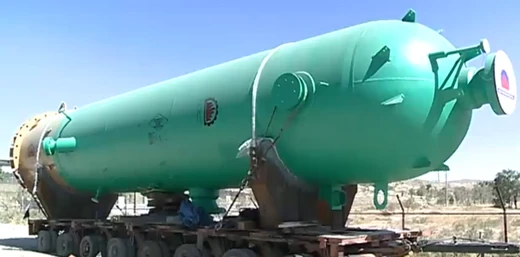
A chemical process describes how one or more substances change their chemical identity. This change can happen on its own or be triggered by an external factor, and it always involves a chemical reaction. In a practical, industrial sense, a chemical process is a method used in manufacturing to alter the composition of chemicals or materials, typically employing technology found in chemical plants or the broader chemical industry.
Neither definition is precise enough to always distinguish a chemical process from other phenomena; they are practical guidelines with significant overlap. Because of this ambiguity, chemists and scientists generally use the term only in a general or engineering context. In engineering, however, "chemical process" is widely applied, and this entry focuses on that engineering definition.
While a chemical process may sometimes consist of a single step, it often involves multiple steps called unit operations. In a plant, each unit operation usually occurs in its own vessel or section, known as a unit. Chemical reactions are common, but other methods like mixing or separation can also change composition. Process steps can be arranged sequentially in time or in space along a flowing material stream. For a given amount of feed or product, expected material amounts at key steps can be determined from empirical data and material balance calculations, and these amounts can be scaled for different plant capacities. Multiple plants may use the same process at different scales. Processes like distillation and crystallization date back to alchemy in Alexandria, Egypt.
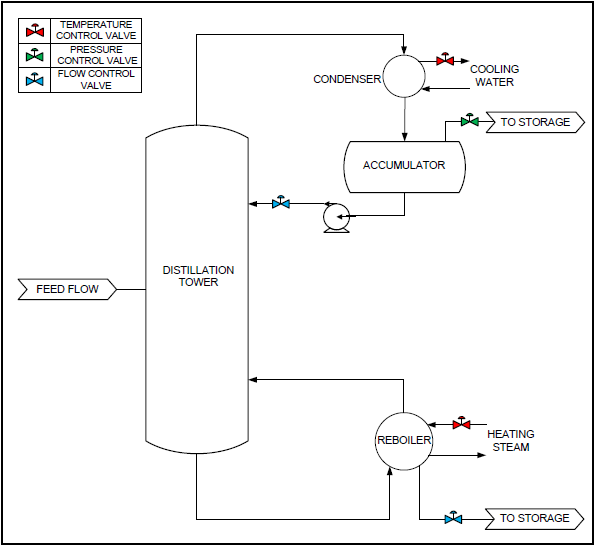
These processes are often illustrated as block flow diagrams, with blocks representing units and arrows showing material flow between them. More detailed versions are called process flow diagrams. Beyond chemical production, similar technology and equipment are used in oil refining, natural gas processing, polymer and pharmaceutical manufacturing, food processing, and water and wastewater treatment.
Unit processing is a fundamental concept in chemical engineering. Alongside unit operations, it forms the core principle of various chemical industries. Each type of unit processing follows the same chemical law, just as each type of unit operation follows the same physical law. Important unit processes include fractionation, decontamination, distillation, filtration, oxidation, reduction, refining, hydrogenation, dehydrogenation, hydrolysis, hydration, dehydration, halogenation, nitrification, sulfonation, amination, alkylation, dealkylation, esterification, polymerization, polycondensation, purification, and catalysis.
Academic research in this area is conducted at institutes such as the Institute of Process Research & Development at the University of Leeds.
- field
- Chemistry, Chemical Engineering
- known_for
- Definition and industrial application of chemical processes, including unit operations and unit processing
- related_concepts
- Unit operations, unit processing, block flow diagrams, process flow diagrams
Lore & Background
A chemical process, in its engineering sense, is a method used on an industrial scale to change the composition of materials, typically employing technology similar to that found in chemical plants or the broader chemical industry. Such a process may involve only a single step, but often consists of multiple steps known as unit operations, each of which commonly takes place in individual vessels or sections of a plant called units. While one or more chemical reactions are frequently involved, other methods of altering composition, such as mixing or separation processes, are also used. The steps can be sequential in time or in space along a stream of flowing material. For a given amount of feed or product, expected material quantities at key steps are determined from empirical data and material balance calculations, and these amounts can be scaled up or down to suit a particular plant’s capacity. More than one plant may use the same process at different scales. Historically, chemical processes like distillation and crystallization trace back to alchemy in Alexandria, Egypt. These processes are illustrated generally as block flow diagrams, with units shown as blocks and streams as connecting lines with arrowheads, or in more detail as process flow diagrams. Beyond chemical production, similar technology and equipment are used in oil refining, natural gas processing, polymer and pharmaceutical manufacturing, food processing, and water and wastewater treatment.
Reader's Guide
Chemical processes are fundamental to the chemical industry and related fields such as oil refining, natural gas processing, polymer and pharmaceutical manufacturing, food processing, and water and wastewater treatment. They can be illustrated as block flow diagrams or process flow diagrams, with blocks representing units and lines representing streams. For a given amount of feed or product, expected material amounts can be determined from empirical data and material balance calculations, and these amounts can be scaled up or down for different plants. Unit processing, which follows chemical laws, includes processes such as fractionation, distillation, filtration, oxidation, reduction, hydrogenation, and polymerization, among others.
Did You Know?
- Chemical processes like distillation and crystallization go back to alchemy in Alexandria, Egypt.
- The term 'chemical process' has two practical definitions, neither of which is exact.
- Chemical processes can be illustrated as block flow diagrams or process flow diagrams.
- Unit processing in chemical engineering includes processes such as fractionation, distillation, filtration, oxidation, and reduction.
Design Philosophy & Economic Optimization
Chemical reactor design sits at the intersection of multiple engineering disciplines, with the ultimate goal of maximizing net present value for a given reaction. Engineers must balance competing demands: achieving the highest possible yield of the desired product while keeping capital and operating costs as low as possible. Operating expenses span a wide range, from raw material procurement and labor to the energy required for heating, cooling, pressure pumping, and agitation. Even frictional pressure losses within the system factor into the economic calculus. The branch of chemical engineering dedicated to this work—chemical reaction engineering—applies chemical kinetics to industrial-scale systems, translating molecular-level reaction rates into practical vessel geometries and operating conditions. A well-designed reactor ensures the reaction proceeds with maximum efficiency toward the target output, making the economic case for the entire process viable.
The Three Idealized Models
Chemical engineers rely on three foundational idealized models to estimate the key process variables of any reactor: the batch reactor model, the continuous stirred-tank reactor (CSTR) model, and the plug flow reactor (PFR) model. The batch model describes a vessel where materials are loaded, the reaction proceeds over time, and no steady state is ever reached. The CSTR model assumes perfect homogeneity throughout the tank, meaning the reaction proceeds at the rate corresponding to the final output concentration. The PFR model, by contrast, assumes no axial mixing, so the reaction rate changes along the length of the tube as reagent concentrations decrease and product concentrations rise. In practice, most real-world reactors behave as some combination of these three archetypes. Key variables tracked across all models include residence time, volume, temperature, pressure, species concentrations, and heat transfer coefficients.
Thermal Management & Reactor Configuration
The thermal character of a reaction fundamentally shapes reactor architecture. Exothermic reactions release heat, while endothermic reactions absorb it, and each demands a different engineering response. A tank reactor might employ a cooling or heating jacket, or coils wrapped around the vessel wall, to manage temperature. Tubular reactors, when handling strongly exothermic chemistry, can be designed to function like heat exchangers; for strongly endothermic reactions, they may be configured like furnaces. Beyond simple tanks and tubes, reactors take specialized forms: a tubular reactor can house a packed bed of solid catalyst particles or pellets through which liquid or gas reactants are pumped. A fluidized bed reactor represents another configuration. The loop reactor offers a hybrid approach—physically resembling a tubular design but operating with CSTR-like mixing, circulating the reaction mixture through a jacketed tube loop while maintaining continuous feed and product withdrawal.
Operational States & Practical Applications
The distinction between steady-state and transient operation is central to reactor behavior. Continuous-process reactors are typically run at steady state, where inflow equals outflow and process variables remain constant. Batch reactors, by necessity, operate in a transient state: key variables shift with time as the reaction progresses, and precise control of temperature, pressure, and volume becomes essential. When any reactor is first started or restarted after shutdown, it passes through a transient period before reaching steady conditions. In CSTR design, the space time—calculated by dividing tank volume by average volumetric flow rate—determines how long fluid resides in the vessel. Operating multiple CSTRs in series is often economically advantageous, allowing the first unit to handle higher reagent concentrations at faster reaction rates while varying vessel sizes to minimize total capital investment. Batch reactors find their niche in small-scale production and biological processes such as brewing, pulping, and enzyme production.
Gallery
Frequently Asked Questions
Who is Chemical process?
Chemical process is the core concept in chemistry and chemical engineering describing how one or more substances shift into new chemical identities via a reaction. It can unfold on its own or be pushed along by an outside force, and in practical settings it is the method industries use to reshape the composition of materials on a large scale.
What is Chemical process's role in the Chemical Reactors And Processes arc?
It acts as the narrative engine that binds unit operations and unit processing into a single, coherent manufacturing method. Every reactor and flow diagram in entries 1-24 ultimately exists to illustrate one step of this overarching transformation.
How does Chemical process's story end?
A given process reaches its conclusion once the target reaction is complete and the desired product composition is secured, a point typically mapped out in a process flow diagram. There is no single dramatic finale; the arc simply closes when the designed chemical change is fully realized.
Why is Chemical process important to fans of the series?
It is the single through-line that makes every other entry—reactors, unit operations, block flow diagrams—cohere into one readable storyline. Skipping or glossing over it leaves the rest of the 24-entry encyclopedia feeling like disconnected side characters.
Which related concepts orbit Chemical process in the canon?
Unit operations, unit processing, block flow diagrams, and process flow diagrams all function as closely linked supporting elements in the broader Chemical Reactors And Processes narrative. Fans typically move between these concepts and Chemical process back and forth while reading through the full arc.
More in Chemical Reactors And Processes 1-24
Spotted an error? Know more?
This is a living reference — every entry is fact-audited, and reader corrections feed straight into our audit queue. Suggest an edit · See this site's audit record