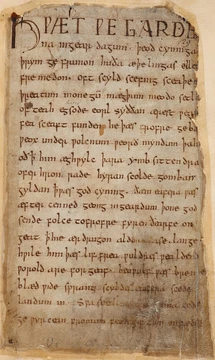
Evangeline
Fictional Acadian heroine of Longfellow's epic poem.

Henry Wadsworth Longfellow · Public domain
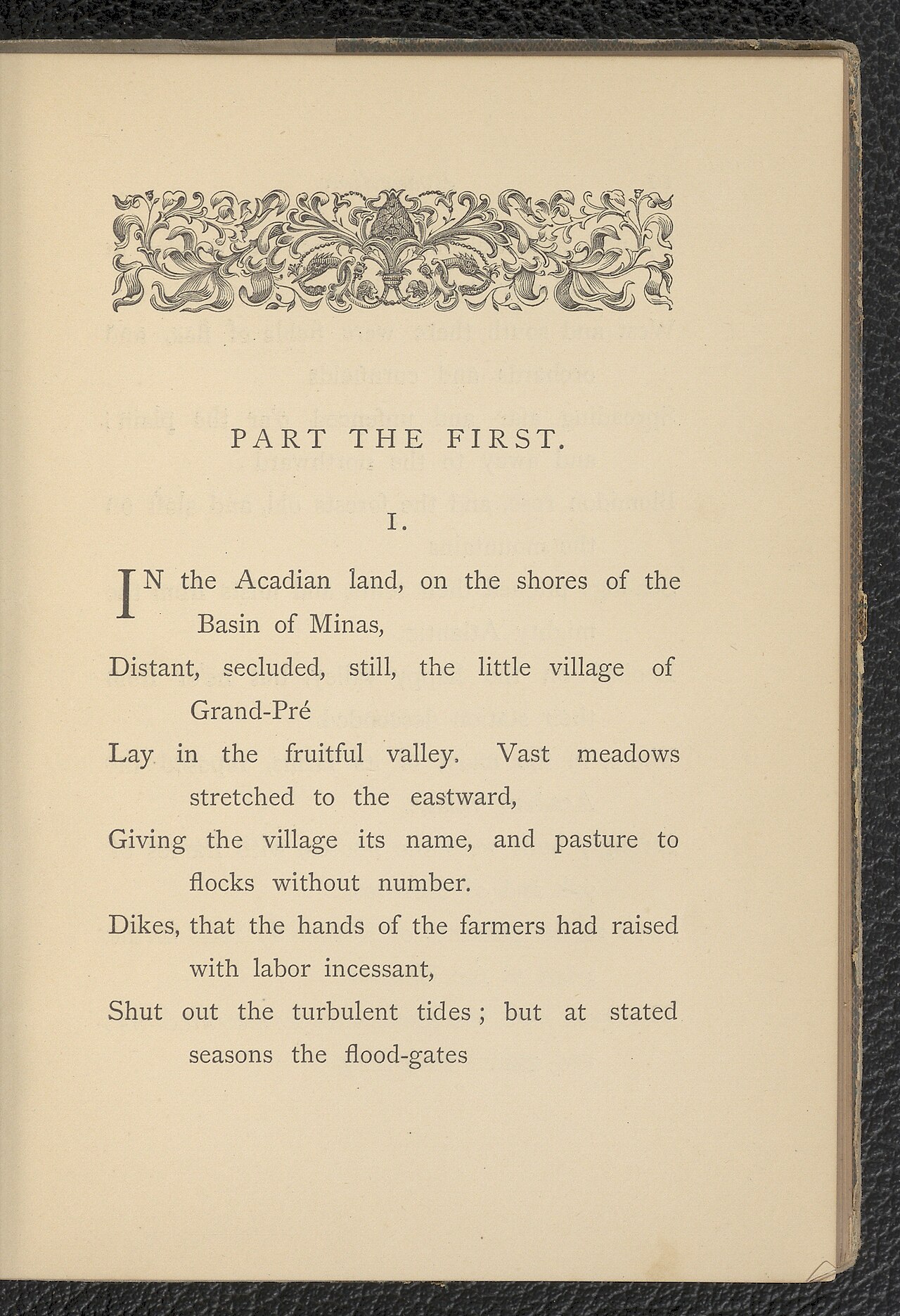
Evangeline is the title character of Henry Wadsworth Longfellow's 1847 epic poem *Evangeline, A Tale of Acadie*. The poem follows a fictional Acadian girl who searches for her lost love Gabriel during the expulsion of the Acadians (1755–1764). The work became Longfellow's most famous in his lifetime and had a powerful effect in defining Acadian history and identity in the 19th and 20th centuries.
Quick Facts
- Author
- Henry Wadsworth Longfellow
- Country
- United States
- Language
- English
- Genre
- Epic poem
- Publication Date
- 1847
Facts from the source article.
Lore & Background
Evangeline describes the betrothal of a fictional Acadian girl named Evangeline Bellefontaine to her beloved Gabriel Lajeunesse, and their separation as the British deport the Acadians from Acadie in the Great Upheaval. The poem then follows Evangeline across the landscapes of America as she spends years searching for him, at times being near Gabriel without realizing it. Finally she settles in Philadelphia and, as an old woman, works as a Sister of Mercy among the poor. While tending the dying during an epidemic she finds Gabriel among the sick, and he dies in her arms.
The idea for the poem came from Longfellow's friend Nathaniel Hawthorne, who had heard a story of separated Acadian lovers from a Boston minister. Longfellow, who had never visited the setting, relied on historical books for background. The poem is written in rhymed dactylic hexameter (specifically, hexameter couplets), a choice that was criticized by some contemporaries but which Longfellow defended. The name Evangeline comes from the Latin word 'evangelium' meaning 'gospel'.
Reader's Guide
Longfellow's *Evangeline* had a powerful effect in defining both Acadian history and identity in the 19th and 20th centuries. Prior to the poem, historians generally focused on the founding of Halifax (1749) as the beginning of Nova Scotian history; Longfellow's poem shed light on the 150 years of Acadian settlement that preceded Halifax. The poem represents lost loved ones and heartbreak but also keeping hope. While Longfellow was a poet, not a historian, 21st-century scholarship has included those who expound the view that Longfellow's work fails as a scientific historical document. More recent scholarship has revealed historical misconceptions in the poem, such as depicting Acadia as a utopia and the Acadians as homogeneous and passive, ignoring resistance leader Joseph Broussard and Acadian military history. The poem also allowed generations of Protestant Anglo-Americans to sympathize with the Acadians while maintaining anti-Catholic viewpoints, and provided a safe symbolic space for Acadians to develop arguments for more recognition and respect in the United States.
Did You Know?
- Longfellow used rhymed dactylic hexameter (hexameter couplets), a choice criticized by some contemporaries but praised by poet John Greenleaf Whittier.
- A statue of Evangeline, posed for by silent film star Dolores del Río, was donated to St. Martinville, Louisiana in 1929.
Origins and the Road to Publication
The seed of Evangeline was planted not by Longfellow himself but by his friend Nathaniel Hawthorne, who had been told a tale of separated Acadian lovers by Boston minister Rev. Horace Conolly, who in turn had heard it from his own parishioners. The two men had crossed paths at Bowdoin College as young students, though their deep friendship only formed in 1837 after Longfellow praised Hawthorne's early tales in the North American Review. When Hawthorne passed the story along, he declined to write it himself, confessing to Conolly that the subject lacked the "strong lights and heavy shadows" he preferred. Longfellow seized the opportunity and spent months immersing himself in the histories of Nova Scotian families. He had never set foot in the region, so he leaned heavily on secondary sources—Thomas Chandler Haliburton's statistical account of Nova Scotia, Watson's Annals of Philadelphia, and Darby's geographical description of Louisiana. In a January 1847 journal entry, he admitted these books would supply the facts and local color, but the poetry would have to come from his own mind. The finished work appeared in book form on November 1, 1847, through William D. Ticknor & Co.
The Story of Separation and Search
At its heart, Evangeline is a love story set against the brutal backdrop of the Great Upheaval, the British deportation of the Acadian people from Acadie between 1755 and 1764. The poem opens not with a beginning but with an ending: the French farmers and fishermen who once populated the colony of Nova Scotia have vanished, leaving only moss-draped trees and the restless ocean to carry their memory forward. From there, Longfellow traces the betrothal of a young Acadian girl, Evangeline Bellefontaine, to her beloved Gabriel Lajeunesse, and the violent severing of their bond as soldiers force the community onto ships. What follows is a long, winding odyssey across the American landscape. Evangeline searches for Gabriel for years, and the narrative is punctuated by cruel near-misses—moments where the two are close enough to touch yet remain oblivious to each other's presence. The tale ultimately carries her to Philadelphia, where, grown old, she serves as a Sister of Mercy among the destitute. During an epidemic, while tending the dying, she finally encounters Gabriel among the sick. He dies in her arms, and the search that defined her life closes with loss rather than reunion.
Meter, Craft, and the Name
Longfellow composed Evangeline in unrhymed dactylic hexameter, a metrical pattern drawn from the epic traditions of Homer and the Latin classics. He had been reading Homer at the time and had also recently rendered into English Esaias Tegnér's Swedish poem "The Children of the Lord's Supper" (1841), which employed the same structure. The result is one of the very few nineteenth-century English poems in that meter that still finds readers today. The choice was not universally welcomed. Poet John Greenleaf Whittier argued the subject would have served better in the prose style Longfellow had used for Hyperion. Longfellow, aware of the risk, defended his decision in a letter to Bryan Procter, insisting the poem could not have existed in any other measure without losing its essential character. His wife Fanny offered a more lyrical justification, calling the meter "sonorous like the sea which is ever sounding in Evangeline's ear." Even so, while reviewing proofs for a second edition, Longfellow humorously mused that the hexameters might benefit from "stretching their legs a little more at their ease." The title itself carries a theological echo: "Evangeline" derives from the Latin evangelium, meaning gospel, which in turn comes from the Greek eu (good) and angela (news).
Reception, Sales, and Enduring Legacy
Evangeline became the work that defined Longfellow's public reputation. Contemporary reviewers were overwhelmingly enthusiastic; The Metropolitan Magazine praised its "delicious portraiture of rustic scenery," and Charles Sumner recounted meeting a woman who had read the poem some twenty times and considered it the most perfect in the English language. Even King Leopold I of Belgium counted himself among its admirers. Commercially, the poem was a triumph: by 1857 it had sold nearly thirty-six thousand copies, and Longfellow's royalty rate of twenty-five and sixteenths per cent was believed to be an all-time high for a poet. Yet the poet himself described the process as agonizing, telling readers the poem read easily because it had been "so hard for me to write." Beyond the bookshelf, Evangeline exerted a powerful shaping force on Acadian collective memory throughout the nineteenth and twentieth centuries, encoding themes of lost loved ones, heartbreak, and stubborn hope. In the twenty-first century, scholars have begun to interrogate the poem more critically, with some arguing that Longfellow's work, however moving, falls short as a rigorous historical document of the expulsion.
Gallery

Frequently Asked Questions
Who is Evangeline?
Evangeline is the fictional Acadian heroine and title character of Henry Wadsworth Longfellow's 1847 epic poem. She is a young woman whose central quest is finding her lost love, Gabriel, after the forced removal of the Acadian people.
What is Evangeline's role in the poem?
She functions as the protagonist who endures the displacement of her community and journeys across the continent searching for Gabriel. Her unwavering devotion makes her a symbol of hope and perseverance through catastrophe.
Why is Evangeline important beyond the poem itself?
Longfellow's work profoundly shaped how 19th- and 20th-century readers understood Acadian history, elevating a fictional girl into a lasting emblem of the Acadian diaspora. She became a cultural touchstone for identity and collective memory among Acadian communities.
Who created Evangeline and when did she first appear?
Henry Wadsworth Longfellow introduced her in his 1847 narrative poem *Evangeline, A Tale of Acadie*, which went on to become his most famous work during his own lifetime.
More in Characters in epic poems 1-18
Spotted an error? Know more?
Reader corrections go straight into our review queue. Suggest an edit · How this site is sourced