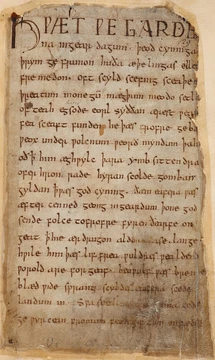
Erichtho
Legendary Thessalian witch and necromancer in Roman literature.

John Hamilton Mortimer · CC BY 2.0
Erichtho is a legendary Thessalian witch who appears in several works of Roman literature, most notably in Lucan's epic poem *Pharsalia*, which details Caesar's Civil War. She is characterized by her horrifying appearance, impious nature, and powerful necromantic abilities, serving as a dark counterpart to Virgil's pious Cumaean Sibyl.
- Field
- Literature
- Known for
- Necromancy, role in Lucan's *Pharsalia*, antithesis to Virgil's Cumaean Sibyl
- Nationality
- Thessalian (legendary)
Lore & Background
Erichtho first appears in Roman literature in Lucan's *Pharsalia* (Book 6), not in Ovid. Her popularity came several decades later thanks to Lucan, who featured her prominently in *Pharsalia*. In that work, she is described as repugnant—with a 'dry cloud' over her head and breath that 'poisons otherwise non-lethal air'—and wicked to the point of sacrilege, never beseeching the gods. She lives near graveyards, gibbets, and battlefields, using body parts in her magic spells, and delights in macabre acts such as digging out eyeballs and gnawing nails from corpses.
In *Pharsalia*, Sextus Pompeius, son of Pompey the Great, seeks Erichtho to learn the outcome of the Battle of Pharsalus. She performs a necromantic rite: finding a cadaver with uninjured lung tissue, she cleans its organs and fills the body with a potion of warm blood, lunar poison, and other wicked substances. The spirit initially refuses to return, but Erichtho threatens to summon a god at whose name earth trembles, and the corpse is reanimated. It describes a civil war in the underworld and delivers an ambiguous prophecy about Pompey and his kin.
Reader's Guide
Erichtho's significance lies in her role as the antithetical counterpart to Virgil's Cumaean Sibyl, as argued by many classicists. In *Pharsalia*, Book 6 is seen as a reworking of *Aeneid* Book 6, with Erichtho inverting the Sibyl's pious rites: the Sibyl requires burial of a corpse before Aeneas's underworld journey, while Erichtho requires an unburied corpse for her necromancy. Other inversions include the Sibyl's urging of courage versus Erichtho's criticism of cowardice, and the Sibyl sending Aeneas underground versus Erichtho conjuring a spirit upward.
Erichtho's legacy extends beyond Lucan. In Dante's *Divine Comedy*, Virgil reveals that Erichtho once forced him to fetch a soul from Hell's ninth circle—a story without precedent in medieval sources. This anachronistic connection plays on the medieval belief that Virgil was a magician. She also appears in Goethe's *Faust* (Part 2, Act 2), where she delivers a soliloquy referencing the Battle of Pharsalia and claims she is not as abominable as poets painted her. Additionally, she appears in John Marston's Jacobean play *The Tragedy of Sophonisba*.
Did You Know?
- Erichtho first appears in Lucan's *Pharsalia* (Book 6), not in Ovid's *Heroides XV*—that poem is by Sappho and does not mention Erichtho.
- In Lucan's *Pharsalia*, Erichtho threatens to summon a god at whose dread name earth trembles to force a corpse to speak.
- Dante's *Divine Comedy* anachronistically has Erichtho forcing Virgil to fetch a soul from Hell's ninth circle, though Virgil died after the Battle of Pharsalus.
- Erichtho appears in Goethe's *Faust* Part 2, where she claims she is 'not so abominable as the wretched poets painted me.'
Literary Origins and the Thessalian Tradition
The figure of Erichtho likely first took shape in the work of the Roman poet Ovid, who referenced her in his collection Heroides XV. However, the character did not achieve lasting prominence until several decades later, when Lucan wove her into the fabric of his epic Pharsalia. Scholars trace her roots to the rich tradition of Thessalian witchcraft that flourished during the Classical Greek era. Ancient sources consistently portrayed the region of Thessaly as a notorious refuge for practitioners of dark arts, and the folklore surrounding that area—stories of witches, potent drugs, deadly poisons, and arcane spells—continued to circulate well into the Roman period and beyond. This deep well of regional mythology provided a ready-made archetype for a poet seeking to dramatize necromancy. Ovid's brief mention planted the seed, but it was Lucan's expansive, visceral treatment in the sixth book of Pharsalia that transformed Erichtho from a passing allusion into one of the most memorable supernatural figures in Roman literature.
The Necromantic Rite and Its Gruesome Details
In the sixth book of Pharsalia, Lucan paints Erichtho as a figure of extreme revulsion. A perpetual dry cloud hovers above her head, and her very breath renders otherwise harmless air lethal. She inhabits the margins of civilization, dwelling among graveyards, execution sites, and the carnage of civil war, harvesting body parts for her dark rituals. Her power is staggering: Lucan suggests that if she had chosen to reanimate every soldier on a battlefield, the very laws of the underworld would have bent to her will. It is precisely this terrifying capability that draws Sextus Pompeius to her doorstep. Desperate to learn the outcome of the approaching Battle of Pharsalus, he requests a necromantic summoning. Erichtho combs a battlefield for a corpse whose lungs remain intact, cleans its organs, and fills the cavity with a foul concoction of warm blood, lunar poison, and every vile substance nature produces. The summoned spirit initially resists re-entry into its flesh, but Erichtho's threat to call upon a god whose name makes the earth tremble forces compliance. The reanimated dead then recounts a civil war raging in the underworld and offers a prophecy about Pompey's family that Sextus finds maddeningly ambiguous.
The Antithetical Sibyl: Lucan's Deliberate Inversion
Scholars have long observed that the sixth book of Pharsalia functions as a pointed reworking of the sixth book of Virgil's Aeneid, and Erichtho occupies the role of the Cumaean Sibyl's dark mirror. Both figures serve as intermediaries who grant a mortal access to knowledge from the underworld, yet their moral orientations are diametrically opposed. Where the Sibyl is pious and reverent, Erichtho is defined by sacrilege—she never prays to the gods or offers supplicatory hymns. The scholar Andrew Zissos highlights how the moral gulf between them is sharpened by their respective preparations: the Sibyl insists that the unburied body of Misenus must be properly interred before Aeneas descends, while Erichtho specifically demands an unburied corpse for her rite. Jamie Masters further argues that the Sibyl's commands to bury Misenus and obtain the Golden Bough are inverted and compressed in Lucan's version. Additional inversions include the Sibyl's warning that only the descent will be easy versus Erichtho's claim that necromancy is straightforward; the Sibyl's encouragement of Aeneas's courage versus Erichtho's rebuke of Sextus's cowardice; and the direction of the journey itself—the Sibyl sends Aeneas down into the earth, while Erichtho pulls a spirit up out of it.
A Persistent Presence: Erichtho in Later Literature
Long after Lucan's epic cemented her place in the classical imagination, Erichtho continued to surface in major works of Western literature across the centuries. In the fourteenth century, Dante Alighieri wove her name into Canto IX of Inferno, the first canticle of his Divine Comedy. There, when Dante and Virgil are turned away from the gates of Dis, Dante questions his guide about prior visits to Hell's deepest regions. Virgil confirms that he once descended to the ninth circle at Erichtho's command, compelled by her magic to retrieve a soul for one of her necromantic ceremonies. This brief but striking reference underscores how firmly the Thessalian witch had embedded herself in the medieval literary imagination. The character's afterlife in print did not end there. In the nineteenth century, Johann Wolfgang von Goethe included Erichtho in his play Faust, and the Jacobean dramatist John Marston featured her in The Tragedy of Sophonisba. Across these works, separated by centuries and national traditions, Erichtho endures as a potent literary figure—a reminder that Lucan's macabre creation transcended her original context to become a shared symbol of forbidden knowledge and transgressive power.
Gallery
Frequently Asked Questions
Who is Erichtho?
Erichtho is a legendary Thessalian witch who appears most prominently in Lucan's epic *Pharsalia*, which narrates Caesar's Civil War. She is portrayed as a grotesque, deeply impious figure whose defining trait is her mastery over the dead.
What are Erichtho's powers and abilities?
Her central power is necromancy: she can summon and command the shades of the deceased for specific purposes. In *Pharsalia*, she is invoked to raise a dead general's spirit so that its presence can sway the outcome of the war.
What role does Erichtho play in the plot of *Pharsalia*?
She functions as Lucan's vehicle for dramatizing how impious magic corrupts the natural and moral order during Rome's civil conflict. Her scenes punctuate the narrative with moments of horror that underscore the era's spiritual decay.
How does Erichtho compare to Virgil's Cumaean Sibyl?
Lucan deliberately cast her as a dark mirror to the Sibyl: where the Cumaean prophetess acts under divine sanction and piety, Erichtho operates through personal ambition and sacrilege. The contrast highlights two opposing models of prophetic power in Roman epic.
Why is Erichtho considered significant in Roman literature?
She offers one of the most vivid classical depictions of Thessalian necromantic ritual and gives readers a concrete, sensory image of summoning the dead. Her character also lets Lucan critique the political exploitation of supernatural forces during the Republic's collapse.
More in Characters in epic poems 1-18
Spotted an error? Know more?
Reader corrections go straight into our review queue. Suggest an edit · How this site is sourced