Three Gorges
Three adjacent gorges along the Yangtze, famed for scenery and history.
Last updated
Where it is
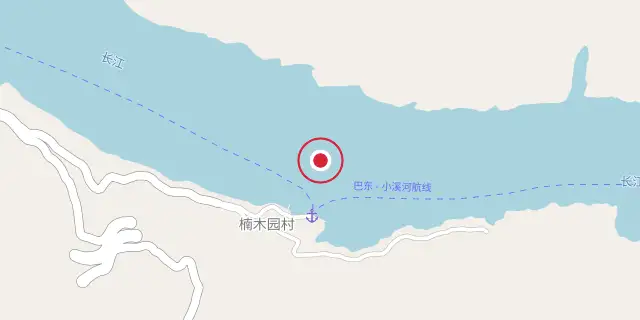
Coordinates: 31°01′05″N 110°13′44″E (31.0180, 110.2290) · Open in OpenStreetMap
Coordinates and connected clubs: the infobox of Wikipedia: Three Gorges (CC BY-SA 4.0). Map: drawn by Codexery from OpenStreetMap tiles.
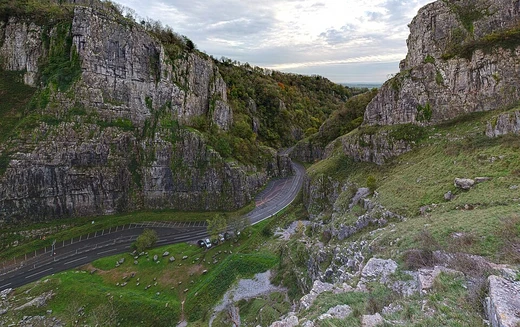
The Three Gorges region stretches from Fengjie in Chongqing to Yichang in Hubei, covering about 120 km of gorges within a 200 km reservoir area.[1] The Three Gorges region is renowned for its landscapes, yet it also possesses considerable historical and cultural significance within China.[2]
Geography and history
The Three Gorges themselves occupy about 120 km within the larger reservoir region.[1] Shipbuilding and navigation advances during the Tang and Song dynasties enabled regular transport through the gorges.[3] Shipping volume remained low until the resettlement of Sichuan in the 1600s.[3] Government and private projects during the 1700s and 1800s carved towpaths, removed rocks, and established pilot stations to improve safety.[3]
Manual labor was still used to some extent until the 1970s even after motorized boats arrived.[3] The Three Gorges stretch from Fengjie in the west to Yichang in the east.[1] Navigating the gorges was perilous, and the danger increased due to erosion caused by farming on the hillsides.[3] The dam's elevated water levels have altered the landscape, resulting in a broader river and giving the mountains a lower appearance.[4]
What the cited sources add
A 2004 report from the China Internet Information Center notes that the Three Gorges region became China's largest geological park, covering both banks from Fengjie to Yichang.[5] The same source quotes an official saying the area has "so complete and rich data" that it is uncommon in China or the world.[5] A 2003 article from the China Internet Information Center states that archaeological discoveries show the Three Gorges area should be recognized as the birthplace of Chinese civilization.[6] Discoveries of Old Stone Age sites at Gaojiazhen and Yandunbao in 1999 pushed back known Paleolithic dates from 50,000 to 100,000 years ago.[6]
The same source reports that the State Council approved a 1 billion yuan rescue program to protect 1,074 historical sites before the dam's completion.[6] A 2010 Guardian article reports that 1.2 million people had already been forced to leave their homes during dam construction.[7] The Guardian also states a draft government report recommended relocating an additional 300,000 people at risk of landslides and water pollution.[7]
References
- Wikipedia, "Three Gorges" (CC BY-SA 4.0), which cites: "Three Gorges Region Becomes China's Largest Geological Park", China Internet Information Center, March 8, 2004 (we also read that source) en.wikipedia.org
- Wikipedia, "Three Gorges" (CC BY-SA 4.0), which cites: "Saving the Cultural Relics of the Three Gorges", China Internet Information Center, 2003 (we also read that source) en.wikipedia.org
- Wikipedia, "Three Gorges" (CC BY-SA 4.0), which cites: Kim, "River Control, Merchant Philanthropy, and Environmental Change in Nineteenth-Century China", Journal of the Economic and Social History of the Orient, 2009, p. 660–694; Liu, "The Yangtze River Tow Men", Probe International, 2010-01-01 (we also read that source) en.wikipedia.org
- Wikipedia, "Three Gorges" (CC BY-SA 4.0), which cites: "Three Gorges dam may force relocation of a further 300,000 people", the Guardian, 2010-01-22; "Relocated Three Gorges Residents Face Challenges", NPR.org (we also read that source) en.wikipedia.org
- "Three Gorges Region Becomes China's Largest Geological Park", China Internet Information Center, March 8, 2004. facts only, no text reused. china.org.cn
- "Saving the Cultural Relics of the Three Gorges", China Internet Information Center, 2003. facts only, no text reused. china.org.cn
- "Three Gorges dam may force relocation of a further 300,000 people", the Guardian, 2010-01-22. facts only, no text reused. theguardian.com
Each numbered sentence above was checked against the source it cites before publication. Sentences citing Wikipedia adapt text from the English Wikipedia article Three Gorges (contributors), used under CC BY-SA 4.0; this entry is available under the same licence. Other sources were used for facts only; no text or images are copied from them.
More in Caves & Gorges
Sources
Compiled from Wikipedia and the sources listed below. Text from Wikipedia is available under CC BY-SA 4.0; this entry is adapted from it.
- Wikipedia: Three Gorges (CC BY-SA 4.0).
Spotted an error? Know more?
Reader corrections go straight into our review queue. Suggest an edit · How this site is sourced