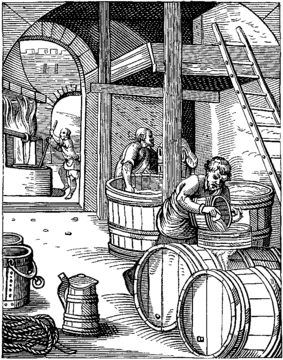
Beer shop
A specialised liquor store focused on beer and related goods.

A beer shop (also called a beershop or beer store) is a retail store that sells beer and related items. It is a specialized type of liquor store. These shops exist worldwide, with many found in countries where beer is a major cultural product, such as Belgium, Canada, Germany, New Zealand, Scandinavian countries, the UK, and the US. Beer shops vary in size and can be located on streets or in shopping malls. Some focus only on well-known regional beer brands, while others offer a wide selection of beers from around the world, with some items priced high, similar to fine wines.
Because of the growth of craft brewing, many beer shops now sell craft beers from local or international microbreweries. Some breweries operate their own beer shops to sell their own products, and sometimes those of partner breweries, in regular bottles or in growlers (large, reusable jugs for transporting beer). Some beer shops also host beer tastings, homebrewing classes, and sell specialty goods like beer jam, beer mustard, beer chocolate, craft cheeses, and hop-based hard liquor. Staff are usually trained, and some are beer sommeliers with broad knowledge of beer.
In Asia, India’s alcohol laws vary by state, from total prohibition (e.g., Gujarat) to state monopolies (e.g., Kerala, Tamil Nadu) to commercial licensing (e.g., Delhi, Karnataka). Licensed alcohol retailers are commonly called liquor shops or wine shops, though wine shops primarily sell beer and hard liquor and may not sell wine. In southern India, shops licensed to make and sell only palm wine (toddy) are called toddy shops. Shops of Tamil Nadu’s alcohol monopoly TASMAC are known as Tasmac outlets or Tasmac bars, and some allow on-premises consumption. In Japan, alcohol is widely available from convenience stores and supermarkets. Dedicated liquor stores are called sakaya, while on-premises drinking establishments are izakaya. Vending machines selling alcoholic drinks remain common, though a voluntary ban was imposed in 2000. South Korea’s history with alcohol shows it is open to many types, easily found in convenience stores, supermarkets, Korean barbecue houses, and hop (beer) houses. There are also stores specializing in traditional and imported alcohol.
- Types of goods sold
- beer, beer jam, beer mustard, beer chocolate, craft cheeses, hop hard liquor
- Common locations
- Belgium, Canada, Germany, New Zealand, Scandinavian countries, UK, US
- Staffing
- trained employees, sometimes beer sommeliers
- Services offered
- beer tastings, homebrewing classes
Lore & Background
Beer shops range in size, and may be located along streets or in shopping malls. Some shops offer only regional beer brands which are famous or well known in their region. Others offer a wide range of beer from around the world, and some items may fetch fairly high prices, as with fine wines. Due to the increase of craft brewing companies, many beer shops sell craft beers from local or international microbreweries, and some such breweries have their own beer shops for selling their own wares and sometimes those of partner breweries, either in regular bottles or in growlers, large, reusable jugs used to transport beer. Some beer shops also offer beer tastings, homebrewing classes, and speciality goods like beer jam, beer mustard, beer chocolate, craft cheeses, and hop hard liquor. The shops are usually staffed by trained employees, sometimes even beer sommeliers who have a broad knowledge of the topic of beer.
Reader's Guide
Beer shops represent a specialised segment of the liquor retail market, focusing exclusively on beer and beer-related products. Their significance is tied to the cultural importance of beer in many regions, particularly in countries where beer is a major cultural product such as Belgium, Canada, Germany, New Zealand, Scandinavian countries, the UK and the US. The rise of craft brewing has expanded the role of beer shops, as they now often serve as outlets for local and international microbreweries, sometimes including brewery-owned shops that sell their own products and those of partner breweries. Beer shops also function as community hubs for enthusiasts, offering tastings, homebrewing classes, and specialty food items that complement beer. The presence of trained staff and beer sommeliers underscores the educational and curatorial aspect of these stores, distinguishing them from general liquor retailers. Their legacy is one of elevating beer from a commodity to a product worthy of the same appreciation and expertise as fine wine.
Did You Know?
- Beer shops are a specialised type of liquor store.
- Some beer shops sell items like beer jam, beer mustard, and hop hard liquor.
- Beer shops may be staffed by beer sommeliers.
- Some breweries have their own beer shops selling their wares and those of partner breweries.
More in Brewing Processes, Part 2 1-24
Spotted an error? Know more?
Reader corrections go straight into our review queue. Suggest an edit · How this site is sourced