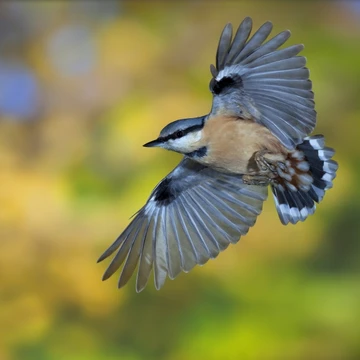
Bustard
Large terrestrial birds of dry grasslands and steppes.
Last updated
The family Otididae was introduced by Constantine Samuel Rafinesque in 1815.[1]
Scientific classification
- KingdomAnimalia
- PhylumChordata
- ClassAves
- OrderOtidiformes
- FamilyOtididae
Named by Rafinesque, 1815
Sources: Wikipedia taxobox: Bustard (CC BY-SA 4.0)
Quick Facts
- Family
- Otididae
- Number of species
- 26
- Diet
- omnivorous and opportunistic
- Habitat
- dry grassland areas and steppe regions
- Heaviest flying birds
- kori bustard and great bustard
Facts from the source article.
Biology and range
Seeds and invertebrates form the principal part of a bustard's diet.[2] Using their strong legs and large toes, bustards walk with a steady gait while pecking to gather food.[2] When moving, most bustards choose running or walking rather than taking flight.[2] The tail of a bustard contains 18 to 20 feathers.[3]
Cryptic coloration is the dominant feature of bustard plumage.[3]
What the specialist sources record
The GBIF Backbone Taxonomy lists the family Otididae under order Otidiformes, class Aves.[4] GBIF holds 551,152 occurrence records for this taxon as of 16 October 2026.[4] The genus name Otis comes from the Greek word ὠτίς ōtis.[1]
References
- Wikipedia, "Bustard" (CC BY-SA 4.0), which cites: Rafinesque, "Analyse de la nature ou, Tableau de l'univers et des corps organisés", Self-published, 1815, p. 70; Bock, "History and Nomenclature of Avian Family-Group Names", American Museum of Natural History, 1994, p. 137, 252; "Taxonomic lists- Aves"; Linnaeus, "Systema Naturae per regna tria naturae, secundum classes, ordines, genera, species, cum characteribus, differentiis, synonymis, locis", Laurentii Salvii, 1758, p. 154; Jobling, "Helm Dictionary of Scientific Bird Names", Christopher Helm, 2010, p. 286; Liddell, "ὠτίς", A Greek-Englis en.wikipedia.org
- Wikipedia, "Bustard" (CC BY-SA 4.0), which cites: Archibald, George W., "Encyclopaedia of Animals: Birds", Merehurst Press, 1991, p. 98–99 (we also read that source) en.wikipedia.org
- Wikipedia, "Bustard" (CC BY-SA 4.0), which cites: del Hoyo, J. Elliott, A. & Sargatal, J. (editors). (1996) Handbook of the Birds of the World. Volume 3: Hoatzin to Auks. Lynx Edicions. (original not read by us) en.wikipedia.org
- GBIF Backbone Taxonomy and occurrence index, Otididae (taxon key 9610). CC BY 4.0 (backbone); counts are facts. gbif.org
Each numbered sentence above was checked against the source it cites before publication. Sentences citing Wikipedia adapt text from the English Wikipedia article Bustard (contributors), used under CC BY-SA 4.0; this entry is available under the same licence. Other sources were used for facts only; no text or images are copied from them.
More in Birds
Sources
Compiled from Wikipedia and the sources listed below. Text from Wikipedia is available under CC BY-SA 4.0; this entry is adapted from it.
- Wikipedia: Bustard (CC BY-SA 4.0).
- Word definitions: the Codexery glossary, each quoted from its Wikipedia article.
Spotted an error? Know more?
Reader corrections go straight into our review queue. Suggest an edit · How this site is sourced