Species
Basic unit of classification and biodiversity.
Last updated
A species is the fundamental category used to classify living things and measure biodiversity. It is most commonly defined as the largest group of organisms where any two individuals of the right sexes or mating types can produce fertile offspring, usually through sexual reproduction. Species can also be identified by other traits, such as their chromosome structure, DNA sequence, physical form, behavior, or the ecological role they play. For paleontologists, who cannot observe reproduction in fossils, the idea of a chronospecies—a lineage that changes enough over time to be considered a new species—is used instead.
The most recent careful estimate suggests there are between 8 and 8.7 million species of eukaryotes, and by 2011, only about 14% of these had been described. Every species gets a two-part binomial name: the first part is the genus it belongs to, and the second part is its specific name or epithet. For instance, Boa constrictor is a species in the genus Boa, with constrictor as the specific name.
These definitions, while seemingly straightforward, become problematic on closer inspection. Boundaries between closely related species can blur due to hybridization, in species complexes with hundreds of similar microspecies, or in ring species. For organisms that reproduce only asexually, the reproductive definition breaks down, and each separate clonal line can be considered a microspecies.
None of these concepts are perfect, and the species idea is not a flawless model of life, but it remains a useful tool for scientists and conservationists. If species were fixed and clearly distinct, there would be no difficulty, but evolution constantly changes them. This forces taxonomists to decide, for example, when a fossil lineage has changed enough to be split into multiple chronospecies, or when populations have diverged enough in key traits to be described as cladistic species.
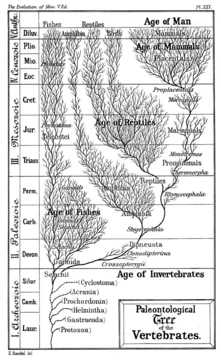
From Aristotle until the 18th century, species and higher groups were seen as fixed categories in a hierarchy called the great chain of being. In the 19th century, biologists realized that species could evolve over time. Charles Darwin’s 1859 book On the Origin of Species explained how natural selection could produce new species. This understanding deepened in the 20th century with genetics and population ecology.
Quick Facts
- Field
- Biology, Taxonomy
- Known for
- Basic unit of biological classification and biodiversity
- Key concept
- Largest group capable of producing fertile offspring
- Estimated total eukaryote species
- Between 8 and 8.7 million
Facts from the source article.
Lore & Background
Biologists and taxonomists have made many attempts to define species, beginning from morphology and moving towards genetics. Early taxonomists such as Linnaeus had no option but to describe what they saw, formalized as the typological or morphological species concept.
Ernst Mayr emphasized reproductive isolation, but this can be hard to test for groups separated in space or time. Later biologists have tried to refine Mayr's definition with recognition and cohesion concepts. The biologist R. L. Mayden recorded about 24 species concepts, and the philosopher of science John Wilkins counted 26, grouping them into seven basic kinds: agamospecies, biospecies, ecospecies, evolutionary species, genetic species, morphospecies, and taxonomic species.
Reader's Guide
The species concept is central to biology but remains problematic. Boundaries between closely related species become unclear with hybridization, in species complexes of hundreds of similar microspecies, and in ring species. Among organisms that reproduce only asexually, the concept of a reproductive species breaks down, and each clonal lineage is potentially a microspecies. Despite these difficulties, the species concept remains a useful tool for studying life on Earth.
Charles Darwin's 1859 book On the Origin of Species explained how species could arise by natural selection, and that understanding was greatly extended in the 20th century through genetics and population ecology. Genetic variability arises from mutations and recombination, while organisms are mobile, leading to geographical isolation and genetic drift. Species can become extinct for a variety of reasons, with several mass extinction events occurring throughout history. Viruses are a special case, driven by a balance of mutation and selection, and can be treated as quasispecies.
Frequently Asked Questions
What is a species in biology?
A species is the most basic unit used to categorize living organisms and to gauge how much biodiversity exists on Earth. It serves as the fundamental building block of the entire taxonomic hierarchy.
How many species are estimated to exist on Earth?
Current estimates suggest roughly 8 to 8.7 million eukaryote species in total, encompassing animals, plants, fungi, and protists. The true number remains uncertain because so many organisms have never been encountered by researchers.
What percentage of Earth's species have scientists actually described?
As of around 2011, only about 14 percent of estimated eukaryote species had been formally named and described in the scientific literature. This means the overwhelming majority of life on the planet is still unknown to taxonomy.
What is a chronospecies and why does it matter for paleontology?
A chronospecies is a lineage that has evolved enough over time to be recognized as a distinct species, a concept especially useful for paleontologists who study fossils and cannot observe live reproduction. It helps bridge the gap between ancestral and descendant forms in the fossil record.
More in Taxonomy & Evolution
Sources
Compiled from Wikipedia and the sources listed below. Text from Wikipedia is available under CC BY-SA 4.0; this entry is adapted from it.
- Wikipedia: Species (CC BY-SA 4.0).
- Word definitions: the Codexery glossary, each quoted from its Wikipedia article.
Spotted an error? Know more?
Reader corrections go straight into our review queue. Suggest an edit · How this site is sourced