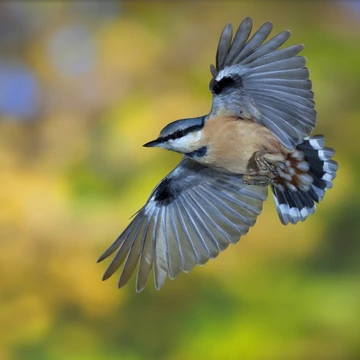
Eurasian eagle-owl
One of the largest and most widely distributed owl species.
Last updated
The Eurasian eagle-owl (Bubo bubo) is a large owl species found across much of Eurasia, often simply called the eagle-owl in Europe and Asia.[1] According to Mikkola (2012), female Eurasian eagle-owls attain a maximum length of 75 cm and a wingspan of 188 cm, while males are somewhat smaller.[2]
Scientific classification
- KingdomAnimalia
- PhylumChordata
- ClassAves
- OrderStrigiformes
- FamilyStrigidae
- GenusBubo
- SpeciesBubo bubo
Named by (Linnaeus, 1758)
Sources: Wikipedia taxobox: Eurasian eagle-owl (CC BY-SA 4.0) · order, family and genus agree with WoRMS AphiaID 1506637 (CC BY 4.0)
Conservation status
Least Concern (LC)
- LC▲ this species
- NT
- VU
- EN
- CR
- EW
- EX
Source: IUCN Red List assessment · GBIF copy of the Red List category
How big is it?
Largest length in the source, 0.75 m, next to a 1.8 m person.
Diagram: drawn by Codexery, schematic shapes to scale (not a likeness). Length: Wikipedia: Eurasian eagle-owl
Where the eurasian eagle-owl has been recorded
Each dot is a place where the species has been observed and reported (170,841 records, half-degree grid) — not a modelled range. 296 inland records left out (institution coordinates).
Map: drawn by Codexery. Data: GBIF occurrence search (records CC0 / CC BY) · Natural Earth basemap (public domain)
Biology and range
The species has a total range in Europe and Asia of about 51.4 million km², with a total population estimated between 100,000 and 500,000 individuals.[3] Cliff ledges, gullies, rocky areas, and other hidden spots serve as typical breeding locations for this species.[4] The female handles egg incubation and brooding of the young, while the male supplies food for both her and the nestlings.[4][5] Coniferous forests, steppes, and remote areas are also inhabited, and they occasionally appear in farmland and park-like environments within European and Asian cities.[6]
What the specialist sources record
The Owlpages.com account states that general consensus points towards the Eurasian Eagle Owl being the largest in weight and average length.[7] The same source notes that Blakiston's Fish Owl has unpublished average and maximum weights exceeding the Eurasian Eagle Owl.[7] The Raptor Foundation account gives a length range of 58-73 cm, a wingspan of 150-200 cm, and a weight range of 1600-4200 g for the species.[8] That account also reports that Eurasian Eagle Owls are found throughout Europe, Scandinavia, Russia, the Middle East, and Asia, with some breeding as far south as the Sahara in Africa.[8]
The Raptor Foundation further states that the species hunts predominantly at dusk and into the early night.[8] Owlpages.com describes the pellets as somewhat compressed, irregularly cylindrical or conical, averaging about 75 x 32 mm.[9] The same source reports that one clutch per year of 1-4 white eggs is laid, measuring 56-73 mm x 44.2-53 mm and weighing 75-80 g.[9]
References
- Wikipedia, "Eurasian eagle-owl" (CC BY-SA 4.0), which cites: Andrews, P. (1990). Owls, caves and fossils: predation, preservation and accumulation of small mammal bones in caves, with an analysis of the Pleistocene cave f (original not read by us) en.wikipedia.org
- Wikipedia, "Eurasian eagle-owl" (CC BY-SA 4.0), which cites: Owls of the World: A Photographic Guide by Mikkola, H. Firefly Books (2012), (original not read by us) en.wikipedia.org
- Wikipedia, "Eurasian eagle-owl" (CC BY-SA 4.0), which cites: Hume, R. (1991). Owls of the world. Running Press, Philadelphia.; "Bubo bubo", BirdLife International; BirdLife International, "Bubo bubo", 2017; BirdLife International, "Bubo bubo", 2017; Gilruth, Andrew, "Eagle owls – are they making a comeback in Britain?", Game and Wildlife Conservation Trust, 2016-04-17; Life, "The six types of owl you'll find in Britain", Country Life, 2020-01-28; "Overdue recognition: owl issued library card after solving university's gull woes", The Guardian, 29 July 2015 (original not read by us) en.wikipedia.org
- Wikipedia, "Eurasian eagle-owl" (CC BY-SA 4.0), which cites: Penteriani, V., & del Mar Delgado, M. (2019). The eagle owl. Bloomsbury Publishing.; Voous, K.H. (1988). Owls of the Northern Hemisphere. The MIT Press, .; Hume, R. (1991). Owls of the world. Running Press, Philadelphia. (original not read by us) en.wikipedia.org
- Wikipedia, "Eurasian eagle-owl" (CC BY-SA 4.0), which cites: Voous, K.H. (1988). Owls of the Northern Hemisphere. The MIT Press, . (original not read by us) en.wikipedia.org
- Wikipedia, "Eurasian eagle-owl" (CC BY-SA 4.0), which cites: Penteriani, V., & del Mar Delgado, M. (2019). The eagle owl. Bloomsbury Publishing.; Voous, K.H. (1988). Owls of the Northern Hemisphere. The MIT Press, . (original not read by us) en.wikipedia.org
- "Owl Frequently Asked Questions", Owlpages.com. facts only, no text reused. owlpages.com
- Frost, Paul K., "Eurasian Eagle Owl", The Raptor Foundation. facts only, no text reused. pauldfrost.co.uk
- "Eurasian Eagle Owl – Bubo bubo – Information, Pictures, Sounds", Owlpages.com, 2005-04-21. facts only, no text reused. owlpages.com
Each numbered sentence above was checked against the source it cites before publication. Sentences citing Wikipedia adapt text from the English Wikipedia article Eurasian eagle-owl (contributors), used under CC BY-SA 4.0; this entry is available under the same licence. Other sources were used for facts only; no text or images are copied from them.
More in Birds
Test yourself
Three questions drawn from this entry’s sources. Pick an answer to check it.
Answers checked against the source article
Sources
Compiled from Wikipedia and the sources listed below. Text from Wikipedia is available under CC BY-SA 4.0; this entry is adapted from it.
- Wikipedia: Eurasian eagle-owl (CC BY-SA 4.0).
- Classification: the source article's taxobox; order, family and genus checked against WoRMS, the World Register of Marine Species (CC BY 4.0).
- Conservation status: IUCN Red List assessment.
- Occurrence records: GBIF (CC0 / CC BY). Basemap: Natural Earth (public domain).
- Word definitions: the , each quoted from its Wikipedia article.
Spotted an error? Know more?
Reader corrections go straight into our review queue. Suggest an edit · How this site is sourced