Alessandra Ferri
Italian prima ballerina known for her dramatic roles and collaborations with major ballet companies.
Last updated

via Wikipedia: Alessandra Ferri · see source
Alessandra Ferri OMRI, born 6 May 1963 in Milan, is an Italian dancer who rose to the highest ranks of ballet. She performed as a principal with the Royal Ballet from 1980 to 1984, then with American Ballet Theatre from 1985 to 2007, and also with La Scala Theatre Ballet from 1992 to 2007, in addition to working internationally as a guest artist. She stepped away from the stage on 10 August 2007 at age 44, but came back to dancing in 2013. Some media have called her a prima ballerina assoluta.
Career
Ferri began her training at the La Scala Theatre Ballet School before moving to the Royal Ballet School’s upper division. In 1980, she represented that school at the Prix de Lausanne and won a scholarship to continue her studies there. She joined the Royal Ballet in 1980.
Royal Ballet
Two years later, her first major role in Mayerling earned her a Laurence Olivier Award nomination for Outstanding First Achievement in Ballet. In 1983, she won the Laurence Olivier Award for Outstanding Individual Performance in a New Dance Production for her work in Kenneth MacMillan’s Valley of Shadows, and that same year she was promoted to Principal Dancer. In 1985, Mikhail Baryshnikov asked Ferri to leave the Royal Ballet and become a Principal Dancer with American Ballet Theatre, where he was director. She explained that she wanted a more demanding training regimen than the Royal Ballet offered.
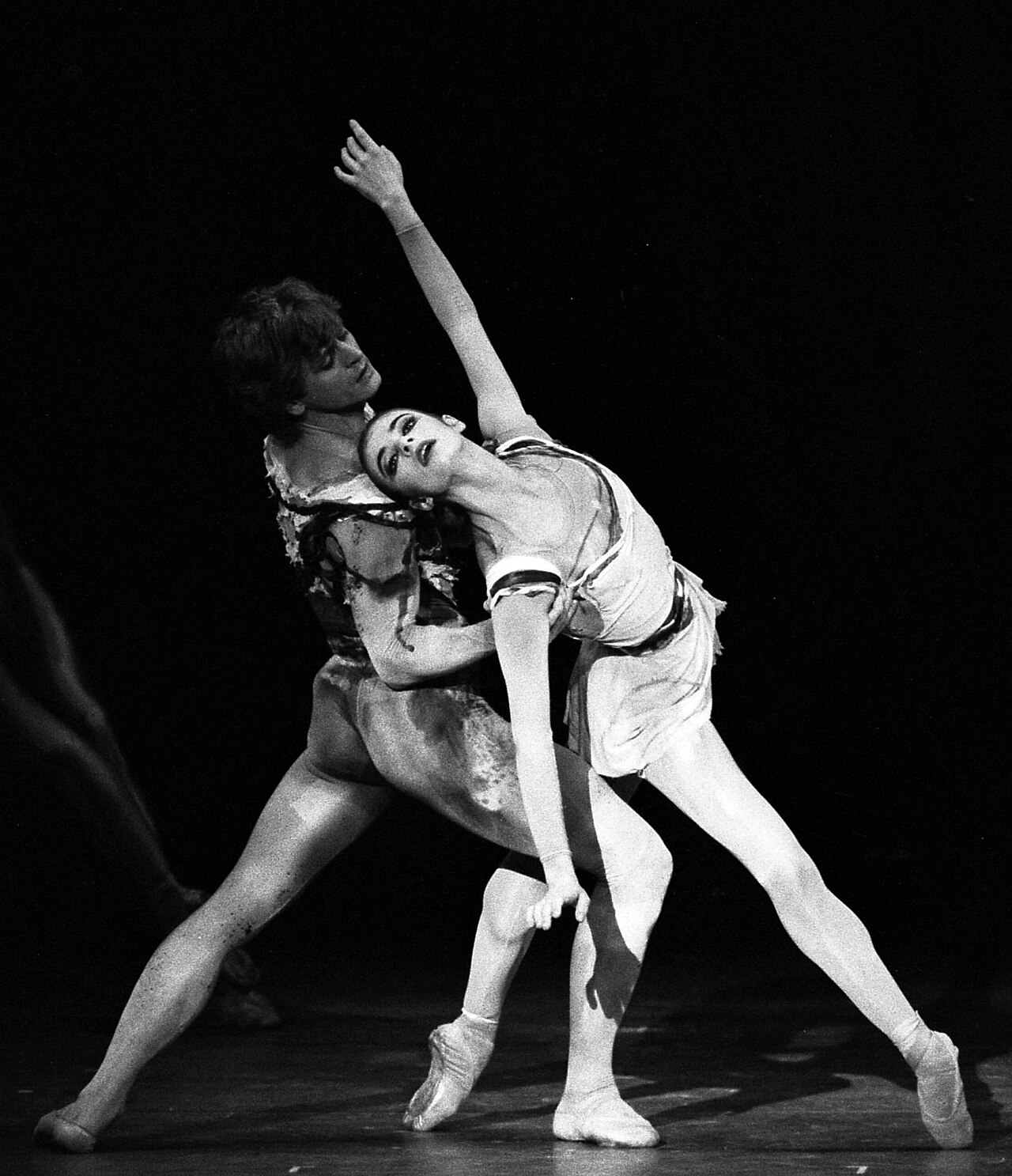
For her farewell performance in 2007, she brought Roberto Bolle to dance opposite her in Romeo and Juliet. In 1992, she became a Guest Star at American Ballet Theatre and began a close partnership with La Scala Theatre Ballet, eventually being recognized as that company’s Prima Ballerina Assoluta. After retiring, Ferri returned to dance in 2013, starring in The Piano Upstairs at Spoleto.
Return from retirement
Subsequent performances included Lea in Cheri for Signature Theatre, The Raven for Gotham Chamber Opera, and Woolf Works with the Royal Ballet. In June 2017, she appeared at the Royal Opera House in Marguerite and Armand. She reprised her role in Woolf Works at the Royal Ballet in 2023 and at American Ballet Theatre in 2024. Throughout her career, Ferri originated roles in numerous works.
Lore & Background
Ferri was born in Milan, Italy. She began studying ballet at the La Scala Theatre Ballet School, later transferring to the upper school of the Royal Ballet School. She represented the Royal Ballet School in the 1980 Prix de Lausanne, winning a scholarship. She joined the Royal Ballet in 1980.
In 1982, for her first major role in Mayerling, she was nominated for the Laurence Olivier Award for Outstanding First Achievement of the Year in Ballet. In 1983, she was nominated for and won the Laurence Olivier Award for Outstanding Individual Performance of the Year in a New Dance Production for her role in Valley of Shadows. In 1983, she was promoted to Principal Dancer.
In 1985, she left the Royal Ballet at the request of Mikhail Baryshnikov to become a Principal Dancer with American Ballet Theatre. In 1992, she became a Guest Star of the American Ballet Theatre and began a close collaboration with La Scala Theatre Ballet, becoming recognised as Prima Ballerina Assoluta of the company. She temporarily retired on 10 August 2007, then returned in 2013. She has two daughters, Matilde (born 1997) and Emma (born 2001), with Italian photographer Fabrizio Ferri.
A Career Spanning Three Great Companies
Born in Milan on 6 May 1963, Ferri first trained at La Scala's ballet school before transferring to the Royal Ballet School's upper division. A scholarship she won at the 1980 Prix de Lausanne kept her in London, where she joined the Royal Ballet that same year. By 1983 she had been elevated to Principal Dancer, earning a Laurence Olivier Award for her work in MacMillan's Valley of Shadows and a nomination for her debut in Mayerling. In 1985, Mikhail Baryshnikov personally recruited her to American Ballet Theatre, a move she explained as a need for the more rigorous daily training the company offered.
She remained with ABT through 2007. Beginning in 1992 she also forged a deep, ongoing partnership with La Scala Theatre Ballet, where she was recognised as Prima Ballerina Assoluta. Her concurrent affiliations with both companies continued until her temporary retirement on 10 August 2007, at the age of forty-four. Certain publications have since elevated her to the distinction of prima ballerina assoluta.
A Prolific Catalogue of Created Roles
Ferri's repertoire of created parts stretches across more than three decades and includes well over twenty-five premieres. Her earliest highlights came with the Royal Ballet: MacMillan's Chanson in 1981, Corder's Invitation au Voyage in 1982, and MacMillan's Valley of Shadows and Different Drummer in 1983 and 1984. Her ABT period yielded MacMillan's Requiem (1986) and Maillot's In Volo (1997). At La Scala she tackled Spoerli's Armide (1996), Vespri Siciliani (1997), and Europa Riconosciuta (2004), alongside Forsythe's Quartetto (1998).
She also created roles for Roland Petit, Daniel Ezralow, Amedeo Amodio, and Oscar Araiz across companies in Marseille, Milan, and Buenos Aires. After her 2013 return she added McGregor's Woolf Works (2015), Neumeier's Duse (2016), and McGregor's Witness (2017) and Afterite (2018). She even stepped behind the curtain to choreograph her own piece, The Piano Upstairs, for the Spoleto Festival that same year.
Partnerships and International Guest Work
Ferri's list of stage partners reads like a roll call of twentieth-century ballet. She danced opposite Rudolf Nureyev in Los Angeles for his fiftieth birthday celebration in 1988, appeared alongside Baryshnikov in the 1987 film Dancers, and shared the stage with Anthony Dowell, Patrick Dupond, Maximiliano Guerra, Manuel Legris, and Carlos Acosta among others.
She has singled out Julio Bocca as her favourite partner; the two performed the Romeo and Juliet pas de deux together in 1998. As a guest artist she brought her artistry to the Paris Opera Ballet, the Kirov Ballet at the Mariinsky, the National Ballet of Canada, the Tokyo Ballet, the Cuban National Ballet, the Hamburg Ballet, the Stuttgart Ballet, and the Ballet National de Marseille. Her particular strength lay in narrative ballets by MacMillan, Petit, Cranko, and Neumeier, productions in which her dramatic intensity and technical command were most fully realised.
Farewell, Return, and Life Beyond the Stage
Ferri stepped away from full-time company work on 10 August 2007, at forty-four, bringing Roberto Bolle on stage for a final Romeo and Juliet. For six years she was absent from the professional stage, but in 2013 she re-emerged at the Spoleto Festival with her own choreography, The Piano Upstairs. Since then she has embraced a varied slate of projects: Lea in Cheri for Signature Theatre, The Raven for Gotham Chamber Opera, and McGregor's Woolf Works with the Royal Ballet.
In June 2017 she danced Marguerite and Armand at the Royal Opera House, and she reprised Woolf Works in 2023 with the Royal Ballet and again in 2024 with ABT. Offstage, she is the mother of two daughters, Matilde (born 1997) and Emma (born 2001), whose father is Italian photographer Fabrizio Ferri, founder of the Università dell'Immagine art school in Milan. The girls joined her on stage for her farewell performance.
More in Ballet & Dance Masters
Related in Ballet & Dance Masters
Links follow this subject's own source article.
Sources
Compiled from Wikipedia and the sources listed below. Text from Wikipedia is available under CC BY-SA 4.0; this entry is adapted from it.
- Wikipedia: Alessandra Ferri (CC BY-SA 4.0).
Spotted an error? Know more?
Reader corrections go straight into our review queue. Suggest an edit · How this site is sourced