Alicia Alonso
Cuban prima ballerina assoluta who overcame partial blindness to become a legendary Giselle and founder of the Ballet Nacional de Cuba.
Last updated

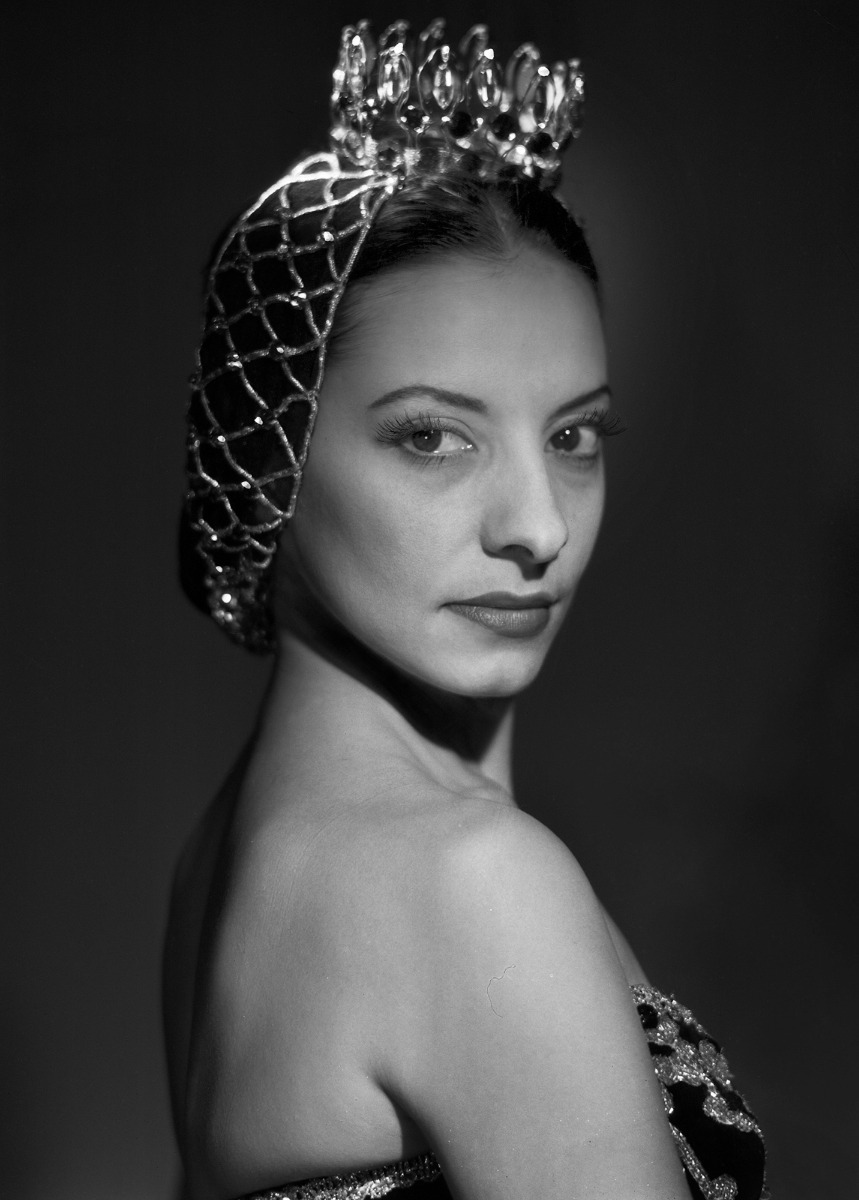
Annemarie Heinrich · Public domain
Alicia Alonso, born Alicia Ernestina de la Caridad del Cobre Martínez del Hoyo on 21 December 1920, was a Cuban prima ballerina assoluta and choreographer. Her dance company eventually became the Ballet Nacional de Cuba in 1955. She earned lasting fame for her performances as Giselle and in the ballet version of Carmen.
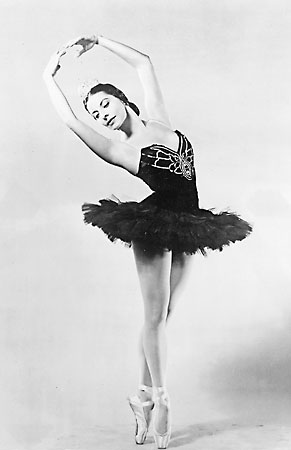
From age nineteen, Alonso dealt with a partial blindness caused by an eye condition. To perform, her partners had to stand exactly where she anticipated them, and she relied on colored stage lights to navigate.
Early life
Alonso was born near Havana in 1920, the fourth child of Antonio Martínez de la Maza Arredondo, an army veterinarian, and Ernestina del Hoyo y Lugo, a dressmaker. Both sides of her family were primarily of northern Spanish descent. She started dancing as a child. When she was nine, in 1929, her family moved to Spain for a year and a half, where she learned traditional Spanish dances like the Jota, Malagueñas, and Sevillanas.
Returning to Cuba in June 1931, she began ballet training at the Sociedad Pro-Arte Musical in Havana under Nikolai Yavorsky. Her first public performance came on 29 December 1931, when she was eleven. Her serious debut was in Tchaikovsky’s Sleeping Beauty at the Teatro Auditorium on 26 October 1932. Early in her Cuban career, she performed under the name Alicia Martínez.
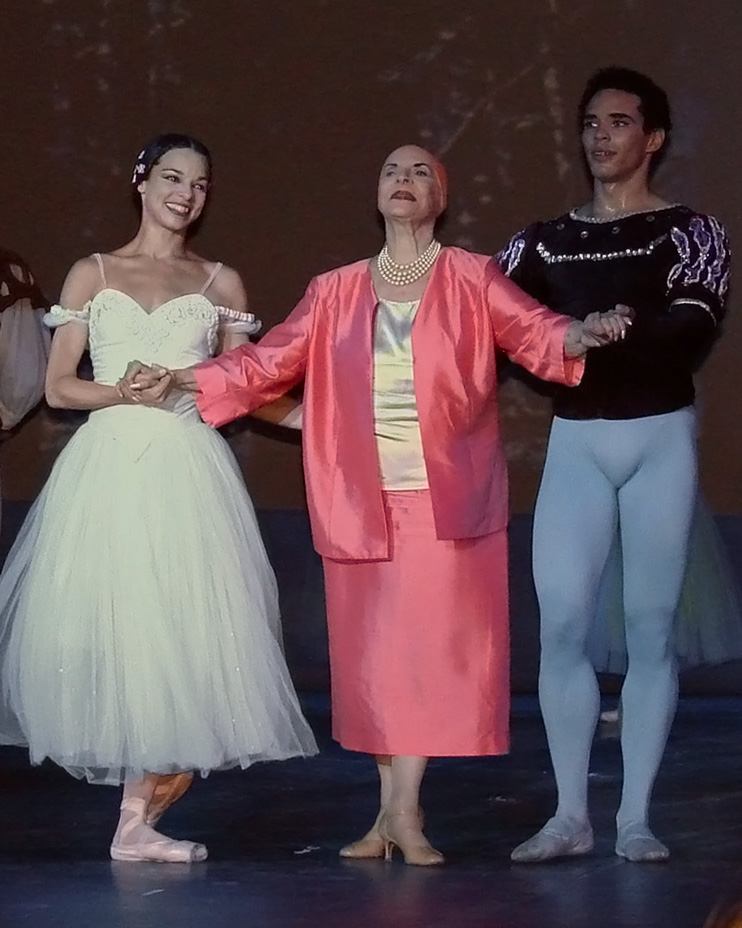
Her training stopped abruptly in 1937 when she fell in love with fellow ballet student Fernando Alonso and married him at sixteen. The couple moved to New York City to pursue professional careers, staying with relatives on Manhattan’s Upper West Side near Riverside Drive.
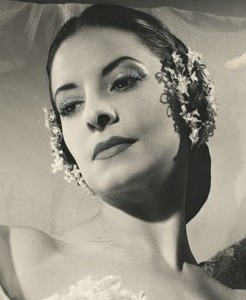
She gave birth to a daughter, Laura, in 1938, but continued training at the School of American Ballet. That same year, she made her U.S. debut in the musical comedies Great Lady and Stars In Your Eyes. She also arranged to travel to London to study with Vera Volkova.
Vision problems
In 1941, after her vision worsened, doctors diagnosed a detached retina and performed surgery. Ordered to rest in bed for three months, Alonso couldn’t fully comply; she practiced with her feet, pointing and stretching to “keep my feet alive.” When the bandages came off, the operation had not fully succeeded. A second surgery led doctors to conclude she would never have peripheral vision.
She agreed to a third procedure in Havana, this time with orders for a full year of bed rest. Her husband sat with her daily, using their fingers to teach her the great classical ballet roles. She later said, “I danced in my mind.
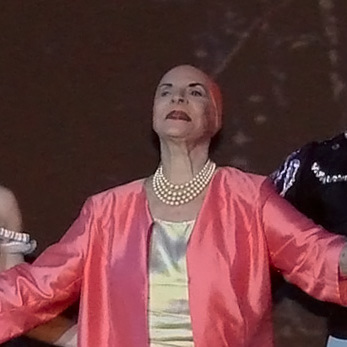
Blinded, motionless, flat on my back, I taught myself to dance Giselle.” Once allowed out of bed, she ignored medical advice and went to a nearby ballet studio every day to practice. Just as hope returned, a hurricane shattered a door in her home, spraying glass splinters onto her head and face, though her eyes were unharmed. Her doctor, seeing this, cleared her to dance, reasoning that if she could survive an explosion of glass, dancing could do no harm.
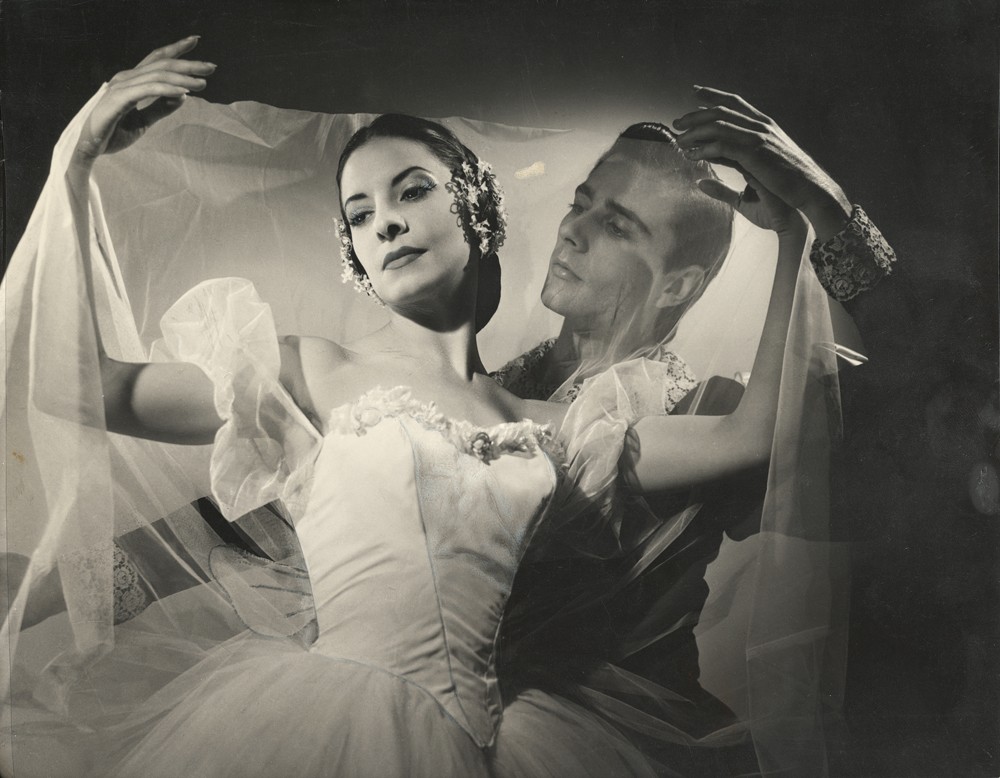
Alonso returned to New York City in 1943 to rebuild her skills. Before she had settled, she was unexpectedly asked to replace the Ballet Theatre’s injured prima ballerina Alicia Markova in Giselle.
Back to work
She accepted and delivered a performance that critics immediately declared made her a star. According to Barbara Steinberg, writing in Dance Magazine, “Her vision difficulties helped inspire her interpretation of the role.” She was promoted to principal dancer of the company in 1946 and danced Giselle until 1948, also performing in Swan Lake, Antony Tudor’s Undertow (1943), Balanchine’s Theme and Variations (1947), and world premieres like deMille’s dramatic ballet Fall River Legend (1948), where she played the Accused. By then, she had a reputation as a dramatic dancer, a pure technician, and a skilled interpreter of classical and romantic repertories.
Her partners, including Igor Youskevitch, and music director Benjamin Steinberg became expert at helping her conceal her handicap. To compensate for only partial sight in one eye and no peripheral vision, she trained her partners to be exactly where she needed them. Set designers installed strong spotlights in different colors as guides. She knew, for instance, that stepping into the glow near the front of the stage meant she was too close to the orchestra pit.
A thin wire stretched across the stage edge at waist height served as another marker. Generally, she danced within the encircling arms of her partners, who led her from point to point. Audiences reportedly never noticed.
Alicia Alonso Ballet Company
Alonso’s desire to develop ballet in Cuba led her to return to Havana in 1948 and found her own company, the Alicia Alonso Ballet Company, supported largely by her fame and earnings. This company eventually became the Ballet Nacional de Cuba. Fernando served as general director, and his brother Alberto, a choreographer, was artistic director. The company debuted briefly in the capital.
Lore & Background
From the age of nineteen, Alonso was afflicted with an eye condition and became partially blind. Her partners always had to be in the exact place she expected them to be, and she used lights in different parts of the stage to guide herself. She was the first American representative to dance with the Bolshoi and Kirov Theaters of Moscow and Leningrad respectively in 1957 and 1958.
Did You Know?
- She taught herself to dance Giselle while bedridden and blindfolded, using her husband's fingers to learn the role.
More in Ballet & Dance Masters
Test yourself
Three questions drawn from this entry’s sources. Pick an answer to check it.
Answers checked against the source article
Sources
Compiled from Wikipedia and the sources listed below. Text from Wikipedia is available under CC BY-SA 4.0; this entry is adapted from it.
- Wikipedia: Alicia Alonso (CC BY-SA 4.0).
Spotted an error? Know more?
Reader corrections go straight into our review queue. Suggest an edit · How this site is sourced