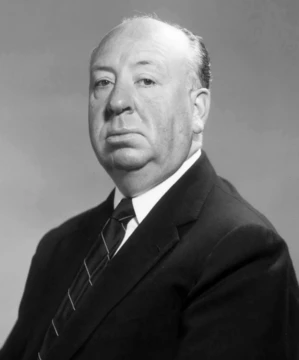
Xie Jin

Xie Jin (21 November 1923 – 18 October 2008) was a Chinese film director who rose to prominence in 1957 with *Woman Basketball Player No. 5*, the first color sports film in the People’s Republic of China. He is considered a member of the Third Generation of Chinese directors. Born in Shangyu, Zhejiang Province, he spent his early childhood there before moving to Shanghai with his parents in the 1930s. After a year of study in Hong Kong, he returned to Shanghai in 1939, attending high school while taking courses at Huaguang Drama School and Jinxing Film Training School under teachers such as Huang Zuolin and Wu Renzhi. He also participated in student drama activities led by Yu Ling. In 1941, he enrolled in the play department of Jiang'an National Drama School in Sichuan, studying under Cao Yu, Hong Shen, and Jiao Juyin, among others. He left his studies in 1943 to work at the China Youth Play Agency in Chongqing as a stage manager, scenario writer, and actor. He resumed his education in 1946 at the National Drama School in Nanjing, majoring in directing, and entered the film industry in 1948 as an assistant and associate director at Datong Film Corporation. After the establishment of the PRC, he studied at the research institute of politics of North China Revolutionary University and later worked as a director at Changjiang Film Studio and Shanghai Film Studio.
Xie directed over twenty films. *Woman Basketball Player No. 5* won a silver prize at the 6th International Youth Film Festival in 1957 and the Silver Hat Prize at the Mexico International Film Week in 1958. He staged the original production of the revolutionary opera *On the Docks* in the early 1960s and filmed it in 1972. *The Red Detachment of Women* won Best Picture and Best Directing at the 1st Hundred Flowers Awards, as well as the Wanlong Prize at the 3rd Asia-Africa Film Festival in 1964. *Two Stage Sisters*, released in 1965, won the Sutherland Trophy at the 24th BFI London Film Festival in 1980 and prizes in Portugal and Manila, but was attacked in China for allegedly advocating class reconciliation. Xie recalled in a 2002 interview that his parents committed suicide amid political pressure—his mother jumping from a building and his father overdosing on sleeping pills—and he had to collect their bodies himself. Filmmaker Jia Zhangke noted that it was still risky for Xie to make films about t
- died
- 18 October 2008, Shangyu, China
- field
- Film director
- nationality
- Chinese
- known_for
- Directing *Woman Basketball Player No. 5*, *The Red Detachment of Women*, *Two Stage Sisters*, and *The Opium War*
Verified Timeline
Lore & Background
He moved to Shanghai in the 1930s, then to Hong Kong in 1938 for a year of study. After the establishment of the PRC, he studied at the research institute of politics of North China Revolutionary University, then worked at Changjiang Film Studio and Shanghai Film Studio. Xie directed more than 20 films. Jia Zhangke remarked that it was still risky for Xie to make films about this traumatic period in the 1980s. On 23 August 2008, Xie Jin's son died of cancer. Two months later, on 18 October 2008, Xie Jin's body was discovered in his hotel room in Shangyu. Hundreds of celebrities and thousands of others attended his funeral.
Reader's Guide
Xie Jin’s career was marked by a sustained engagement with politically sensitive themes, often navigating the shifting ideological currents of the early PRC era and the reform period. His films frequently addressed class reconciliation and the personal trauma of the Cultural Revolution, a period that profoundly affected his own life—his mother died by jumping from a building and his father from an overdose of sleeping pills, and Xie had to collect their bodies himself. Despite these risks, he continued to make films about this traumatic period in the 1980s, as noted by filmmaker Jia Zhangke, at a time when China was beginning to open up and implement economic reforms. His work *Two Stage Sisters*, released in 1965, was attacked domestically for allegedly advocating the reconciliation of social classes, yet it later won the Sutherland Trophy at the 24th BFI London Film Festival and prizes in Portugal and Manila. Xie’s debut, *Woman Basketball Player No. 5*, was the first color sports film in the PRC and earned a silver prize at the 6th International Youth Film Festival and the Silver Hat Prize in Mexico. He also staged the original production of the revolutionary opera *On the Docks* in the early 1960s and filmed it in 1972. Six of his films won Best Picture at the Hundred Flowers Awards, making him especially popular among older generations. He remains the only Chinese director to have been a member of both the Academy of Motion Picture Arts and Sciences and the Directors Guild of America, reflecting his global recognition.
Did You Know?
- Xie Jin was the only Chinese director to date to be a member of both the Academy of Motion Picture Arts and Sciences and the Directors Guild of America.
- His debut film, *Woman Basketball Player No. 5*, was the first color sports film in the People's Republic of China.
- Six of his films were voted Best Picture in the Hundred Flowers Awards.
- After his death, media figure Song Zude made derogatory statements about Xie Jin, prompting millions to stand against him in respect.
More in Auteur Directors 1-24
Spotted an error? Know more?
This is a living reference — every entry is fact-audited, and reader corrections feed straight into our audit queue. Suggest an edit · See this site's audit record