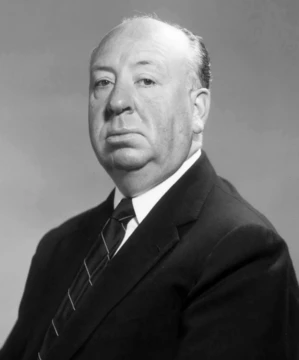
Theo Angelopoulos
French filmmaker known for ascetic minimalism and non-professional actors.

Theodoros "Theo" Angelopoulos (27 April 1935 – 24 January 2012) was a Greek filmmaker, screenwriter, and producer who became the dominant figure in Greek art cinema from 1975 onward and earned international acclaim as one of the world’s most influential directors. He began making films in 1967, following the coup that established the Regime of the Colonels. During the 1970s, he produced a series of politically charged works about modern Greece, including *Days of '36*, *The Travelling Players*, and *The Hunters*. His style is defined by long takes, slow and episodic narratives, and complex, meticulously choreographed scenes involving many actors; *The Travelling Players* contains only 80 shots across roughly four hours. Martin Scorsese described him as a masterful filmmaker, and his method is often called sweeping and hypnotic. Angelopoulos stated that in his shots, time becomes space and space becomes time. His recurring themes include immigration, exile, return, and the history of 20th-century Greece. He collaborated regularly with cinematographer Giorgos Arvanitis, screenwriter Tonino Guerra, and composer Eleni Karaindrou. He acknowledged Orson Welles’ use of the plan-sequence and deep focus, and Mizoguchi’s treatment of time and off-camera space as specific influences, also citing Andrei Tarkovsky’s *Stalker*. In 1998, his film *Eternity and a Day* won the Palme d’Or at Cannes. Angelopoulos died on 24 January 2012 from injuries sustained when he was hit by a motorcycle while crossing a road during the shooting of his final film, *The Other Sea*, in Athens.
- died
- 18 December 1999
- field
- Filmmaker
- nationality
- French
Verified Timeline
Quick Facts
- Birth Name
- Theodoros Angelopoulos
- Birth Date
- 1935-04-27
- Birth Place
- Athens, Greece
- Death Date
- 2012-01-24
- Death Place
- Piraeus, Greece
- Resting Place
- First Cemetery of Athens
- Education
- University of Athens / IDHEC
- Occupation
- Film director, screenwriter
- Years Active
- 1965–2012
- Spouse
- Foivi Oikonomopoulou · 1980
- Children
- 3
- Awards
- Palme d'Or (1998)
Facts from the source article.
Lore & Background
Bresson was born at Bromont-Lamothe, Puy-de-Dôme, the son of Marie-Élisabeth (née Clausels) and Léon Bresson. Little is known of his early life. He was educated at Lycée Lakanal in Sceaux, Hauts-de-Seine, close to Paris, and turned to painting after graduating. Three formative influences in his early life are evident in his films: Catholicism, art, and his experiences as a prisoner of war. Initially a photographer, Bresson made his first short film, *Les affaires publiques* (Public Affairs) in 1934. He enlisted in the French Army on the onset of World War II and was captured by the Germans in 1940 and held as a prisoner of war for more than a year, an experience which informed *A Man Escaped* (1956). In a career that spanned fifty years, Bresson made only 13 feature-length films. This reflects his painstaking approach to the filmmaking process and his non-commercial preoccupations. Difficulty finding funding for his projects was also a factor. Bresson was sometimes accused of an uncompromising 'ivory tower existence' outside of mainstream cinema. Later in his life, he said that he had stopped watching other filmmakers' movies in theaters, although he later praised the James Bond film *For Your Eyes Only* (1981), saying that 'It filled me with wonder ... if I could have seen it twice in a row and again the next day, I would have.' Bresson died on 18 December 1999, at his home in Droue-sur-Drouette, southwest of Paris. He was 98. He made his last film, *L'Argent* (Money), in 1983 and had been unwell for some time.
Reader's Guide
Bresson's artistic focus was to separate the language of cinema from that of the theater, which often relies heavily upon the actor's performance to drive the work. He preferred to think of his actors as 'models', requiring them to repeat multiple takes of each scene until all semblances of 'performance' were stripped away, leaving a stark effect that registers as both subtle and raw. This, as well as Bresson's restraint in musical scoring, would have a significant influence on minimalist cinema. Bresson published a collection of aphorisms and reflections in 1975 titled *Notes on the Cinematographer* (French: *Notes sur le cinématographe*), in which he argues for a unique sense of the term 'cinematography'. For him, cinematography is the higher function of cinema. While a movie is in essence 'only' filmed theatre, Bresson defines cinematography as an attempt to create a new language of moving images and sounds. Bresson was a Catholic, although he disagreed with some points of Catholic theology, explaining that he was not sure of the resurrection of the body and 'would rather be a Jansenist than Jesuit' due to his belief in predestination. In his later life he stopped attending church services due to his dissatisfaction with the Second Vatican Council's transition to the Mass of Paul VI. In 1973, Bresson explained: 'There is the feeling that God is everywhere, and the more I live, the more I see that in nature, in the country. When I see a tree, I see that God exists. I try to catch and to convey the idea that we have a soul and that the soul is in contact with God. That's the first thing I want to get in my films.'
Did You Know?
- Bresson has the highest number of films (seven) that made the 2012 Sight and Sound critics' poll of the Greatest Films of All Time.
- Jean-Luc Godard once wrote of Bresson: 'He is the French cinema, as Dostoevsky is the Russian novel and Mozart is German music.'
- Bresson was held as a prisoner of war for more than a year after being captured by the Germans in 1940, an experience that informed his film *A Man Escaped* (1956).
- Bresson praised the James Bond film *For Your Eyes Only* (1981), saying 'It filled me with wonder ... if I could have seen it twice in a row and again the next day, I would have.'
- Bresson made only 13 feature-length films in a career that spanned fifty years.
More in Auteur Directors 1-24
Spotted an error? Know more?
This is a living reference — every entry is fact-audited, and reader corrections feed straight into our audit queue. Suggest an edit · See this site's audit record