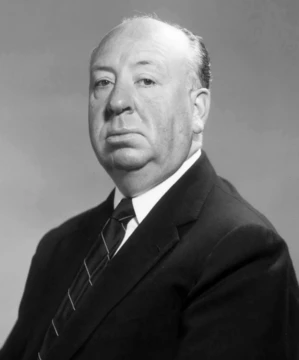
Spike Lee
American filmmaker whose work examines race, media, and urban life.

Spike Lee is an American filmmaker and actor whose work has been recognized as among the most significant of the late 20th century. His films consistently examine race relations, struggles within the black community, the influence of media, and the realities of urban crime and poverty. Born Shelton Jackson Lee in Atlanta, Georgia, he was nicknamed "Spike" by his mother, a teacher of arts and black literature. His father was a jazz musician and composer. The family moved to Brooklyn, New York, when Lee was a child. He attended Morehouse College, a historically black institution, where he made his first student film and earned a degree in mass communication. He later completed a Master of Fine Arts in film and television at New York University’s Tisch School of the Arts.
Lee’s student film, *Joe's Bed-Stuy Barbershop: We Cut Heads*, won a Student Academy Award and was the first student film showcased at Lincoln Center’s New Directors New Films Festival. He made his feature debut with the comedy *She's Gotta Have It* (1986), shot on a $175,000 budget in two weeks, which grossed over $7 million and helped launch the American independent film movement. His breakthrough came with *Do the Right Thing* (1989), a drama about racial tension in Brooklyn that earned him an Academy Award nomination for Best Original Screenplay. He followed with the historical epic *Malcolm X* (1992), which was nominated for the Golden Bear at the Berlin International Film Festival. For the biographical crime dramedy *BlacKkKlansman* (2018), Lee won the Academy Award for Best Adapted Screenplay and the Grand Prix at Cannes. His other notable films include *School Daze*, *Mo’ Better Blues*, *Jungle Fever*, *Crooklyn*, *Clockers*, *Bamboozled*, *25th Hour*, *Inside Man*, *Chi-Raq*, *Da 5 Bloods*, and *Highest 2 Lowest*. He has also directed documentaries such as *4 Little Girls*, which was nominated for an Academy Award, and the HBO series *When the Levees Broke*, which won two Primetime Emmy Awards. Lee has received numerous honors, including an Academy Honorary Award, an Honorary BAFTA, an Honorary César, and the National Medal of Arts. Five of his films have been preserved in the National Film Registry.
- field
- Filmmaker, actor
- nationality
- American
Verified Timeline
Lore & Background
Spike Lee conceived the idea for *Do the Right Thing* after discussing a 1986 incident at Howard Beach, Queens, with actor Robert De Niro. This incident involved an attack on African-American men in a predominantly Italian-American neighborhood, resulting in one victim being struck by a car and killed. Lee was also influenced by the Alfred Hitchcock Presents episode 'Shopping for Death,' in which the main characters discuss their theory that hot weather increases violent tendencies, and the killing of Eleanor Bumpurs by police. He wrote the screenplay in two weeks. The original script ended with a stronger reconciliation between Mookie and Sal than Lee used in the film; Lee's contemporaneous notes indicate that Lisa Jones expressed Sal's reaction as 'too nice' as originally written. Initially considering De Niro for the role of 'Sal,' Lee eventually cast Danny Aiello at De Niro's suggestion. Roger Guenveur Smith, who was pestering Lee for a role, created the character of Smiley, who was not in the original script. Lee originally wanted Bill Nunn to play Mister Señor Love Daddy but later recast him as Radio Raheem. Principal photography commenced on July 18, 1988, on a single block in Brooklyn, New York, with a budget of $6.2 million. During filming, the neighborhood's crack dealers threatened the film crew, leading Lee to hire Fruit of Islam members to provide security. Filming wrapped on September 14, 1988.
Reader's Guide
Spike Lee's significance lies in his sustained, provocative examination of race relations, urban life, and media through a prolific filmography. His breakthrough film *Do the Right Thing* (1989) became a cultural touchstone for its unflinching portrayal of racial tension, earning him his first Oscar nomination for Best Original Screenplay. The film features an ensemble cast including Lee, Danny Aiello, Ossie Davis, Ruby Dee, Richard Edson, Giancarlo Esposito, Bill Nunn, John Turturro, and John Savage, and is the feature film debut of Martin Lawrence and Rosie Perez. Blending elements of comedy, drama, and social commentary, the film is noted for its vivid color design, stylized cinematography, direct-address monologues, and an influential hip-hop-driven soundtrack prominently featuring Public Enemy's 'Fight the Power.' The film's ambiguous and controversial conclusion sparked widespread debate upon release regarding the nature of protest, responsibility, and moral judgment. In 1999, *Do the Right Thing* was selected for preservation in the United States National Film Registry by the Library of Congress as being 'culturally, historically or aesthetically significant.' In 2022, the film was ranked the 24th greatest of all time in *Sight and Sound* magazine's decennial poll.
Did You Know?
- Spike Lee wrote the screenplay for *Do the Right Thing* in just two weeks.
- Lee originally wanted Bill Nunn to play Mister Señor Love Daddy but later recast him as Radio Raheem.
- During filming, neighborhood crack dealers threatened the crew, so Lee hired Fruit of Islam members for security.
- The character Smiley was not in the original script; actor Roger Guenveur Smith created him while pestering Lee for a role.
- Lee initially considered Robert De Niro for the role of Sal, but cast Danny Aiello at De Niro's suggestion.
More in Auteur Directors 1-24
Spotted an error? Know more?
This is a living reference — every entry is fact-audited, and reader corrections feed straight into our audit queue. Suggest an edit · See this site's audit record