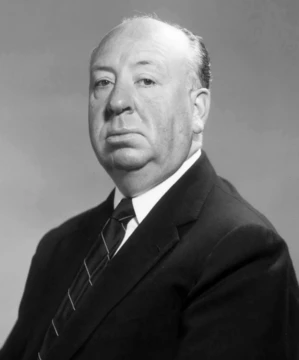
Stephen Chow
Hong Kong filmmaker and actor known for mo lei tau comedy.

Stephen Chow Sing-chi, born in Hong Kong on 22 June 1962, is a filmmaker and former actor celebrated for his mo lei tau comedy, which has deeply influenced Chinese popular culture. His parents divorced when he was seven, and he was raised by his mother. Inspired by Bruce Lee’s *The Big Boss* at age nine, he aspired to become a martial arts star. After attending Heep Woh Primary School and San Marino Secondary School, he joined TVB’s acting classes. His career began as an extra for Rediffusion Television; he was initially rejected by TVB’s training course but gained admission the following year with help from a friend. He hosted the children’s program *430 Space Shuttle* for five years, capturing public attention. A supporting role in the crime drama *Final Justice* (1988) won him the Golden Horse Award for Best Supporting Actor. He rose to television stardom in the wuxia series *The Final Combat* (1989). His breakthrough came when director Jeff Lau cast him in the parody *All for the Winner* (1990), which became Hong Kong’s highest-grossing film at the time and paired him with Ng Man-tat. Chow then starred in *God of Gamblers II* (1990) and *Tricky Brains*, both major hits, though subsequent films underperformed, leading some to declare his career over. However, *Fight Back to School* (1991) revived his fortunes, earning HK$43 million and launching a franchise. Beginning in the early 1990s, Chow worked as a screenwriter and director, serving as de facto director for *Flirting Scholar* (1993) before his first official directorial credit with *From Beijing with Love* (1994). His early Hong Kong–mainland co-productions, *Flirting Scholar* and *A Chinese Odyssey* (1995), received mixed reviews and underperformed initially but later gained cult status, with *A Chinese Odyssey* elevating him to a cultural icon in China by the 2000s. He directed and starred in *Shaolin Soccer* (2001), which brought international recognition, followed by *Kung Fu Hustle* (2004). His final on-screen performance was in *CJ7* (2008), after which he focused solely on filmmaking, achieving major success with *Journey to the West* (2013) and *The Mermaid* (2016).
- field
- Filmmaker, former actor
- nationality
- Hong Kong
Verified Timeline
Lore & Background
Stephen Chow is a Hong Kong filmmaker and former actor, born on 22 June 1962. His appearance is not described in the source, but his public image is defined by his association with mo lei tau comedy, a nonsensical, slapstick style that has deeply influenced Chinese popular culture. His career began in television, where he gained recognition through variety shows and dramas. His breakthrough came in 1989 with the comedy dramas *The Final Combat* and *The Justice of Life*, the latter starting his on-screen partnership with Ng Man-tat. He broke Hong Kong box office records with *All for the Winner* (1990) and *Fight Back to School* (1991), cementing his status as a top actor. By the early 1990s, he began writing and directing, serving as de facto director for *Flirting Scholar* (1993) before his official directorial debut with *From Beijing with Love* (1994). His early co-productions with mainland China, *Flirting Scholar* and *A Chinese Odyssey* (1995), received mixed reviews and underperformed initially but later gained cult status, with *A Chinese Odyssey* elevating him to a cultural icon in China by the 2000s. He directed and starred in *Shaolin Soccer* (2001) and *Kung Fu Hustle* (2004), which brought international recognition. His final on-screen performance was in *CJ7* (2008), after which he focused solely on filmmaking, achieving success with *Journey to the West* (2013) and *The Mermaid* (2016).
Reader's Guide
Stephen Chow’s significance stems from his creation and popularization of *mo lei tau* comedy, a style of absurdist, nonsensical humor that has left a lasting mark on Chinese popular culture. His career trajectory illustrates the commercial and cultural power of this approach: after breaking Hong Kong box-office records with *All for the Winner* and *Fight Back to School*, he cemented his status as a leading actor. Chow’s collaborations were also notable; his on-screen partnership with Ng Man-tat began in the television drama *The Justice of Life* and continued through many of his major film successes, helping revive Ng’s career after a gambling addiction had derailed it. Beyond acting, Chow’s work as a director and screenwriter reshaped his legacy. His early co-productions with mainland China, such as *Flirting Scholar* and *A Chinese Odyssey*, initially received mixed reviews and underperformed, but later gained cult status, with *A Chinese Odyssey* elevating him to a cultural icon in China by the 2000s. Internationally, *Shaolin Soccer* and *Kung Fu Hustle* brought him global recognition. After his final on-screen role in *CJ7*, he transitioned fully to filmmaking, achieving further commercial success with *Journey to the West* and *The Mermaid*. Chow’s career demonstrates how a distinctive, self-referential comedic voice can evolve from television to become a defining force in Chinese-language cinema.
Did You Know?
- At age nine, he saw Bruce Lee's film The Big Boss, which inspired him to become a martial arts star.
- Chow won the Golden Horse Award for Best Supporting Actor for his role in Final Justice (1988).
- In 1992, all five top spots at the Hong Kong box office were held by his films.
- His two-part adaptation A Chinese Odyssey (1995) underperformed at the box office, leading to bankruptcy, but later became a cult favorite in Mainland China.
The Director's Craft in Action Cinema
At the heart of every kinetic sequence on screen stands a director orchestrating choreography, camera movement, and narrative purpose. In the action genre, set pieces—fights, stunts, vehicle pursuits, and explosive confrontations—either dominate the storytelling or serve a subtler function, revealing character and advancing plot through physical spectacle. A skilled action director does not merely capture violence; they shape how audiences feel the weight of a punch or the tension of a chase. The craft demands that every staged moment carry emotional or narrative justification, transforming raw spectacle into meaningful cinema. Directors in this space also frequently weave in adjacent tones, layering romance, humor, or dramatic stakes beneath the adrenaline to keep the audience emotionally invested beyond the next explosion. This dual responsibility—managing visceral thrills while sustaining a coherent story—defines the role more than any single signature shot or stunt sequence ever could.
From Screen to Director's Chair
A recurring pattern across action cinema is the performer who steps behind the camera to helm their own projects. The tradition stretches across decades and continents, with figures who spent years executing stunts and embodying heroes eventually taking full creative control of their stories. Some built entire directorial catalogs over the years, returning repeatedly to the genre with new titles and evolving styles. Others made a single foray into directing, treating it as a one-time creative experiment before returning to acting. What unites these figures is a deep, embodied understanding of the physical language of action—having lived the choreography from the inside gives them an intuitive grasp of pacing, framing, and the rhythm of a fight that purely technical directors may lack. This performer-to-director pipeline has produced some of the most personally distinctive voices in the genre, where the star's physicality and the director's vision are inseparable.
Where Genres Collide
The most memorable action films rarely exist in a vacuum. Directors working in this space routinely fold in elements from romance, science fiction, fantasy, comedy, drama, and even horror, using the action framework as a vessel for broader storytelling. This cross-pollination means a single film might open with a tender character beat, escalate into a high-octane chase, and close with a philosophical or emotional resolution. The genre's natural kinship with thriller and adventure pictures further blurs the boundaries, allowing directors to borrow pacing structures, world-building techniques, and tonal shifts from neighboring categories. The result is a form of cinema that resists easy labeling: a comedy can detonate into a war sequence, a romance can be punctuated by a rooftop gunfight, and a fantasy epic can hinge on a single, meticulously choreographed duel. This flexibility is what keeps the genre perpetually reinventing itself across cultures and eras.
A Global Roster of Visionaries
Names range from veteran figures who shaped the genre's grammar in the mid-twentieth century to newer voices pushing formal and narrative boundaries in the present day. Some directors are known for a single defining film, while others maintain long, prolific careers spanning multiple decades. The roster includes auteurs who treat action as a vehicle for social commentary, technicians obsessed with practical effects and in-camera spectacle, and storytellers who prioritize character arcs over set-piece density. This geographic and stylistic diversity ensures that the genre never calcifies into a single national or studio sensibility. Audiences worldwide encounter action cinema filtered through distinct cultural lenses, each bringing unique approaches to choreography, pacing, humor, and the moral weight of violence, making the genre one of the most globally shared and locally specific forms in film.
More in Auteur Directors 1-24
Spotted an error? Know more?
This is a living reference — every entry is fact-audited, and reader corrections feed straight into our audit queue. Suggest an edit · See this site's audit record