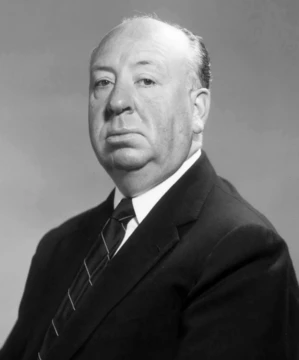
Vsevolod Pudovkin
Soviet film director who co-created the Kuleshov effect and developed montage theories.

Vsevolod Illarionovich Pudovkin was a Soviet film director, screenwriter, and actor, born in Penza into a Russian family as the third of six children. His father, who came from a peasant background in the Penza Governorate, worked as a manager and door-to-door salesman, while his mother was a housewife. Initially a student of engineering at Moscow University, Pudovkin served in World War I and was captured by German forces, during which time he studied foreign languages and created book illustrations. After the war, he left his professional field to enter cinema, working first as a screenwriter, actor, and art director, then as an assistant director to Lev Kuleshov. He married Anna Zemtsova in 1924, crediting her encouragement for his filmmaking career. His first notable work was the comedy short *Chess Fever* (1925), co-directed with Nikolai Shpikovsky, featuring a cameo by chess champion José Raúl Capablanca. In 1926, he directed *Mother*, a silent masterpiece that developed the montage theories for which he became renowned. This film, along with *The End of St. Petersburg* (1927) and *Storm over Asia* (also known as *The Heir of Genghis Khan*, 1928), formed a trilogy supporting Bolshevik revolutionary policy. With the arrival of sound, Pudovkin, Sergei Eisenstein, and Grigori Aleksandrov signed the Manifest of Sound in 1928, arguing for sound to be in tension and nonsynchronization with image. His experimental sound film *A Simple Case* (1932) led to public charges of formalism, and he was forced to release it without its soundtrack. He later directed historical epics such as *Minin and Pozharsky* (1939) and *Suvorov* (1941), both praised as among the best Russian historical films and awarded the Stalin Prize first degree in 1941. During World War II, he was evacuated to Kazakhstan, making patriotic war films and appearing as God’s fool in Eisenstein’s *Ivan the Terrible*. After the war, he continued at Mosfilm, earning another Stalin Prize for *Admiral Nakhimov* (1947) and a second Order of Lenin for *Zhukovsky* (1950). He also worked as an educator, journalist, and author of film theory books, served as a professor at VGIK, and was president of the cinema section at VOKS. Pudovkin died of a heart attack on 30 June 1953 in Dubulti, Latvian SSR, and was buried at Novodevichy Cemetery. He was named People’s Artist of the USSR in 1948.
- field
- Film director, screenwriter, actor
- known_for
- Montage theories, silent film trilogy (Mother, The End of St. Petersburg, Storm
Quick Facts
- Native Name Lang
- ru
- Birth Date
- 1893-02-28
- Birth Place
- Penza, Penza Governorate, Russian Empire
- Death Date
- 1953-06-30
- Death Place
- Dubulti, Jūrmala, Latvian SSR, Soviet Union
- Occupation
- Film director · screenwriter · actor · pedagogue
- Years Active
- 1921–1953
- Education
- Moscow State University
Facts from the source article.
Lore & Background
Vsevolod Pudovkin collaborated with Lev Kuleshov on the legendary cinematic research known as the Kuleshov effect, though when, where, and how it was created is not precisely known. Kuleshov and Pudovkin recounted differing versions, beginning soon after the work was done. Pudovkin later claimed to have been the co-creator of the experiment. In 1929, he described how the audience believed the expression on Ivan Mozzhukhin's face changed depending on the shot it was intercut with—a bowl of soup, a girl in a coffin, or a woman on a divan—showing hunger, grief, or desire, respectively, though the footage of Mozzhukhin was actually the same shot each time. The montage experiments carried out by Kuleshov and Pudovkin in the late 1910s and early 1920s formed the theoretical basis of Soviet montage cinema, culminating in films such as Pudovkin's *Mother* and *The End of St. Petersburg*.
Reader's Guide
Pudovkin's significance lies in his development of montage theories alongside Lev Kuleshov. The Kuleshov effect demonstrated that viewers derive more meaning from the interaction of two sequential shots than from a single shot in isolation. Kuleshov used the experiment to indicate the usefulness and effectiveness of film editing, believing that montage had to be the basis of cinema as an independent art form. The montage experiments carried out by Kuleshov and Pudovkin in the late 1910s and early 1920s formed the theoretical basis of Soviet montage cinema, culminating in the famous films of the late 1920s by directors such as Sergei Eisenstein, Vsevolod Pudovkin, and Dziga Vertov. These films included Pudovkin's *Mother* and *The End of St. Petersburg*, as well as *The Battleship Potemkin*, *October*, *Storm over Asia*, and *The Man with a Movie Camera*.
Did You Know?
- Pudovkin later claimed to have been the co-creator of the Kuleshov effect experiment.
- In 1929, Pudovkin described how the audience 'raved about the acting' of Ivan Mozzhukhin, not realizing the same shot was used each time.
- The Kuleshov effect was sometimes known as the Pudovkin effect prior to the 1960s.
- Pudovkin's films *Mother* and *The End of St. Petersburg* are among the famous Soviet montage films of the late 1920s.
- The montage experiments by Kuleshov and Pudovkin formed the theoretical basis of Soviet montage cinema.
More in Auteur Directors 1-24
Spotted an error? Know more?
This is a living reference — every entry is fact-audited, and reader corrections feed straight into our audit queue. Suggest an edit · See this site's audit record