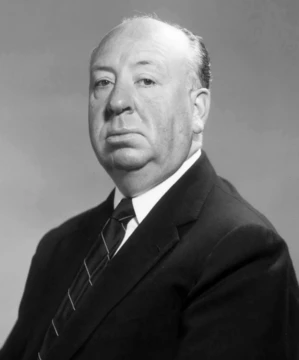
Tran Anh Hung
Vietnamese-born French filmmaker of acclaimed Vietnam trilogy.

Trần Anh Hùng is a Vietnamese-born French filmmaker whose visually distinctive works have made him a leading figure in overseas Vietnamese cinema. Born in Da Nang, South Vietnam, he immigrated to France at age twelve after the fall of Saigon in 1975. He initially studied philosophy at a French university, but after seeing Robert Bresson’s film *A Man Escaped*, he decided to pursue filmmaking. He later studied photography at the National School Supérieure Louis-Lumière, a school that trains cinematographers, and supported himself by working in the bookshop of the Musée d’Orsay. His early short films, including *La femme mariée de Nam Xuong* (inspired by a Vietnamese folk tale) and *La pierre de l’attente*, preceded his acclaimed debut feature, *The Scent of Green Papaya* (1993). That film, nominated for the Academy Award for Best Foreign Language Film, won two top prizes at the Cannes Film Festival and remains the only Vietnamese cinema entry ever nominated in that category. Its success funded his next film, *Cyclo* (1995), which featured Hong Kong star Tony Leung Chiu-Wai and won the Golden Lion at the Venice International Film Festival, making Hung one of the youngest directors to receive that honor. The third film in his “Vietnam trilogy,” *The Vertical Ray of the Sun* (2000), centered on three sisters in Hanoi. After a sabbatical, Hung returned with the noir psychological thriller *I Come with the Rain* (2009), featuring an international cast including Josh Hartnett and Elias Koteas, and later directed an adaptation of Haruki Murakami’s novel *Norwegian Wood* (2010). Hung’s films aim to rebuild the image of Vietnam he lost after emigrating, offering an alternative to the portrayals long dominated by French and American cinema. He draws on his knowledge of Vietnamese culture and firsthand experience from trips to the country. His style, influenced by European and Japanese directors such as Bergman, Bresson, Kurosawa, Tarkovsky, and Ozu, rejects conventional storytelling in favor of challenging audiences’ feelings through a “language of the body.” He has stated that “art is the truth wearing a mask.” His work has shattered stereotypical images of poverty and backwardness, presenting a Vietnam where tenderness and cruelty coexist.
- field
- Filmmaker
- nationality
- Vietnamese-born French
- known_for
- The Scent of Green Papaya, Cyclo, The Vertical Ray of the Sun
Verified Timeline
Quick Facts
- Birth Date
- mf=yes · 1962 · 12 · 23
- Birth Place
- Da Nang, South Vietnam
- Citizenship
- French
- Spouse
- Trần Nữ Yên Khê
- Children
- 2
- Occupation
- Film director, screenwriter
- Years Active
- 1989–present
Facts from the source article.
Lore & Background
Trần Anh Hùng is a Vietnamese-born French filmmaker whose work is defined by a deeply personal, sensory reconstruction of Vietnam, a country he left as a child. He was born in Da Nang and immigrated to France at age twelve following the end of the Vietnam War. His filmmaking style is strongly influenced by European and Japanese directors such as Bergman, Bresson, Kurosawa, Tarkovsky, and Ozu, and he deliberately rejects conventional storytelling in favor of a new cinematic language that challenges the audience’s feelings rather than their critical reasoning. He has stated that “art is the truth wearing a mask.” His first three features form a celebrated “Vietnam trilogy,” each a varied meditation on life in his homeland. His debut, *The Scent of Green Papaya*, was acclaimed for its beautiful images of Vietnamese life and remains the only Vietnamese film ever nominated for the Academy Award for Best Foreign Language Film. The follow-up, *Cyclo*, was shot on location in Ho Chi Minh City and won the Golden Lion at the Venice Film Festival, making Hung one of the youngest directors to receive that honor. The trilogy concluded with *The Vertical Ray of the Sun*, set in Hanoi and centered on three sisters. After a sabbatical, he returned with the noir thriller *I Come with the Rain* and later directed an adaptation of Haruki Murakami’s novel *Norwegian Wood*. His films aim to shatter stereotypical images of poverty and backwardness, instead showing a Vietnam where tenderness and cruelty coexist.
Reader's Guide
Trần Anh Hùng's significance lies in his role as a pioneer of overseas Vietnamese cinema, offering an alternative perspective on Vietnam that challenged the stereotypical images of poverty and backwardness often depicted in American and French films. His films are noted for their unique visual style and their exploration of Vietnamese culture, blending tenderness and cruelty. He is strongly influenced by European and Japanese filmmakers such as Bergman, Bresson, Kurosawa, Tarkovsky, and Ozu. His legacy includes inspiring a wave of Vietnamese diaspora filmmakers and reshaping global perceptions of Vietnam through cinema.
Did You Know?
- He decided to study film after seeing Robert Bresson's film A Man Escaped.
- His debut feature, The Scent of Green Papaya (1993), was nominated for the Academy Award for Best Foreign Language Film.
- Cyclo (1995) won the Golden Lion at the Venice International Film Festival.
- The Scent of Green Papaya remains the only Vietnamese film nominated for the Academy Award for Best Foreign Language Film.
More in Auteur Directors 1-24
Spotted an error? Know more?
This is a living reference — every entry is fact-audited, and reader corrections feed straight into our audit queue. Suggest an edit · See this site's audit record